
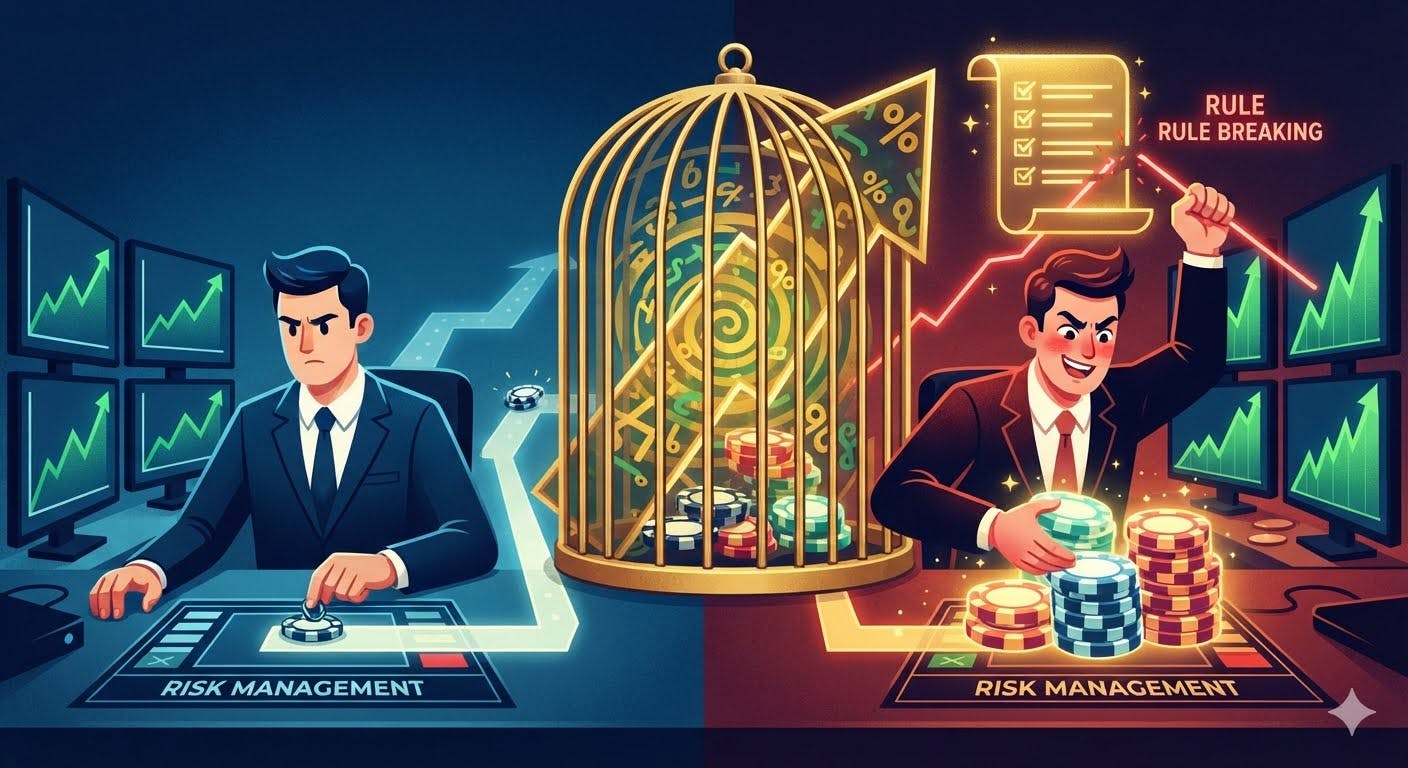
The month you feel most in control is the one you should worry about. Not the drawdown. Not the losing streak. Those hurt, but they keep you honest. The real danger shows up when you’ve strung together a handful of green days and started to believe you finally get it. I call it the cautious-success trap, and it has taken more money from me than any single bad trade ever did. Here’s how it works. You start small. You’re careful because you’re new to the strategy, or coming back from a loss, or just naturally risk-averse. You follow the rules exactly, because you don’t yet trust yourself to break them. And it works. Three wins. Then five. Your account creeps up and something shifts quietly in the back of your head: maybe I’m better at this than I thought. That thought is the beginning of the problem. Barber and Odean tracked 66,465 households and found the most active traders earned annual returns about 6.5% below the market. The pattern underneath was simple: after a run of wins, people traded more, sized up, and did worse. Their brains had quietly credited skill for what was partly luck, and confidence turned into a bigger position. The cruel part is the timing. Overconfidence doesn’t arrive when you’re reckless. It arrives right after a stretch of discipline pays off. The caution that produced the wins gets mistaken for a personal talent, and then you feel entitled to relax the very rules that made you money. You know the move even if you’ve never named it. The position that’s a little bigger than your plan allows, “just this once, because the setup is clean.” The stop you widen because the last few trades came back. The extra trade you take on a Friday because you’re up for the week and it feels like free money. None of these feel reckless in the moment. Each one feels earned. That’s the tell. When breaking your own rule feels justified rather than nervous, you’re in the dangerous phase. Most traders think blowups come from fear or greed at extremes — panic-selling the bottom, chasing a pump at the top. Sometimes. But a lot of account damage happens in calm, confident conditions, right after things have been going well. The trader isn’t scared. He’s comfortable. And comfort is when the guard drops. Think about what a winning streak actually tells you. Over ten trades, a strategy with a real edge and one with pure luck can produce identical results. Ten trades is nothing. You’d need dozens, sometimes hundreds, before the sample says anything trustworthy about your skill. But your emotions don’t wait for the sample. Five wins feel like proof. They aren’t. So what do you do with this? You separate the win from the behavior. At the end of a good stretch, don’t ask “how much did I make.” Ask “did I follow my plan on every trade.” Those are different questions, and only the second one predicts whether you’ll still be here in a year. A green month built on three rule-breaks is a warning, not a victory — you got paid for bad behavior, which is the most expensive kind of reward because it teaches you to repeat it. I keep a simple log now. Every trade gets a yes or no: did I follow the rule, or not. The P&L column matters less to me than the yes/no column. When I see a string of yeses, I know the account is safe regardless of what it did that week. When I see a no that still made money, I flag it, because that’s the trade that’s training me to blow up later. This is also the quiet argument for taking yourself out of the loop. A system doesn’t feel proud after five wins. It doesn’t size up because last week went well. It runs the same rules on trade 100 that it ran on trade 1, which is exactly the consistency human confidence erodes. If you’ve noticed your worst decisions cluster right after your best weeks, that’s not a discipline problem you can willpower your way out of. It’s a structural one. The next time you feel like you’ve finally figured it out, treat that feeling as information. It’s not telling you you’ve arrived. It’s telling you your guard is down. That’s the moment to tighten the rules, not loosen them — because the market has a way of collecting on overconfidence right when you’re least prepared to pay.
When Breaking a Rule Feels Earned, You're in Trouble
Full Article
Original Source
Read the full article at Hackernoon →KhanList aggregates and links to publicly available news content. We do not host full articles from third-party sources. Always verify important information with original sources.