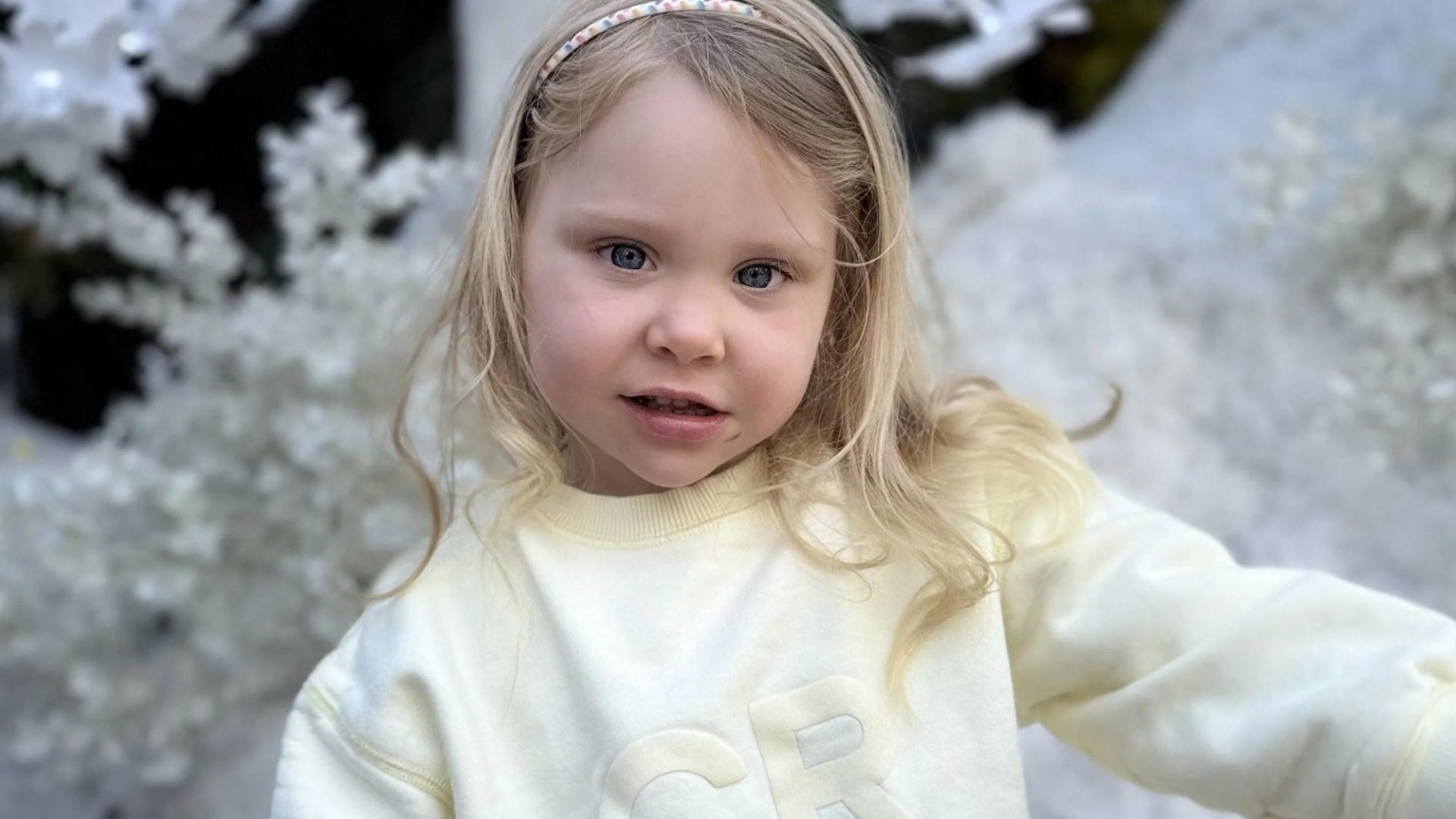
LITTLE Ayla was a “happy and active” four-year-old, a social butterfly who was brimming with confidence. Until last year when her parents began to notice subtle changes and her pre-school teachers noted she was arguing with pals. Mum Katie says Ayla’s behaviour was “unusual”, but nothing prepared the family for what was to come. Ayla, 4, had always been a social butterfly, full of confidence and personality Credit: Jam Press/@kcullenx For months, Katie had been pushing for answers for a number of vague symptoms but GPs blamed common childhood illnesses or growing pains – until Ayla’s cancer had spread. Even when parents Katie, 30, and David, 31, found a large lump in Ayla’s abdomen while getting her ready for bed one evening, it was brushed off as constipation. “Something didn’t sit right with me, but I never imagined it could be cancer,” Katie, from Sydney, Australia, said. “We’d taken her to an urgent care clinic that night after finding the lump, but were told it was likely constipation and sent home. “I booked a GP appointment for the following morning and we were immediately referred to the emergency department. “Within hours, scans revealed an 11cm tumour on her kidney. “Nothing prepares you for hearing the words ‘your daughter has a tumour’. “One moment I thought I was taking my little girl to hospital for constipation, and the next I was being told she had a tumour the size of a grapefruit. In 2025, Ayla began experiencing hives and rashes and had red patches under her eyes Credit: Jam Press/@kcullenx Her pre-school teachers also noted she was arguing with friends, which was unusual Credit: Jam Press/@kcullenx “I was terrified, but I was also in denial. “Cancer had always been something I feared, and I couldn’t believe it was happening to our family. “My mind immediately went to whether she would survive, how much she would suffer, and how I was going to explain any of this to a four-year-old who just wanted to go home and play. “It felt like our entire world stopped.” Ayla loved dancing, singing and playing with her brother Elijah, six. Katie said: “Ayla has always been a social butterfly, full of confidence and personality. “Towards the end of 2025, we started to notice her personality change, and looking back, I believe the tumour was making her increasingly uncomfortable. “She became noticeably more irritable and easily frustrated, which was very unlike her.” The young child would occasionally complain of stomach pain and often felt tired. Her pre-school teachers noted she was arguing with friends, which was unusual. “At pre-school, she started arguing with other children over things that normally wouldn’t have bothered her,” says Katie. “At home, she was quicker to become upset, had less patience, and wasn’t her usual happy, carefree self.” Pictured, Ayla with mum Katie and dad David during treatment Credit: Jam Press/@kcullenx After Katie found a lump on Ayla’s abdomen in January 2026 scans revealed an 11cm tumour on her kidney Credit: Jam Press/@kcullenx As well as her deteriorating mood, Ayla also started to sleep in later in the mornings and stopped wanting to play. She would occasionally come out in hives and rashes, and had red patches under her eyes. Katie said: “We saw doctors and specialists multiple times throughout the year as different symptoms appeared. “I was always trying to find an explanation, but because each symptom seemed relatively common on its own, cancer wasn’t suspected. “The two blood tests she had in 2025 also came back completely normal.” At the start of 2025, Ayla had also had a UTI that was difficult to clear, and an abdominal ultrasound similarly found nothing abnormal. Katie said: “As the months went on, she continued to have intermittent symptoms including abdominal pain, fatigue and bloating. “We saw our GP, had multiple blood tests, saw specialists and continued investigating her symptoms. “Everything continued to come back reassuring.” But that all changed when she found the lump in January 2026, leading to the diagnosis of Wilms tumour, or nephroblastoma – a rare type of kidney cancer. Wilms tumours are most common in children under five years. About 85 children between the ages of 0 and 14 years are diagnosed with it in the UK each year. Pictured, Alya’s bloating caused by the tumour Credit: Jam Press/@kcullenx The most common symptom is a painless swelling of the tummy. Little Ayla began chemotherapy almost immediately, undergoing four rounds, which reduced the tumour by around 70 per cent. She later underwent surgery to remove her kidney and the tumour. During surgery, it was discovered that the tumour had ruptured before the operation, with local spread to surrounding tissues including her bowel, pancreas and diaphragm – moving her to stage three, and requiring more intensive treatment. Since then, Ayla has completed 10 days of whole abdominal radiation, as well as an additional six days of targeted radiation to the tumour bed. She is currently receiving a 27-week chemotherapy protocol with two drugs vincristine and actinomycin D. Throughout treatment, Ayla has needed a central line, a feeding tube, blood transfusions, platelet transfusions and multiple hospital admissions for infections and low blood counts. Katie said: “She has been incredibly brave. Alya is currently receiving a 27-week chemotherapy protocol Credit: Jam Press/@kcullenx What is Wilm's tumour? Wilms’ tumour is a type of kidney cancer that was named after Dr Max Wilms, who first described it. It’s thought to come from very specialised cells in the embryo known as metanephric blastema. These cells are involved in the development of the child’s kidneys while they are in the womb. The cells usually disappear at birth, but in many children with Wilms’ tumour, clusters of primitive kidneys cells, called nephrogenic rests can still be found. In most children, the causes of Wilms’ tumour are unknown. The most common symptom is a swollen abdomen, which is usually painless. Sometimes a parent or carer may feel a lump in the abdomen which can be quite large. Occasionally, the tumour may bleed slightly and this can irritate the kidney and may be painful. There may be blood in your child’s urine (pee), or their blood pressure may be raised. The child may also have a high temperature (fever), upset stomach, weight loss or a lack of appetite. The outlook for Wilms tumor is very good, with a survival rate exceeding 90 per cent in high-income countries, as most affected children are cured. However, the prognosis can vary depending on factors like tumour stage, presence of unfavourable histology or molecular features, and whether the cancer has spread or recurred. Source: NHS “There have been days she’s too exhausted to play, days she doesn’t want to eat, and days where she’s lost feeling and strength in her hands and feet because of chemotherapy-induced neuropathy. “She’s lost her hair, spent weeks in hospital and endured more needles and procedures than most adults ever experience. “Despite everything, she still finds reasons to smile, sing and make people laugh. “She’s built such a special relationship with the nurses and staff in the oncology unit. “Her resilience amazes me every single day. “We remain hopeful. But one of the biggest things I’ve learnt is that childhood cancer doesn’t always look the way people expect. “I hope that by sharing her story, we can help raise awareness that childhood cancer symptoms are often vague and can easily be mistaken for common illnesses, while also encouraging parents to trust their instincts if they feel something isn’t right. “If our story encourages even one parent to seek a second opinion, trust their gut, or helps raise awareness for childhood cancer, then sharing it is worth it.”
When Ayla, 4, started arguing at school no one suspected CANCER… I took her to hospital with ‘constipation’
Full Article
Original Source
Read the full article at Thesun →KhanList aggregates and links to publicly available news content. We do not host full articles from third-party sources. Always verify important information with original sources.