
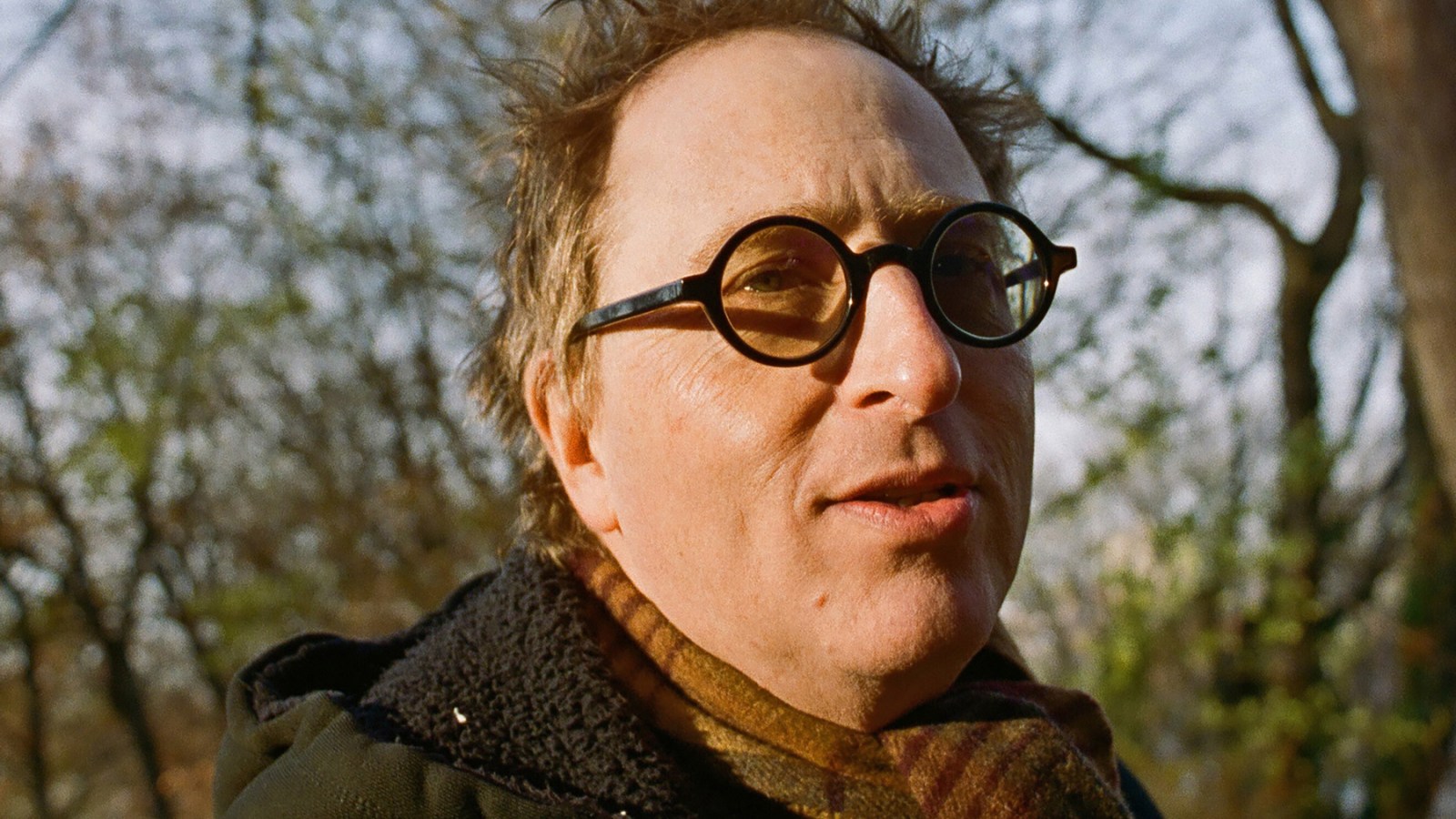
“This story crashed unannounced into my life,” Jon Ronson tells me. It’s a lazy summer afternoon in the hamlet where he lives in upstate New York, and the journalist and author of The Men Who Stare at Goats, So You’ve Been Publicly Shamed, and The Psychopath Test is explaining the genesis of his latest book. He describes a night, almost exactly three years ago, when he slept through a series of texts that came in from his adult son. The messages told a disconcerting story: His son’s friend, a woman, had connected with a man on Tinder, who invited her to come over to his castle in a rural part of Connecticut and bring some friends. According to his son’s description, Ronson says, the structure was a “vast, newly-built castle, ostentatious even by Gothic castle standards. Like, Count Dracula would think this is a bit much.” There were turrets, and a drawbridge, but in the grand ballroom, there was no sign of a party. “There’s a couple of other young people looking awkward and wondering what the hell is going on, but nobody knows what’s happening. Everyone’s confused.” When the middle-aged castle owner emerged, he introduced himself as Chris Mark. The assembled twentysomethings asked him what was going on, and he told them they were there to take part in his new reality show, 101 Princesses. “He said, ‘I’m the king. I’m looking for my queen, and I have 101 princesses to choose from.” He sent the women down to the basement, where they could find princess costumes to wear. “They went with it, I guess out of unease, awkwardness,” Ronson says. “A videographer appears. They start filming. It becomes pretty clear pretty quickly that this isn’t a real reality show. One reason being that the videographer kept cutting up [a slab of] meat for the castle owner. Just for him. No meat was offered to anyone else.” Ronson, who was also host of the hit porn-industry investigative audio project The Butterfly Effect, has made a career of letting his curiosity get the better of him. So, the next day, he went to the castle “to find out what the hell was going on,” he says. “And that’s how the book begins.” Editor’s picks The Castle: Adventures in a World of Unraveling Men (out now from Riverhead Books), reads like an adventure story. Though much of it is framed around his interviews and interactions with Mark — the wealthy descendent of a Gilded Age baron — it opens up to a larger pursuit to understand the state of men, and how the breakdown of societal support, coupled with the rise of a technological state, has brought so many to the brink. In the book, Ronson travels to the Midwest to visit a town built by Mark’s great grandfather in the 19th century, a recreation of a British village set under power plants and steel factories, where he talks to the man keeping its history alive. He charts the career path of an early YouTube star, Greg Chism, who went from being one of the first lawn-care influencers to chasing the algorithm by posting videos of his two young daughters. What starts as wholesome family content takes a left turn when he begins dressing up his daughters as babies, then donning a baby costume himself, before he’s ultimately all but run off the platform. Ronson includes chapters about Graham Linehan, the creator of huge British sitcoms like Father Ted and The IT Crowd, who became a prominent anti-transgender activist, and Armie Hammer, whose acting career crumbled after his cannibalism kink was revealed. Ultimately, Ronson develops descriptions of the different kinds of men who thrive online — the Vulnerable Man, the Doofus Man, the Manosphere Man, the Separatist Man, the Disinhibited Man — and what these modern archetypes communicate about the world we live in. And throughout it all, he comes back to his own unease about his place in the world. If a man doesn’t have purpose, what’s left? Chris Mark is a fascinating character — he built this castle for his daughter, but then turned it into a sort of alternate-reality Playboy Mansion. At what point did you realize that his story was going to lead to your next book?The first thing I heard about the castle owner was that he was a big fan of Hugh Hefner. I thought, this is really funny. He’s trying to be Hugh Hefner at the worst moment in human history. I linked him with my feelings of unease, as well, about not having enough purpose. It felt like there were weird echoes there. I thought, this is a man out of time. He wants a world that’s no longer going to work for somebody like him, and maybe I should write a book about all these other things that men are no longer able to do that they used to be able to do. Related Content One of the things you write about in the book is how people are reflexively dismissive of the problems of straight white men. What made you want to tackle this when you knew that there was going to be pushback?I think [of this] a little bit like my public-shaming book. People may not like the idea of the book, but then when they read it, they realize that their idea was wrong. Many times over my career, I’ve had this. Nobody wanted to read The Men Who Stare at Goats. The only book I’ve ever written which sold itself was The Psychopath Test — if you put “psychopath” in the title, you don’t have to do that much work. But what I do, I think, over and over again in my career, is look at how big changes that happen on high trickle down and impact the inner lives of people down here. But mostly, it was a book that crashed into my life, this big fucking castle that my son was lured to under false pretenses, and I just wanted to know what the hell was going on. But let me add one more thing, and I think this applies equally to women as to men. One thing that I became really interested in is this: Structures and institutions collapse, and people feel cut adrift from society, and it does seem to be something that happens more to men than women. There’s more of a weakness in men, that when things fall apart, men isolate and withdraw from the world more. But I got really interested in that — like, what does a lack of purpose and structure do to people’s inner lives? And what’s filling the gap? And one thing that I found that’s filling the gap is content creation on YouTube. Do you think, as these societal structures break down, the fact that men can’t live up to the preconceived notion of masculinity that they were fed as kids — being a provider, a protector — that’s part of what’s making them feel lonely?There’s a moment in the book when Greg Chism is the world’s greatest lawn-care influencer, but then his life spirals in the most bizarre ways. He starts to listen too much to the algorithms, and everything goes wrong. And it ends with him basically withdrawing from the world. But I ask him what his life’s like now, and he says, “Well, I wake up, I take my kids to school. I come home. I fall asleep. I wake up and I bring the kids back home from school.” I mean, what a terrible, depressing life. For me, it’s the erosion of structure which is causing so much horror in people’s lives. So you think people are dealing with this by becoming content creators?It’s funny, I went to the cage fight at the White House [in July]. Everybody [in the press pool] was allowed to inspect the cage a couple of days earlier, so we all had to be at the White House at like half past five in the morning. Like 100 people were there, and we were all standing on the steps of the Eisenhower Building, and somebody from the UFC came up and yowled, “OK, everybody, content creators and videographers, step to the left, print journalists step to the right. And there was this vast exodus to the left. Like 98 percent of the people there were content creators, and the print line was like me [and a few other journalists]. And we were just laughing, like, “Oh, my God, we’re such redundant dinosaurs.” So that’s the kind of thing I’m talking about, like a huge shift from the old institutions that I grew up in, to the sort of post-institution era. How do you think AI chatbot technology plays into accelerating this?It makes it so much worse. AI trawls the internet, sees how purposeless people feel, how lost, and comes in with a false idea of purpose. Like, “You’re the greatest mathematician on the planet,” or, “You’re creating the greatest reality show ever.” It’s so pernicious. It’s so evil. It’s like they’re swooping in to keep us engaged through sycophancy. Going back to Greg Chism, the lawn-care influencer, one of the things that I found so stark in that story was how he kept changing his content to please the YouTube algorithm so he could get views. What did you find in reporting this book about people who are trying to contort themselves to the pleasure of the computer?His story has got to be one of the most extraordinary things that ever unfolded on YouTube. Like how he goes from lawn care through to all the stuff that happened after that, which is just nuts. Do you remember that novel, The Dice Man, by Luke Rhinehart? It’s about a character who decides to cede his life to the roll of a dice. Every decision he makes, he makes for the roll of a dice, and that’s what people are doing now on YouTube. If they give themselves over too much to the algorithm and the incentive structures, you end up doing more and more extreme things. I think it’s partly because YouTube gained the reputation of being this wide-open country, like a post-institution utopia where men and women could thrive through grit and perseverance as an influencer, which is a very compelling idea. I grew up in a world of gatekeepers, and it was awful to have to beg people to give me a chance. It’s very compelling to have a world without that, that feels like it could be a true meritocracy where good people rise to the top. And good people do rise to the top. It’s not like it’s all an illusion. Greg Chism’s story and lots of other stories show that if you cede your life to the algorithm — and not just the algorithm, also what the viewers are encouraging you to do — it just leads to hell, and Greg’s story leads to hell in the most baroque and unexpected ways. But I think you could say the same thing about smaller stories, like anti-woke influencers, is a good example of another way that this manifests in sort of pernicious ways. Another person you write about is your former friend, Graham Linehan, who went from being pretty universally beloved in Britain to becoming one of the country’s loudest anti-trans voices. He attacked you extensively online after you called him out for being a bully, too. Tell me about your decision to include such a personal story in this book.Well, it was very hard. I’ve been trying to write about Graham since 2020, and I’ve picked it up and put it down many times because I could just feel my stress levels rising. Because, you know, Graham’s story is, he became a gender-critical activist, and just made it his absolute identity. And he has his bêtes noires, and I’m one of them, and he’s posted about me thousands of times by now. The Graham chapter was much longer, but it stressed me out so much. I cut it in half, but it’s like that scene in Poltergeist when you open the door in the bedroom and there’s all this furniture spinning violently around, and I think I’m a piece of furniture spinning violently around inside Graham’s head. I told him I thought he was acting like a bully back in 2019, and all these years later, he’s still going on about it. But I think there’s three or four reasons why I thought I should write about it. Firstly, the only reason to not write about it is fear, and I just don’t think, as journalists, we can be guided by fear. Secondly, I’ve often thought about Graham. So Graham, for people who don’t know, was a huge figure in British cultural life, maybe a good equivalent would be like Judd Apatow. He was this showrunner of some of the most beloved comedies in British history, and then he fell into this new world in this extraordinary way. I hope this doesn’t sound glib, but I’ve always thought there was like an epic quality to Graham’s story. It was like if Harold Pinter or Tom Stoppard was writing a play about Graham, it would be an incredible play. But the main reason [I wrote about him] is that I really wanted to do something about disinhibited men. What I discovered was that, when men feel cut out, cut adrift from society, some fold in on themselves. Some adapt. Some lash out. Graham is somebody, and you see it in a lot of different places, who basically decided to just be completely disinhibited, to basically rip off his face, and just allow his head to run wild. It’s as if he’s just decided nothing matters anymore. I thought that felt so extraordinary, but also so resonant to the world we’re living in now of disinhibition. Tell me about Marktown, the town in Northwest Indiana that was built by Chris Mark’s great grandfather, and modeled after a British village. What did you find when you went there?I really wanted to do something after the castle mystery, you know, exploded into my life, and I decided I wanted to broaden it out into other men, feeling that life was passing them by, and then I thought, well, I’d love to do something about deindustrialization, but how? And also, men who are withdrawing from the world and becoming recluses, but how? And then I discovered, just incredibly fortuitously, that the castle owner’s great-grandfather was a Gilded Age steel tycoon. That’s how he got his money to build his castle, and he had built a utopian theme town in East Chicago, Indiana, for his steelworkers to live in. And over the years, this utopian town, which at the beginning looked great, has completely crumbled into a world of recluses and hoarders. Marktown’s designed to be this lovely English village, like a Miss Marple-type village where some kind of Agatha Christie adventure would happen, but it’s completely surrounded by heavy industry. So it’s like Miss Markle being like scrunched up and thrown into the middle of Wall-E. And when you look at an aerial photograph of Marktown, you just can’t believe it. It’s like nothing on Earth. So yes, so very fortuitously, I got to tell that story of deindustrialization in a way that’s completely relevant to the castle story. Toward the end of the book, you write a little bit about an interview you did with Armie Hammer after his “cannibalism” scandal broke.So the story is, I got a call. He was filming in New Orleans, and I knew some of the people involved in the film [called Wounds], and they invited me to New Orleans to visit the set. We had dinner with Armie Hammer and his wife and the various movie people, and Armie talked a lot about meat, how much he liked meat, and he was utterly delightful and charming, and it was a great night. Trending Stories So then a couple of years later, it all happens, the whole cannibal stuff, and then a couple of months after that he contacts me, and I fly to interview him. He says I’m the first person ever to interview him [since the scandal], and he tells me the whole story. But I sit on it. I don’t know what to do with it because there’s some things where he’s definitely right, but then there’s other things where he hasn’t behaved well. Like he would sweep women off their feet and take them to Ojai, and then give them the time of their life, and then come back and drop them off, and completely forget about them. And I thought, I need time. Like I just, you know, this is a story that needs a lot of time. And [eventually] he gave the story to someone else. I felt slightly like one of the women that you take to Ojai. But you know what? I can’t blame him. I was taking way too long. So I have no ill feelings, but this interview was sitting on my computer for the next couple of years, and so I included a little bit of it because there were moments in our conversation which I think shed light on some of the motivations of the castle owner, and privilege, and people not being told that they can’t do things. I cut it down to its absolute minimum, to shed light on other stories in the book. You’ve got a stage show of the book you’re taking on tour in the States and the U.K. Can you tell us about that?It’s called Enter the Castle. I always do pretty elaborate stage shows. I still do a show called Psychopath Now, based on my Psychopath Test book, where I have mystery guests, and I’ve done shows where I have a band onstage, performing with me as I’m doing the speaking. This time around, I’m using a lot of audio and video clips, and bringing the book to life as a series, almost like a live documentary that I’m narrating onstage. So I always make it ambitious.
What’s Wrong With Men? This Author Thinks He Knows
Full Article
Original Source
Read the full article at Rollingstone →KhanList aggregates and links to publicly available news content. We do not host full articles from third-party sources. Always verify important information with original sources.