
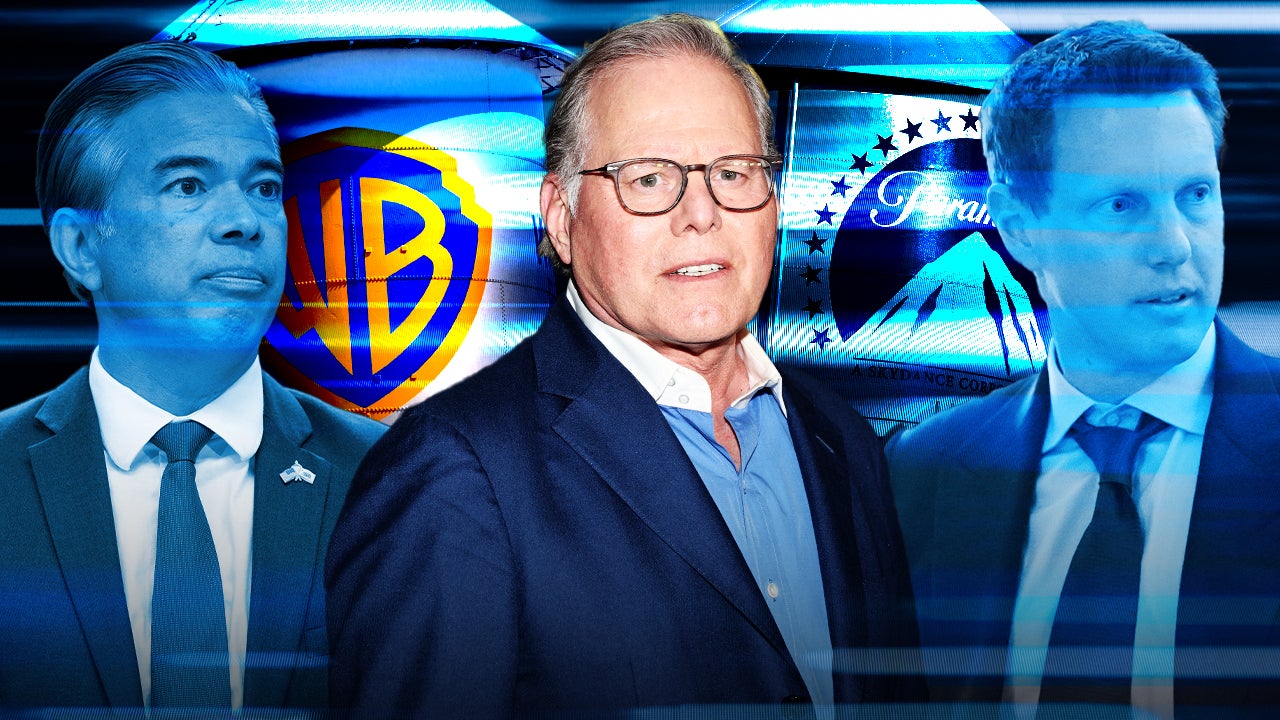
As Paramount and Warner Bros. Discovery’s $110 billion merger remains stuck in legal limbo, the public discourse scrutinizing every twist and turn has become an intense debate over how badly the two companies need each other to survive in the competitive media landscape. But it also raises a key question: What is WBD’s path forward if the deal ultimately falls apart? To be clear, the deal collapsing wouldn’t be fatal to Warner Bros. Discovery. CEO David Zaslav would walk away with a $7 billion break-up fee that could offer some additional flexibility as an independent company. But experts who spoke to TheWrap are skeptical that management would continue to go it alone long-term, given the M&A options that would be available to them and the challenge it continues to face with a deteriorating linear TV business. Instead, they predict that WBD’s management would return to its planned split in the hopes of attracting another buyer for all or part of its portfolio. Or it could look to sell non-core assets individually or monetize their IP through licensing or specific sales, they said. “One way or another, the ability to unlock value offsets any potential operating benefit from keeping the company together,” Morningstar Research analyst Matthew Dolgin said. “I’d expect a material portion of the work to implement the split would not have to be redone or paid for again.” Questions about the fate of WBD continue to swirl with California Attorney General Rob Bonta and 11 other state AGs putting the deal on ice, with settlement talks set Tuesday to begin Oct. 14 — after a daily ticking fee of $7 million that kicks in on Oct. 1. Both Warner Bros. and Paramount have maintained that the merger will close as planned. A WBD spokesperson declined to comment on potential scenarios beyond that, while a Paramount spokesperson did not immediately return TheWrap’s request for comment on this story. Warner’s options If the Paramount deal collapses, Warner Bros. Discovery would still retain several highly valuable and strategic assets. That includes a streaming business that’s scaling profitably, a legendary studio and a portfolio of some of the most recognizable IP. But even with the breakup fee and improving leverage, some experts argued that it would still be in a difficult financial position with its debt and the secular downward trend of linear TV. It would also likely suffer a dramatic reversal in its stock price — it has climbed 44% in the past year — which would only further encourage management to pursue M&A opportunities. “I am pretty sure going back to running the company in its likely state if the deal doesn’t close is the last thing David Zaslav wants,” Paul Nary, an M&A strategy professor at the University of Pennsylvania’s Wharton School, told TheWrap. “WBD would have to spring back into action after taking a year-plus long break from running the business at full speed/control, try to recover from distraction and plow ahead while doing the best they can to combat decay and deterioration of its portfolio from the last year of focusing on the deal.” Nary said a split could bring “some substantial restructuring costs,” but warned there may be “serious cuts on the table” and potential asset sales if it continues to go it alone. Notably, potential buyers are already reportedly circling assets like New Line Cinema in the event that Paramount reaches a settlement with the state AGs that requires divestitures. Bloomberg Intelligence estimates that WBD’s studio and streaming business is worth $70.2 billion, while the linear networks are worth $17.86 billion. Dolgin said Netflix, Apple and Amazon would be the “perfect suitors” for the former, but acknowledged there are “no signs” to point to the latter two companies’ interest. Meanwhile, Lloyd Greif, the CEO of investment firm Greif & Co., told TheWrap the cable networks could be sold piecemeal or together to a number of prospective buyers, such as strategic players like Nexstar Media Group and IAC Chairman Barry Diller or private equity firms like Apollo Global Management, Jeff Zucker’s RedBird IMI, Stonepeak Infrastructure Partners, BC Partners, The Carlyle Group, Crestview Partners, GTCR and Berkshire Partners. At the same time, experts acknowledge the split’s value and economics are only getting worse as linear shrinks, dragging down the market’s view of the multiple on the entire company. “The time to split was yesterday,” Nary said. “Piecemeal sales are more likely than another big deal. There would certainly be parties interested in specific businesses/assets, but whether these would be deals that would work from WBD’s perspective I’m not sure about.” Warner Bros. could also consider negotiating an extension of the June 4 deadline if a settlement isn’t reached and Paramount chooses to appeal a court decision, as Zaslav and other top WBD executives have a fiduciary duty and massive financial incentive to try to get the deal done. But experts said that fiduciary duty cuts both ways and that the board “can’t cling to a dead deal any more than it can abandon a live one.” “At some point, you have to give up the ghost,” Greif said. “Nine months is plenty of time to either fish or cut bait with the court and the 12 states rebelling against the deal.” What Warner Bros. can and can’t do right now While the merger is pending, Warner Bros. Discovery is able to operate independently between signing and closing through a so-called interim operating covenant. This agreement allows the company to run its day-to-day operations, but prevents the company from making major structural changes without Paramount’s consent. Under the agreement’s terms, it has broad flexibility to negotiate licensing and distribution partnership renewals and extensions with existing partners so long as the deals don’t extend past December 2028. Paramount would have first rights to negotiate any deals after that. However, the agreement states that it cannot enter into or modify “material” contracts and collective bargaining agreements, overhaul executive compensation packages, enter new lines of business or engage in large scale M&A and restructurings. It also can’t incur or guarantee in excess of $60 million of new indebtedness, subject to specified exceptions. Additionally, there are limits around deals involving certain “key properties” of IP and some content sales or acquisitions may require Paramount’s approval if they hit certain financial thresholds, which can range from as little as $30 million to as high as $400 million depending on the type of deal, its length and other factors. “You can complete the deals you’re working on, but they don’t want more money going out the door until everything is settled,” Andy Goldman, a former HBO vice president of program strategy and planning, told TheWrap. “The worst thing is for David Zaslav to hand over the keys and then they have all these commitments and more debt potentially.” An insider familiar with the agreement told TheWrap that there hasn’t been any impediment to how WBD is running its business and that they expected the Paramount deal would take 12 or more months to close. But experts warned that prolonged uncertainty only hurts employee morale, makes creative talent more hesitant about committing to projects and gives WBD’s rivals a competitive advantage. “Every quarter WBD spends in structural limbo is a quarter Netflix and Disney don’t have to,” Qualia Legacy Advisors managing director Aaron Meyerson told TheWrap. “The closest precedent is AT&T-Time Warner: a 20-month antitrust fight that arguably cost WarnerMedia its head start in streaming. If the March trial ends in a loss for Paramount and WBD and either side appeals, this starts looking like a rerun of that exact playbook that handicapped WB to begin with.” “My rule of thumb is that the first six months of limbo are manageable and everything after that compounds,” regulatory attorney Braden Perry added. “WBD is already past that point. By the time a March trial and post-trial ruling play out, they’ll have spent well over a year in a holding pattern and that shows up in the product.” Despite the uncertainty surrounding Warner Bros., the insider emphasized that no projects have been put on hold thus far and that creative talent continue to pitch the company’s film and TV studios. While “Abbott Elementary” creator Quinta Brunson moved her overall deal from WBD to Disney, others like “Last Week Tonight” host John Oliver, “House of the Dragon” creator Ryan Condal and “The Pitt” creator John Wells have all extended their contracts. During the company’s second quarter earnings call, Zaslav acknowledged that it’s been a “challenging time,” but praised his staff for working “extremely hard.” “I’m quite inspired by the culture here and the drive to continue to put points on the board and take pride in the fact that this is a great company,” he added. “We want to deliver a great company.”
What’s Warner Bros. Discovery’s Path Forward if the Paramount Deal Collapses?
Full Article
Original Source
Read the full article at Thewrap →KhanList aggregates and links to publicly available news content. We do not host full articles from third-party sources. Always verify important information with original sources.