
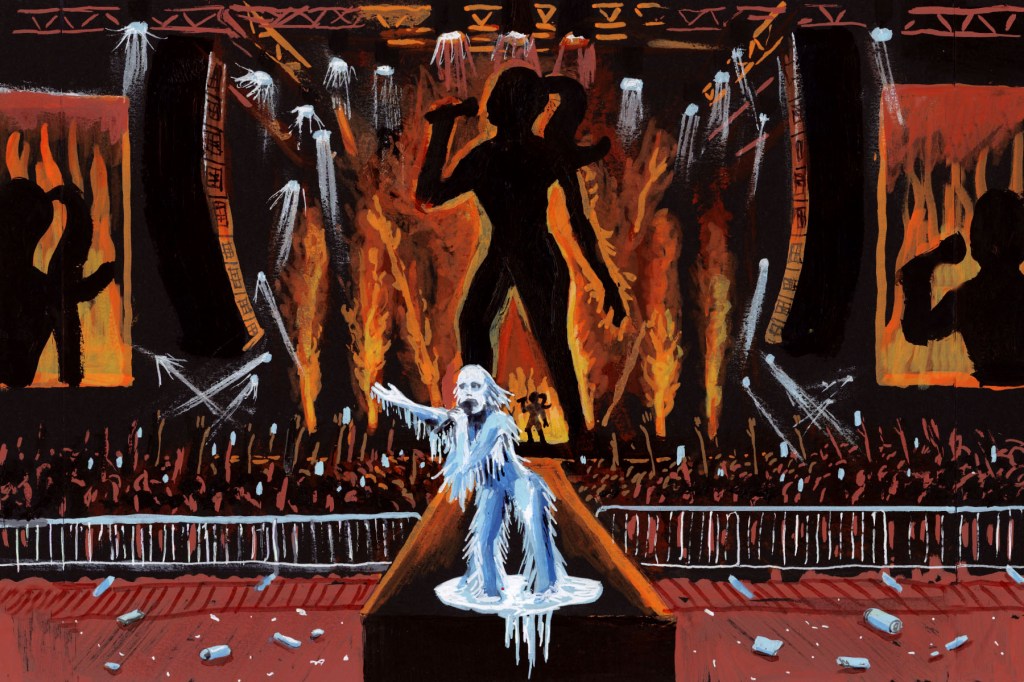
In the past 12 months, Ariana Grande, Rosalía and Lady Gaga all completed blockbuster arena tours in support of chart-topping albums, complete with large-scale production, choreography and outfit changes. But they also had something else in common: no opening acts. While plenty of pop’s biggest artists are still booking buzzy support, tighter budgets, shorter pipelines to stardom and dwindling attention spans are changing the market for pop tour openers and the agents who book them. “There’s all these different cost balance analyses going on,” says Nathaniel Marro, executive director of the National Independent Talent Organization (NITO), which advocates for a sustainable music ecosystem and supports independent music professionals. And while pop tours — especially at the arena level, where bigger budgets, capacity and higher ticket costs rule — are more immune to the industrywide financial squeeze, “everything is more expensive,” Marro maintains. “When you’re looking at these big pop acts, you have very specific stage setups. Adding anything to or detracting from that is a big deal. And then if you are adding anyone to these arena shows, you have to think, ‘Are they actually going to add any value?’ If I’m going to go see Lady Gaga, do I really care about what’s happening before Lady Gaga? “Sometimes, I just want an hour-and-a-half and I want to go home,” he continues. “We’re battling people so much for attention these days, and we’re battling people so much to get off the couch and do things, that when you’re talking about adding another act and the headliner not going on till 9, 9:30, all these things start to add up. It’s [about] how to make the concertgoing experience repeatable for fans.” Performing sans opener worked just fine for Gaga, who topped Billboard’s midyear touring report. And without an opening act, there was no required percentage split after that tour’s expenses were paid for; as Marro explains, while the promoter typically pays the opener, the headliner still stands to make less money in the end since that opener’s costs cut into overall profit. That’s significant at a time when “everyone wants more money,” says Nina Swint, an agent at the global independent agency ROAM. While Swint’s focus is on ascendant punk and rock acts, ROAM’s roster includes rock and indie stars like Adrianne Lenker and Big Thief, Hayley Williams, MJ Lenderman, Jungle and Goose. With rising costs affecting gas, food and hotel stays, Swint says it’s harder than ever to plan a budget for a tour that is happening over a year out. “You don’t really know what those tour costs are going to be, and also you never know if your artist might have a viral moment,” she says. “Why would you lock yourself into a support slot when you don’t know where your artist is going to be in a year?” Pre-pandemic, Swint most often took a “package-focused approach” to booking, pitching a tour with an opener and budget locked. Now, she says there is much more “guesstimating” required. “It’s almost like we’re doing the negotiation after the tour’s confirmed versus in the inception phase.” As Matt Hickey, an agent at High Road Touring (Jeff Tweedy, Joan Baez), adds, “New acts appear to develop more quickly now from a social media moment and don’t see the value in playing support slots — and choose to headline instead.” But for artists on the bubble between support or headliner, Marro’s advice is simple: “Do what’s going to make you the most money and guarantee the most ticket sales. In this economy, it’s really not worth the risk if you have some concern about [headlining].” R&B artists have especially struggled this year with weighing risk versus reward, as a handful of tours — from both established and emerging artists — faced cancellations, including 6LACK, Isaiah Falls, Naomi Sharon and Ravyn Lenae. Just weeks after Lenae’s third album, Blue Island, dropped this August, she announced on Instagram her tour would be postponed. “I’ve never had to cancel a show in my life,” she recently told Billboard. “I need my fans to know that I didn’t make the decision lightly. I cried about it a lot. It’s not fun, and very costly, having to do that.” Still, she will hit the road next spring as the opening act for sombr on the European leg of his tour. It’s one example of how opening slots at the arena level still hold value when done right, from special guests to buzzy acts about to break. On Bruno Mars’ stadium tour, friend and collaborator Anderson .Paak opens nearly every night, also returning for Silk Sonic songs within Mars’ set. And when rising pop sensation ADÉLA opened on tour for Demi Lovato this spring, it was a perfectly timed launchpad for her own career: Her support slot led to a Billboard Hot 100 hit with “Ain’t in LA,” which helped her album PRIMA to a No. 1 entry on Top Album Sales and, now, ADÉLA’s very own headlining tour this fall. “Smart tours have not just a major draw at the top, but also supporting artists who have their own draw,” says Patrick May, an agent at Crossover Touring whose roots-leaning roster includes Billy Strings and Yonder Mountain String Band. At the club level, Marro believes that draw can — and really should — come from local acts now more than ever. “We’re starting to see a lot of promoters and people really start advocating to go back to that local support option,” he says. “We need to start thinking more about building up these communities and really having a foundation to go off of. I think that’s going to be better for every one of these towns and ecosystems in the long run.” This story appears in the Nov. 7, 2026, issue of Billboard.
What’s the Deal With Support Acts on Tours Today?
Full Article
Original Source
Read the full article at Billboard →KhanList aggregates and links to publicly available news content. We do not host full articles from third-party sources. Always verify important information with original sources.