
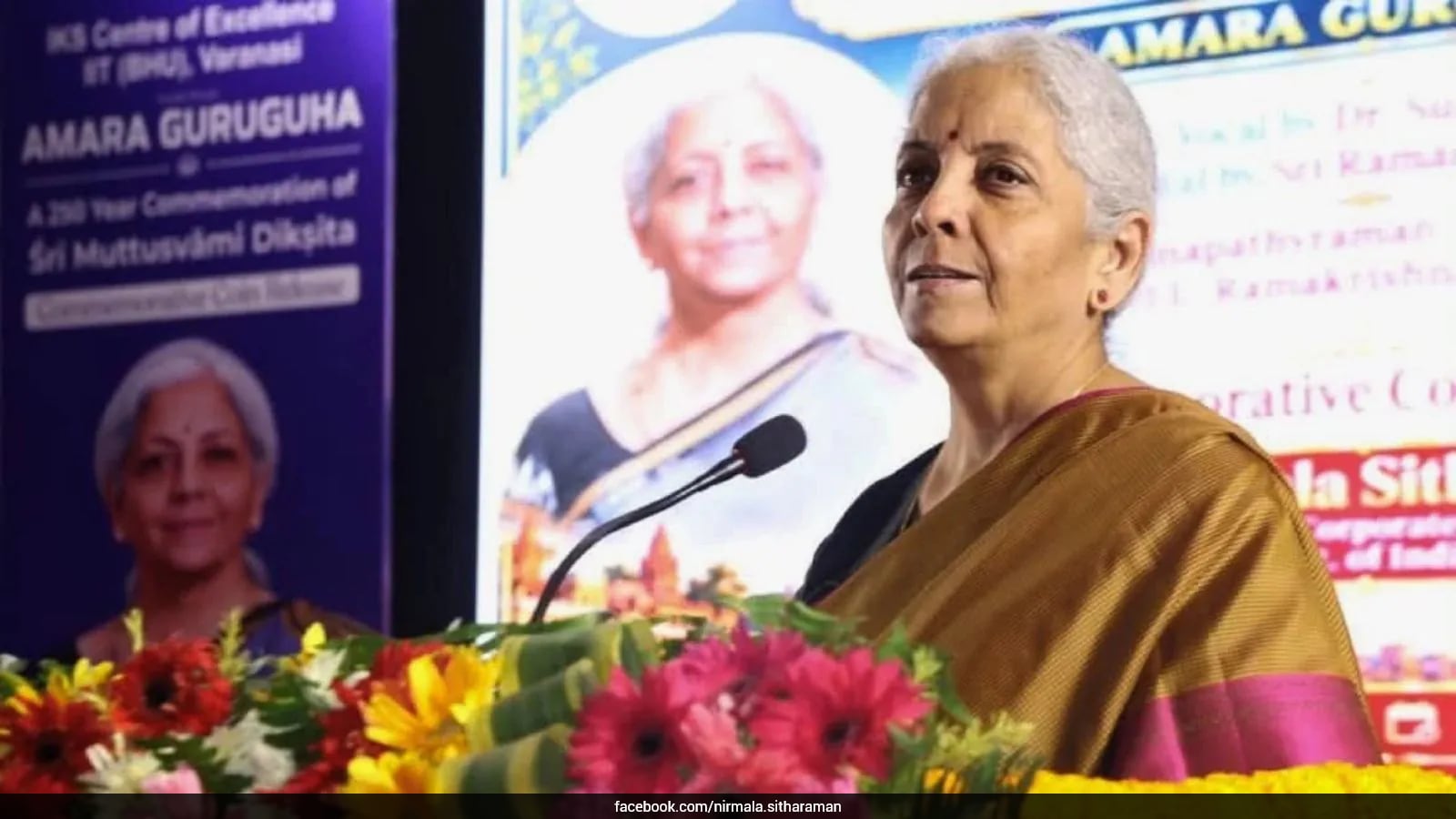
New Delhi: Union Finance Minister Nirmala Sitharaman has said poverty cannot be measured or solved through wages alone as a family without a secure house, clean drinking water, sanitation or healthcare remains just one medical crisis away from financial ruin.In a post on LinkedIn, she cited the World Bank's latest Poverty and Equity Brief on India, which showed nearly 50 crore Indians came out of poverty between 2011 and 2023 and extreme poverty was nearly eradicated.She attributed this improvement to household-level interventions and not simple cash handouts."Garibi (poverty) is not merely a shortage of income or wages. A household without a secure roof, safe water, sanitation or healthcare remains vulnerable even when its income rises. One illness can wipe out savings and push a family back into poverty," the finance minister said.According to her, for more than six decades after Independence, "eradicating mass poverty remained an unfulfilled promise," with India viewed abroad even in the early 2010s as a nation of "enduring destitution, lagging in sanitation, nutrition, clean cooking fuel and banking."During that time, the accepted policy approach was that handing out money to the poor would automatically resolve deprivation, she added.Over the past decade under Prime Minister Narendra Modi, the central government did not use that approach and instead took the route of Antyodaya or the idea of ensuring welfare of the last person in the line by targeting specific household deprivations one by one, Sitharaman said."Our government, therefore, made every intervention targeted at those who needed it, focused on measurable outcomes and tailored to the deprivation it was meant to remove," she wrote on the website mostly used for networking and job-hunting.There was no "magic wand", Sitharaman said, adding that implementing those welfare programmes needed tracking beneficiaries down to the last household. PM Modi "personally and painstakingly monitored implementation, intervened at critical junctures to resolve bottlenecks, ensured follow-ups and encouraged the use of technology to track delivery," she said.Recalling an interaction two months ago with MUDRA beneficiaries, the finance minister mentioned the example of Sushmita Gharai from West Bengal, whose family printing press shut down after she lost her father during the COVID-19 pandemic."With no land or gold as security, a collateral-free MUDRA loan helped her restart the press. Today, she employs eight people, twice her initial workforce, and plans to expand into digital printing," Sitharaman wrote.She said she also met tribal women from local self-help groups a year ago in Kiphire, a remote district in the hills of Nagaland, where a 'Lakhpati Didi' named Esther sold millet-based products online to customers far beyond the state."What stayed with me was their confidence in a better future. I encouraged them to dream bigger and become Crorepati Didis," Sitharaman said.In the next phase on the road to the government's 2047 'Viksit Bharat' goal, Sitharaman said welfare protection must be paired with access to finance, markets and the digital economy so that those who have risen out of poverty never slip back."The government is building closer links between academia and industry through employment-linked incentives, internships and apprenticeships, while investment in infrastructure is connecting the country as never before," she wrote.
What's "Garibi?" Nirmala Sitharaman's Deep Dive In LinkedIn Post
Full Article
Original Source
Read the full article at Ndtv →KhanList aggregates and links to publicly available news content. We do not host full articles from third-party sources. Always verify important information with original sources.