
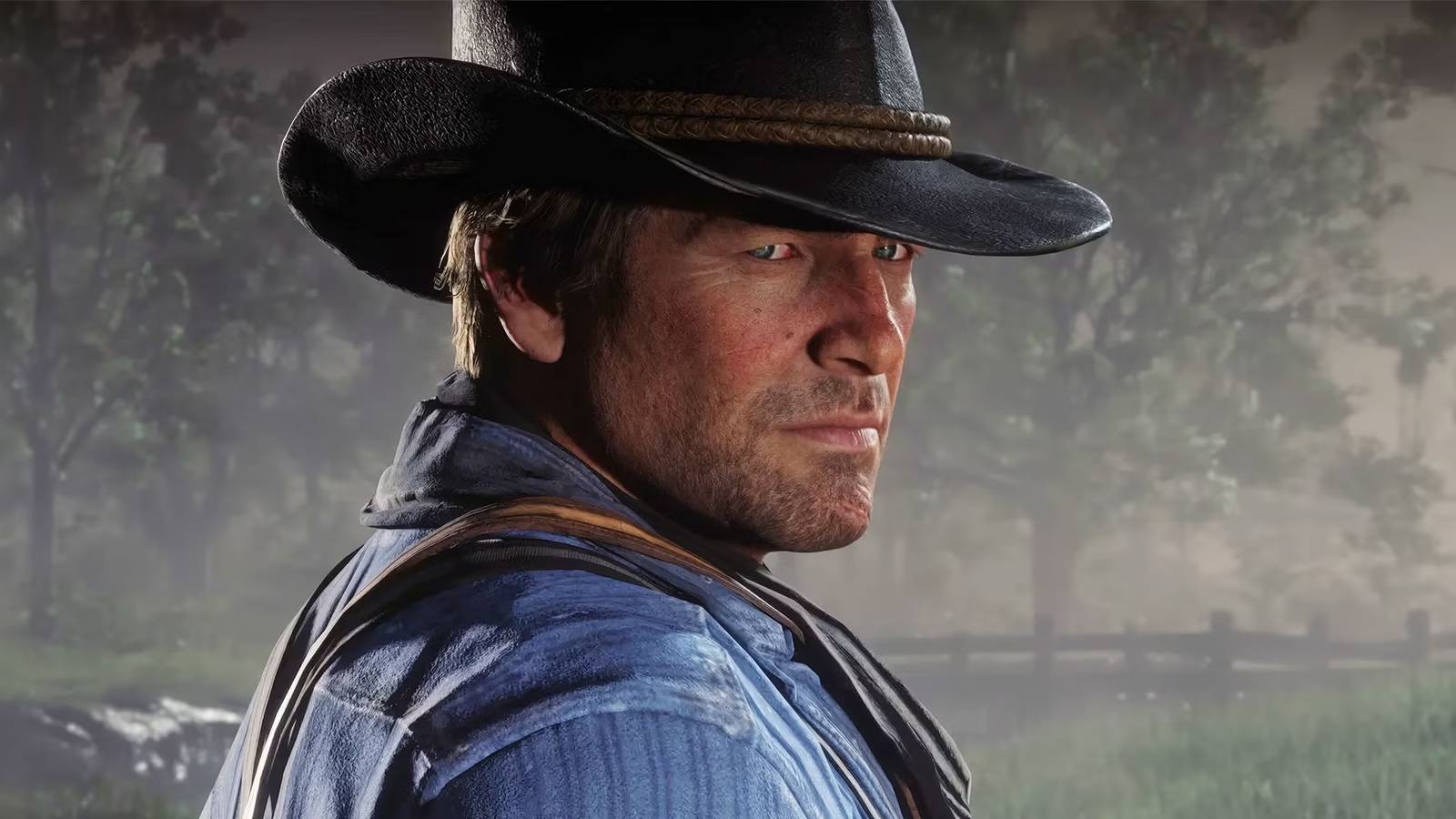
Image via Rockstar Games Published Jul 26, 2026, 6:59 AM EDT Sign in to your Collider account People’s video game choices reveal a lot more about them than they realize. That’s because gaming isn't a passive form of entertainment like movies or TV shows. Players constantly make decisions, solve problems, take risks, and shape their own experiences, which means the kinds of games they keep coming back to usually reflect the kinds of challenges they enjoy. There's a surprising amount of psychology behind it. Some people prefer structure, while others thrive under pressure. No genre can completely define a person, but the experiences people seek out in games often say something about how they see the world. If reading this has you feeling curious, here is what your favorite video game genre might say about you. 6 Role-Playing Games (RPGs) Image via Larian Studios RPGs truly embrace the idea of escapism. The genre features games like The Elder Scrolls V: Skyrim, The Witcher 3: Wild Hunt, Baldur's Gate 3, and Mass Effect, which transport players to a whole other world where they have to make meaningful choices, form relationships, and explore every corner of the map to get to the end. Regular RPG players don’t really care about completing all quests to finish the game as quickly as possible, because they understand that exploration is part of the fun in this genre. Players who gravitate toward RPGs will naturally be curious and look for out-of-the-box ways to do things. They will know that a mysterious cave on the horizon, or an NPC with an interesting backstory, has nothing to do with the central gameplay, but they’re perfectly okay with that. If this is someone’s favorite genre, there's a good chance they enjoy having agency and asserting it too, because RPGs essentially hand players a second life, where they can explore who they are in a completely different realm, with completely different rules. 5 First-Person Shooter (FPS) Image via Activision First-person shooters are all about living in the moment. They strip away almost everything except the players’ ability to make quick decisions and execute them in fractions of a second. FPS games like Call of Duty, DOOM, Counter-Strike 2, or Halo have practically defined gaming for years now, and all of them reward players who can keep up with intense pressure. First-person shooters feel like a rush of adrenaline because every corner can hide an enemy, and every missed shot has immediate consequences. People who gravitate toward FPS games tend to enjoy immediate feedback. They like knowing that success comes from their own skill rather than plain old luck. These games also allow players to see measurable improvement as they land more accurate shots, master a new weapon, or learn the flow of a map through repetition. If this is someone’s favorite genre, they’re probably extremely confident in their instincts and don't need every variable to be perfect before making a call. These players tend to thrive on healthy competition. Winning feels great, but it's the constant process of improvement that gets them hooked. 4 Open-World Image via Rockstar Games Open-world games feel like candy to players who just want to be free. Games like Grand Theft Auto V, Red Dead Redemption 2, Minecraft, and The Legend of Zelda: Breath of the Wild all let their players do whatever they want. Don’t be fooled, because the main story is always there waiting, but there’s no pressure to follow it. In fact, players are actually encouraged to wander off, experiment with mechanics, stumble across unexpected discoveries, and create a story that feels entirely their own. The genre allows people to experience the scale of its world and gameplay at a personalized pace. If this is someone’s favorite genre, chances are that they like having plenty of options at their disposal, even if they never use all of them. They're rarely satisfied with the most obvious solution and don't mind uncertainty because they see it as an opportunity rather than a problem. More than anything, they're self-directed. Instead of waiting for someone else to tell them what's interesting, they prefer deciding that for themselves, and Open-world games are practically designed to do all of that. Collider Exclusive · Horror Survival Quiz Which Horror Villain Do You Have the Best Chance of Surviving? Jason Voorhees · Michael Myers · Freddy Krueger · Pennywise · Chucky Five killers. Five completely different ways to die — if you're not smart enough, fast enough, or self-aware enough to avoid it. Only one of them is the villain your particular set of instincts gives you a fighting chance against. Eight questions will figure out which one. 🏕️Jason 🔪Michael 💤Freddy 🎈Pennywise 🪆Chucky TEST YOUR SURVIVAL → 01 Something feels wrong. You can't explain it — you just know. What do you do? First instincts are the difference between the survivor and the first act casualty. ALeave immediately. I don't need to understand a threat to respect it. BStay quiet and observe. If I can see it, I can understand it. If I can understand it, I can avoid it. CStay awake. Whatever this is, I am not going to sleep until I feel safe again. DConfront it directly. Fear grows in the dark — I'd rather know what I'm dealing with. ECheck everything, trust nothing. The threat might be closer than I think — and smaller. NEXT QUESTION → 02 Where are you most likely to find yourself when things go wrong? Setting is everything in horror. Where you are determines which rules apply. ASomewhere remote — a cabin, a campsite, off the grid and away from people. BA quiet suburban neighbourhood where nothing ever happens. Except tonight. CIn my own head — the most dangerous place of all, depending on what's already in there. DWherever children are — because something about this place attracts the worst things. ESomewhere ordinary — a house, a toy store, a place where the last thing you'd expect is a threat. NEXT QUESTION → 03 What is your most reliable survival asset? Every survivor has a quality the villain didn't account for. What's yours? APhysical fitness — I can run, I can swim, I can outlast something that relies on brute persistence. BSpatial awareness — I always know the exits, the hiding spots, the fastest route out. CPsychological resilience — I've faced my worst fears before. They don't have the same power over me. DEmotional steadiness — I don't panic. Panic is what gets you caught. EScepticism — I don't underestimate threats because of how they look. Size is irrelevant. NEXT QUESTION → 04 What kind of fear is hardest for you to fight through? Knowing your weakness is the first step to not dying because of it. AThe unstoppable — something that will not stop, cannot be reasoned with, and is always getting closer. BThe invisible — a threat I can feel but can't locate, watching from somewhere I can't see. CThe psychological — something that uses my own mind and memories against me. DThe unknowable — something ancient, shapeless, that feeds on the fear itself. EThe mundane — a threat so ordinary-looking that no one will believe me until it's too late. NEXT QUESTION → 05 You're with a group when things start going wrong. What's your role? Horror movies are brutally clear about who survives group situations and who doesn't. AThe one who says "we need to leave" first — and means it, even when no one listens. BThe one who stays quiet, watches the others, and figures out the pattern before anyone else does. CThe one who holds the group together when panic sets in — because someone has to. DThe one who asks the questions nobody wants to ask — because ignoring them gets people killed. EThe one who takes the threat seriously when everyone else is laughing it off. NEXT QUESTION → 06 What's the horror movie mistake you're most likely to make? Honest self-assessment is a survival skill. Denial is not. AGoing back for someone — I know I shouldn't, but I can't leave them behind. BAssuming I'm safe once I've found a hiding spot. That's when it finds me. CFalling asleep when I absolutely cannot afford to. Exhaustion is its own enemy. DLetting my curiosity override my instincts — I always need to understand what I'm dealing with. EDismissing the threat because of how it looks. That's exactly what it wants. NEXT QUESTION → 07 What's your best weapon against something that can't be stopped by conventional means? Every horror villain has a weakness. The survivors are always the ones who find it. AThe environment itself — I use the terrain, the water, the geography against it. BPatience — I wait, I watch, and I strike at the one moment it doesn't expect. CLucidity — if I can stay in control of my own mind, it loses its primary weapon. DCourage — facing it directly, refusing to run, taking away the fear it feeds on. EImprovisation — I use whatever's at hand, however unconventional. Creativity over brute force. NEXT QUESTION → 08 It's the final scene. You're the last one standing. How did you make it? The final survivor always has a reason. What's yours? AI kept moving. I never stopped, never hid for too long, never let it corner me. BI figured out the pattern before anyone else did — and I used it against the thing following it. CI stayed awake, stayed lucid, and refused to give it the one thing it needed most. DI stopped being afraid of it. And the moment I did, everything changed. EI took it seriously from the start — and I never once made the mistake of underestimating it. REVEAL MY VILLAIN → Your Survival Odds Have Been Calculated Your Best Chance Is Against…Your instincts, your strengths, and your particular way of thinking under pressure point to one villain you actually have a fighting chance against. Everyone else — good luck. Jason VoorheesJason is relentless, but he is also predictable — and that is the gap you would exploit. He moves in straight lines toward his target. He doesn't strategise, doesn't adapt, doesn't outsmart. He simply pursues. Your ability to keep moving, use the environment, and resist the panic that freezes most victims gives you a genuine edge. The Crystal Lake survivors were always the ones who stopped running in circles and started thinking about terrain, water, and distance. You think like that. Which means Jason, for all his indestructibility, would face someone who simply refused to be where he expected. Michael MyersMichael watches before he moves. He is patient, methodical, and almost impossible to detect — until it's too late for anyone who isn't paying close enough attention. But you are paying attention. You notice the shape in the window, the car parked slightly wrong, the silence where there should be sound. Michael's power lies in the invisibility of ordinary suburbia — the fact that nothing ever looks wrong until it already is. Your spatial awareness and instinct to map every room, every exit, and every shadow before you need them is precisely the quality Laurie Strode had. You are not a victim waiting to happen. You are someone who already suspects something is wrong — and acts on it. Freddy KruegerFreddy wins by getting inside your head — using your own fears, your own memories, your own subconscious as weapons against you. That strategy requires a target who can be destabilised. You are harder to destabilise than most. You've faced uncomfortable truths about yourself and you haven't looked away. The survivors on Elm Street were always the ones who understood what was happening and chose to face it rather than flee from it. Freddy's greatest weakness is that his power evaporates in the presence of someone who refuses to give him the fear he feeds on. Your psychological resilience — the ability to stay grounded when reality itself becomes unreliable — is exactly the quality that keeps you alive here. PennywisePennywise is ancient, shapeshifting, and feeds on terror — but it has one critical vulnerability: it cannot function against someone who genuinely stops being afraid of it. The Losers Club didn't survive because they were braver than everyone else. They survived because they faced their fears together, and faced them honestly. You ask the questions others avoid. You look directly at what frightens you rather than turning away. That directness — the refusal to let fear fester in the dark — is Pennywise's worst nightmare. It chose the wrong target when it chose you. You are exactly the kind of person whose fear tastes like nothing at all. ChuckyChucky's greatest advantage is that nobody takes him seriously until it's already too late. He exploits the gap between how something looks and what it actually is. You don't have that gap. You take threats seriously regardless of how they present — and you never make the mistake of underestimating something because of its size or appearance. Chucky relies on surprise, on the delay between recognition and response. You close that delay faster than almost anyone. Your instinct to treat every unfamiliar thing with appropriate scepticism — rather than dismissing it because it seems absurd — is the exact quality that keeps you breathing. Against Chucky, not laughing is already winning. You are very good at not laughing. ↻ RETAKE THE QUIZ 3 Horror Image via Capcom Horror games are fundamentally different from horror movies because here, the players aren’t sitting back and watching someone else make the bad decisions. Games like Resident Evil, Silent Hill, Amnesia: The Dark Descent, and Alien: Isolation put players directly in harm's way and force them to enter dark hallways, explore haunted houses, and manage their fear while trying to get to the end. Jump scares are a genre staple, regardless of the medium, so one can expect plenty of those in horror games as well. That’s not all, though, because horror video games thrive on creating a constant sense of uncertainty, where players question every sound and second-guess every choice they have to make. Type B people typically enjoy this genre of gaming because they perform best in chaos. These players process stress more slowly and do not get easily overwhelmed by tense situations. They enjoy experiences that demand their complete attention and love the adrenaline that the genre delivers. For them, the greatest reward is knowing that they can keep their composure even in the bleakest of situations. 2 Strategy Image via Paradox Interactive Strategy games reward patience in a way that most gamers just aren’t used to. Some of the best games in this genre, including Civilization VI, Age of Empires II, XCOM 2, and Crusader Kings III, ask players to think several moves ahead, manage limited resources, and adapt to setbacks they could have never seen coming. That goes to show that strategy games are about more than just quick reflexes or getting the perfect shot. Every victory in this genre feels earned because it comes from careful planning. People who play strategy games tend to enjoy solving complex problems one piece at a time. They probably never make decisions on impulse and often prefer taking a few extra minutes to understand the situation before acting. Instead of chasing immediate rewards, they're comfortable sacrificing something in the present if it means gaining a much bigger advantage later. These players also tend to see failure differently, because to them, a loss is just information that can be used to build a better plan next time. More than anything, strategy fans enjoy putting order to chaos. They're naturally drawn to systems with lots of moving parts, and there's something deeply satisfying about watching a plan they've spent hours building come together exactly as intended. 1 Simulation Image via Electronic Arts Simulation games find excitement in things that most other genres completely overlook. Think of titles like The Sims 4, Microsoft Flight Simulator, Cities: Skylines, or even Euro Truck Simulator 2. All these games recreate real-world systems and challenge players to understand how they work. Instead of defeating enemies or saving the world, players have to manage entire cities, fly a commercial aircraft, build a successful farm, or try to keep a virtual family happy. The sense of fascination in this genre comes from understanding exactly how these things work behind the scenes. Players who enjoy simulation experiences are patient yet creative at the same time. These players are perfectly happy spending an hour adjusting a layout or refining a strategy, even if nobody else notices the difference, because they enjoy the process more than the outcome.
What Your Favorite Video Game Genre Says About You
Full Article
Original Source
Read the full article at Collider →KhanList aggregates and links to publicly available news content. We do not host full articles from third-party sources. Always verify important information with original sources.