
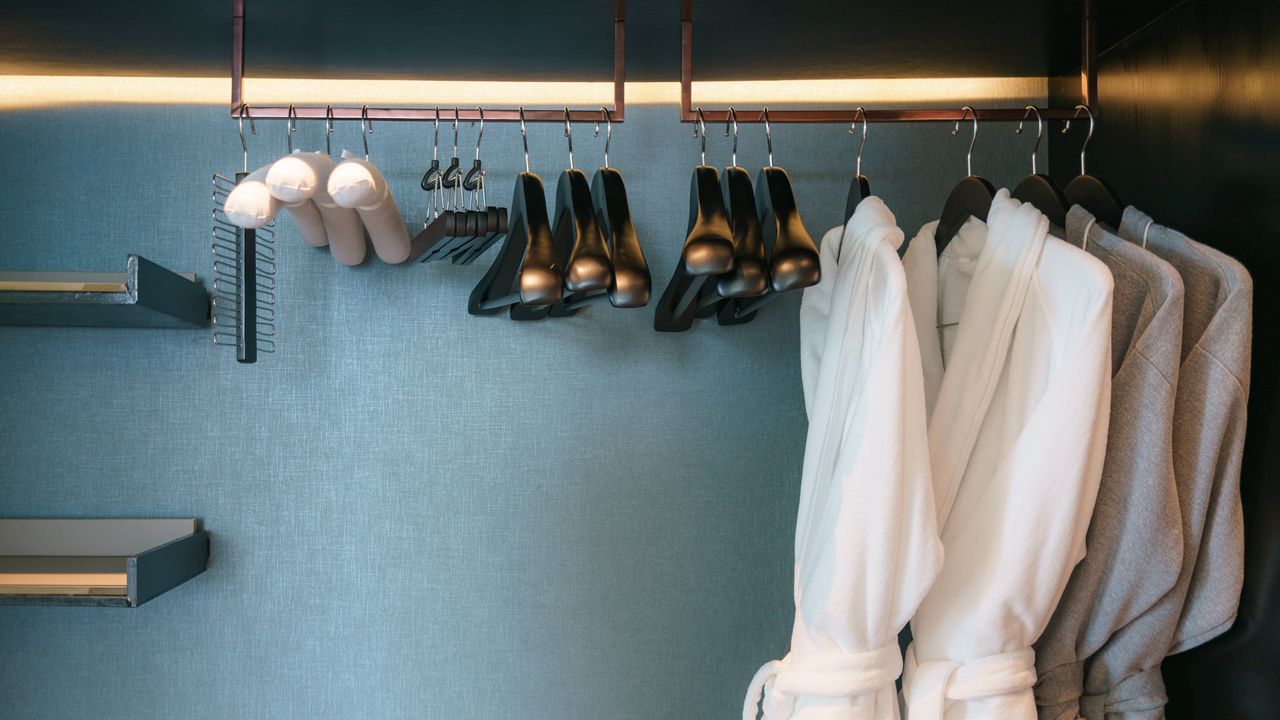
Hotels want you to feel at home. They want you to slip into a robe, pad across plush carpet, and help yourself to the tea tray without a second thought. But the line between what’s complimentary and what’s supposed to stay in the hotel has become increasingly blurred.Industry insiders say the vast majority of guests are well-behaved. But the cumulative impact of small, everyday souvenirs multiplied across millions of stays costs hotels hundreds of millions of dollars globally each year. And while the stereotype is of luxury guests slipping soaps into suitcases, the reality is far stranger, more expensive and common than most travelers realize.“It’s surprising how much you can take,” says Anne Golden, a veteran hotelier at Pan Pacific London. “Take your welcome amenities, your dry amenities; if it’s single-use, take it.” She’s also seen the other end of the spectrum: what she calls the “scorched earth” guest—“anything that isn’t wired down, they’ll take.”Single-use toiletries are fair game to tuck into your suitcase. Getty ImagesThe things hotels expect you to take home“Anyone who says they don’t take something is lying,” says travel advisor Pippa O’Keefe. And luckily single-use toiletries, boxed dental kits, shower caps, combs, sewing kits, and mini soaps aren’t meant to be reused or handed to the next guest—so they're all fair game. Once opened, or even once placed in the room, they’re written off, and from an operational perspective, letting guests take them is easier than throwing them away. The same applies to tea, coffee, sugar sachets, and welcome snacks. Slippers sit in a grayer area, but most hotels assume they’ll leave with the guest, especially in higher-end properties where laundering them wouldn’t make sense anyway. That uncertainty is reflected in guest attitudes, with a recent YouGov poll finding that while more than three-quarters of people believe taking mini toiletries is acceptable, fewer than one in 10 think the same about towels—even though both regularly end up in suitcases.When guests cross the lineBathrobes are the most commonly stolen item in hotels worldwide, and towels come a close second—indeed, in one Europe-wide survey of hotel managers, nearly eight in 10 said towels go missing—but unlike toiletries, these items are designed to be reused hundreds of times. A single robe can cost a hotel well over $100 to replace, or more if it’s bespoke or branded. Towels, pillows, and bed linen aren’t cheap either, particularly at luxury properties using high-spec cotton or custom embroidery.“We know the Dyson hairdryer was there when you checked in, and we know that you took the bathrobe,” Golden says. The response is rarely confrontational, but more often a carefully worded follow-up offering the chance to return the item or pay for it. Karen Irving, general manager of Linthwaite House in the UK, notes that when items do disappear, many hotels simply swallow the cost rather than confront the guest. "We tend to absorb it,” she says. “It’s rare enough that it’s not worth turning a stay into a negative memory.”Luxury travel advisor Duncan Greenfield-Turk, who spent two decades working with top-tier hotels, is more blunt: “You can’t take the bathrobe, you can’t take the bed linen, you can’t take the kettle.” You’re paying for the stay, he adds, not the physical assets. “We don’t live in a society where we walk into a supermarket and walk out and not pay for it.”Most guests who wouldn't dream of stealing from the store can feel more financially incentivized to get their money's worth out of a hotel stay by taking home items they know they shouldn't. Getty ImagesThe strange psychology of hotel theftGuests who would never dream of stealing from a shop will happily slip a bathrobe into their suitcase, but according to clinical psychologist Kate Mason, it's rarely about the money or the cost. “Sometimes it’s just about wanting to get your money’s worth,” Mason explains. When a stay is expensive, she says, guests can feel a subconscious urge to rebalance the scales. But it's an impulse that can quickly blend into something more emotional.“A robe feels like part of the experience,” she says. “Taking it can feel more like keeping a souvenir than committing a crime.” Unlike shoplifting, which is clearly transactional and morally coded, hotel theft exists in a fuzzier psychological space. The room feels semi-private, and the objects feel temporarily yours.Mason also points out that hotels are perceived as large, corporate entities. “There’s often a sense that the hotel won’t miss it,” she says, even though, operationally, they absolutely do. Losses accumulate quietly, one robe at a time, until they become a real cost.The true cost of a towelOn a global scale, hotel theft adds up fast. In the US alone, industry estimates suggest guests steal around $100 million worth of hotel goods each year—a figure hoteliers say is conservative, given how rarely losses are formally recorded. Linen losses are so routine that many hotels treat them as an unavoidable operating expense, closer to breakage in a restaurant than outright crime. But according to Catherine Morris, managing director of Tradelinens, the real damage is caused by accumulation. “A towel going missing once doesn’t feel like much,” Morris says. “But when you multiply that across hundreds of rooms, multiple turns a week, and an entire year, the maths becomes brutal.”Hotels operate on what’s known as “par levels,” with five sets of linen per room often in constant circulation: one in use, one in the hotel, one in the wash, one in transit, and one as backup. “As soon as items start disappearing,” Morris explains, “that buffer collapses. Suddenly you’re short, staff are stressed, and everything costs more.” That’s one reason many hotels are quietly turning to technology. Some now embed RFID chips into towels, robes, and bed linen—tiny trackers sewn into hems that allow staff and laundries to monitor exactly what’s in circulation and what’s missing.Hotels are beginning to include price tags on items inside rooms to clearly indicate what's for sale and what isn't. Getty ImagesWhy price tags are appearing in hotel roomsPrice tags in hotel rooms are a relatively new phenomenon—and a controversial one. Some see them as a clear signal of what’s for sale and what isn’t, but others worry they cheapen the experience, turning a place of rest into something resembling a showroom. “A visible price tag on something like a bathrobe in a high-end hotel can feel a little bit crass,” says O'Keefe. “You start to feel a bit pre-judged.”That tension has pushed many hotels towards a middle ground. Rather than pricing everything, operators increasingly label what is complimentary—a bottle of wine, a tote bag, a welcome gift—while keeping purchasable items available through in-room guides or discreet notes.What hotels are trying to avoid, insiders say, is the feeling that the guest-hotel relationship has shifted from trust towards suspicion. O’Keefe says that distinction matters more than hotels realize. “Guests don’t mind being sold to if it feels optional,” she explains. “What they dislike is feeling policed, or worse, like the hotel assumes they’re going to steal.”This article was originally published in Condé Nast Traveller Middle East.
What You Can (and Can’t) Take From a Hotel Room, According to Travel Experts
Full Article
Original Source
Read the full article at Cntraveler →KhanList aggregates and links to publicly available news content. We do not host full articles from third-party sources. Always verify important information with original sources.