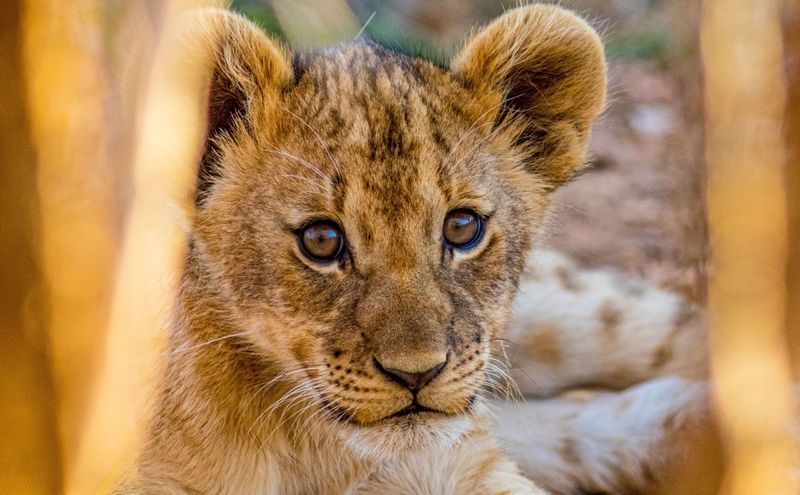
In nature documentaries, the human species tends to remain behind the camera, casting wildlife into a narrative as seen through our eyes, yet keeping at a distance as if we are not a part of nature ourselves.Avoiding imposing on or disrupting natural processes in the animal kingdom can be considered one of the ethical foundations of nature filmmaking. But where does one draw the line between allowing nature to play out in both its awe and its anguish and using our position as humans to intervene?Award winner at the International Tourism Film Festival Africa, the South African documentary Bucket: The Lion Cub is a testament to the work of wildlife conservationists.Told through the narrator, wildlife filmmaker and safari expert Brent Leo-Smith, Bucket: The Lion Cub follows the life of a tiny cub on the Rietspruit Game Reserve in Limpopo, who finds herself on a grand adventure with adult male lions before she is able to physically fend for herself independent of her mother.Made by wildlife media and safari company Painteddog.tv, Bucket: The Lion Cub takes a while to settle into its narrative.It begins with Leo-Smith’s childhood memories of the bush, the backstory of his creative partnership with co-founder and cameraman Wium Dörnbrack, and contextualising the conservation work at the story’s core. But what’s clear from the start is not only Leo-Smith’s palpable passion for wildlife, but also his flair for engaging storytelling.In the film, he describes how, through his work with wildlife on a reserve, one becomes accustomed to the heart-aching ways that nature can unfold.“You’re looking at the species as a whole rather than the individual,” he explains. “The survival of an area or an ecosystem rather than an individual.”Yet when Leo-Smith and his team begin witnessing the gradual deterioration of the cub’s health, they begin to question their responsibility as humans who are witnessing what would probably become a life-or-death situation for the cub.“You have to sort of wonder,” Leo-Smith says, “shouldn’t we help? Can we help? Is it right to help?”In this way, the film raises and confronts the tension between being a documentarian – whose role is to observe and document the animal kingdom – and the very human sense of empathy that makes intervening feel instinctual.Bucket: The Lion Cub brings audiences into a close-up encounter with wildlife. (Photo: Painteddog.tv) Once the film reaches its midpoint, it leaves behind its frequently oversentimental instrumentals for a shift towards a subtle yet effectively suspenseful percussion.It’s from this point that emotions run high as the team take on their high-stakes rescue mission, which involves coaxing the male territorial lions with an impala carcass, mimicking a lioness’ call to her cubs and navigating a treacherous landscape in the black of night.These scenes have a visceral intensity that draws the viewer in to become invested not only in the survival of the cub, but also in the safety of the filmmaking and reserve teams.Unlike a traditional nature documentary, in which the human – apart from a disembodied voiceover – tends to be removed, Bucket: The Lion Cub integrates human perception into its story.This is not a narrative told through scripted voiceover or polished footage. Instead it’s a raw, unscripted tracking of a tiny cub’s survival away from its mother, with moment-by-moment reactions from Leo-Smith that make it feel as if we as the audience are sitting alongside him in the safari vehicle.Its unpretentious, unfiltered style of filmmaking allows Bucket: The Lion Cub to bring viewers into a close-up encounter with wildlife, without the sheen of big-budget documentaries that can be, at times, focused on the beauty and wondrous aspects of the natural world.As Leo-Smith describes in his narration, his production work with Painteddog.tv is about taking people deeper into the reality of the day-to-day trials and tribulations of conservation heroes.“Humans are a part of nature’s design,” Leo-Smith says. “Our challenge is to live in harmony with it, not separate from it.” DMThe original footage on which Bucket: The Lion Cub is based can be watched on Painteddog.tv’s YouTube channel.
WHAT WE’RE WATCHING: Award-winning documentary witnesses local wildlife experts take on lion cub rescue mission
Full Article
Original Source
Read the full article at Dailymaverick →KhanList aggregates and links to publicly available news content. We do not host full articles from third-party sources. Always verify important information with original sources.