
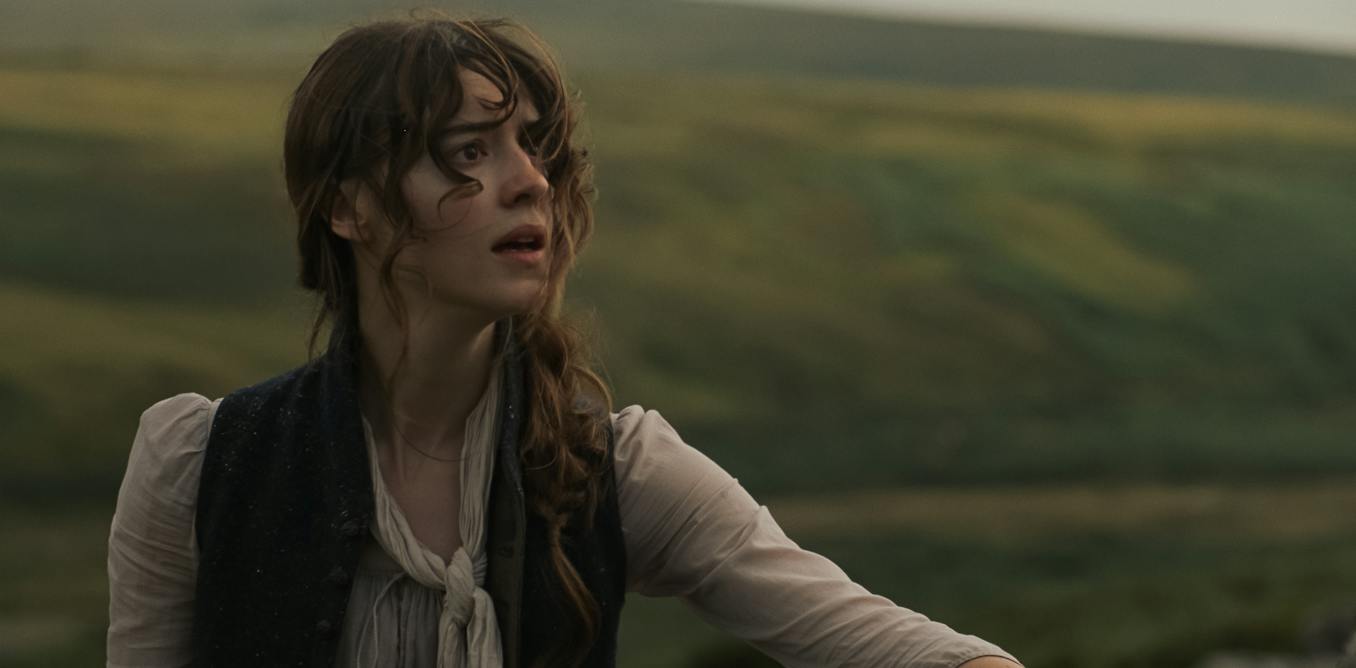
I’m not going to lie. When I saw Georgia Oakley’s new adaptation of Sense and Sensibility, I was swept away. The expansive pastoral landscapes and rocky seascapes are breathtaking. The pond scene at Norland House Park with its stately, if overgrown, stone steps and wild purple flowers was perfection. Each scene is a visual delight, drawing viewers into the pastoral world of Jane Austen and the Georgian era. Textures, costumes and music accompany Austen’s witty dialogue to breathe new life into the story of sisters Elinor (Daisy Edgar-Jones) and Marianne Dashwood (Esmé Creed-Miles) as they navigate grief, happiness and love. The attention given to storytelling, however, is perhaps prioritised at the expense of realities of the period. The social import of dance particularly would have been understood as essential to the sisters’ success in sociable spaces and the marriage market. The trailer for Sense and Sensibility. The Dashwoods’ and Austen’s world was rooted in social hierarchy. Ideals of politeness, civility and decorum dictated standards of behaviour and dress among the gentry and nobility, visibly setting them apart from their social inferiors. Taste, status and wealth were displayed and assessed via the clothing people wore, the things they bought and how they acted. Appearance and movement were therefore physical manifestations of politeness – hair being no exception. Marianne’s unkempt and stringy hair and Elinor’s soft waves, though indicative of the girls’ characters, would have conformed to wider social expectations and been pinned up daily. Hop to it As with the sisters’ wild locks, the two dance sequences – a hop and a ball – capture the spirits of Dashwoods more than they evoke the atmosphere of the period. Dance was central to Georgian sociability and by extension, matchmaking and courtship. Girls and boys took lessons from an early age to learn posture, formations, footwork and eye contact with the expectation they would display grace and ease when the time came to perform in front of their peers and superiors. A lack of bodily comportment signified ineptitude, meekness, and inferiority. This applied to the types of dances themselves as well; country dances and balls were socially acceptable among the refined middling and upper ranks of society, while informal hops were relegated to the “meaner sorts”. Dancing is a core part of the new Sense and Sensibility. The hop, and the action of hopping, which gave the entertainment its name, were in direct opposition to the tenets of decorum, politeness and civility – making it an unlikely pastime for the Dashwoods. In the novel itself, there are no hops, only balls. Sir John (the Dashwoods’ friendly landlord and distant relative, played by Turlough Convery) makes the lone reference to the hop during a conversation with Marianne. He divulges, much to her excitement, that her love interest, Mr Willoughby (Frank Dillane), is a most passionate dancer. He has attended “a little hop in the park” where he danced from “eight o’clock to four without once sitting down”. This perhaps should have been a red flag for Marianne, as respectable persons were not wont to attend hops. The dancing in the film The hop scene in the film is more akin to a country dance and, as such, blends Georgian country dance steps and formations with modern choreography. The exuberance of the company certainly evokes the spirit of a country dance, but the movements themselves are rather jarring, even if jovial. It is at this point that the preference for creative licence begins to erode the film’s carefully crafted world – pieced together so diligently through light, texture and sound. Contemporary choreography tempts the viewer back into the modern day and diminishes the cultural significance dance had in spaces of sociability throughout the Georgian and Regency periods. Nowhere is this more clearly seen than in the second sequence, set in a London ballroom. Elinor finds herself dancing with Edward Ferrars (George MacKay), the man she loves but cannot marry. The ball, both in Austen’s novels and in Georgian society, was the epitome of embodied politeness. Serpentine lines, precise footwork and confident eye contact were essential and signalled not only a good partner in dance, but also the potential for a good partner in marriage. While the dance sequences in the film depicted how couples might move through the space in paired or line formations, the exaggerated sweeping arms, lifts, and over-arched backbends are more reminiscent of musical theatre than the regulated Georgian ballroom. Inside the filming of Sense and Sensibility. The ability to dance and dance well is something that pervades most Georgian and regency period adaptations in some form or other. This is plain to see in everything from the 2020 adaptation of Austen’s Emma, where the characters of Emma and Knightley lock eyes and fingers, to Mary Bennet counting her steps in The Other Bennet Sister, a television continuation of Pride and Prejudice, to Hyacinth having her toes stepped on in the most recent season of Bridgerton. In all of these, dance is portrayed as a foundational, if not nerve-wracking, component of Georgian and regency sociability. It is to the detriment of Sense and Sensibility that this is lost through its choreography, which acts more as a spectacle than serving a function. Despite nods to the period, the dancers burst through the ambience of the scene. Modern movements done in silk gowns and embroidered waistcoats jerk the viewer out of the candlelit ballroom of the 1790s and place them firmly back into the 21st century. Choreographer Holly Blakey, the mind behind the dancing in the film explained her avant garde approach by stating “it was vital that whatever we were doing inside the choreography … did feel like an expression of how the girls were feeling”. Though the thought of expressing oneself through dance might have appealed to Marianne Dashwood, it would have been unheard of in the 1790s. As such, it looks out of place in the period. Had the film not so effectively evoked the 18th century in other ways, the grievances against the infiltration of modern dance (and hair) might have been less noticeable.
What was going on with the dancing in Sense and Sensibility? A Regency expert explains
Full Article
Original Source
Read the full article at Theconversation →KhanList aggregates and links to publicly available news content. We do not host full articles from third-party sources. Always verify important information with original sources.