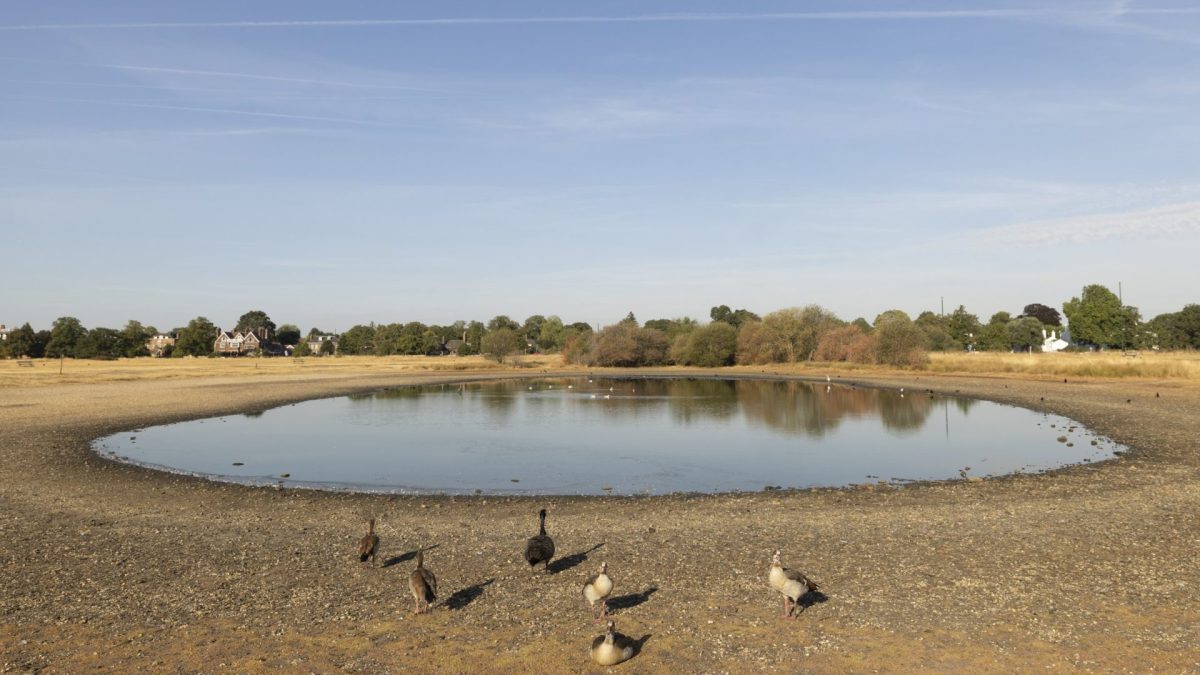
Some water companies across England are trialling tiered billing systems which leave heavy water users facing higher prices for every drop – all in a bid to protect supplies from dwindling. In the trials – which could become commonplace if regulator Ofwat approves a change to water bills – prices increase when consumption hits a new threshold, or “block”. For example, a Severn Trent Water trial which began in February 2026 sees the first 5,000 litres of water per month charged at a lower-than-usual rate. The second 5,000 litres is priced close to the normal rate, while the third 5,000 litres costs more than usual. Shorts On average, an individual uses around 139 litres a day. At present, water bills are usually calculated by measuring usage or depending on the value of the property. South West Water currently has a trial in which 500 households pay a cheaper rate for using a lower amount of water. Prices increase if usage goes up. Similar schemes across Europe Across Europe, this sort of water pricing scheme is more common. Known as an increasing block tariff (IBT), the method was used in around half of countries, a 2016 study found. Under the Metodo Tariffario Idrico, water users in Italy are subject to a variable quota where prices rise with usage thresholds. A similar method is widespread in Spain. In Dunkirk, an “eco-social tariff” introduced in 2012 means prices under a threshold for “vital consumption” are lowered, subsidised by higher costs for those who use more water. The scheme has resulted in 80 per cent of users making savings on their bills, and average water consumption fell by almost a fifth. Targeting a 15 per cent reduction in water use by 2035, authorities in Lyon, France, introduced a system where residents receive 12 cubic metres of water free each year – around 12,000 tonnes. Above that amount, prices increase with usage. The city of Montpellier has also implemented a similar tariff, resulting in a 3.5 per cent drop in water consumption. In Cyprus, where per capita water consumption is around four times higher than the rest of Europe, the government has promised “punitive” charges for those who use too much. Golf courses using public water also pay higher rates. Europe shares UK’s drought struggles While 45 million people in the UK are living in drought conditions, the Continent is also running dry. The Rhine, Loire, Danube and Po rivers are at record-low levels, and 38 per cent of the EU’s land is in drought. The Danube is so low that sunken Nazi warships became visible and passengers were evacuated from a cruise ship after it ran aground. Some 30 per cent of Europeans face water scarcity each year, and climate change is expected to make droughts more common and more severe. Cyprus, Malta and Greece are among the worst-affected countries. Could water bills be used to fight drought in UK? The UK has a target of reducing water use by a fifth per person by April 2038, and experts agree that bills could be used as incentives to help achieve that. But tiered pricing is not without controversy. A study from Belgium argued that poorer households did not consume less water in the first place and called for the schemes to be abolished in Brussels. Andy White, the senior lead for social policy at the Consumer Council for Water, said: “Our water resources are under increasing pressure, so water companies are right to explore new tariff structures that could help manage demand while giving customers more control over their bills. “However, any new approach must be fair and protect customers who are already struggling with rising water costs.” The plans would also require much higher uptake of smart meters. As of November 2025, just 12 per cent of homes in England had smart meters for water, with the government highlighting “substantial differences in roll-out rates across the country”. The target is for roughly half of homes to have a smart meter by 2030. Mohammad Shamsudduha, professor of water crisis and risk reduction at UCL, said: “Any such system must distinguish between essential and excessive water use. Basic needs such as drinking, cooking and sanitation should remain affordable, while higher tariffs should target discretionary or excessive consumption.” Water supplies in Europe are largely under public ownership, but England’s water companies are in private hands. Shamsudduha warned: “In England, progressive tariffs could still work, but strong regulation would be needed to ensure they reduce excessive water use and support long-term water security, rather than simply increasing revenues.”
What UK can learn from Europe about using water bills to fight drought
Full Article
Original Source
Read the full article at Inews →KhanList aggregates and links to publicly available news content. We do not host full articles from third-party sources. Always verify important information with original sources.