
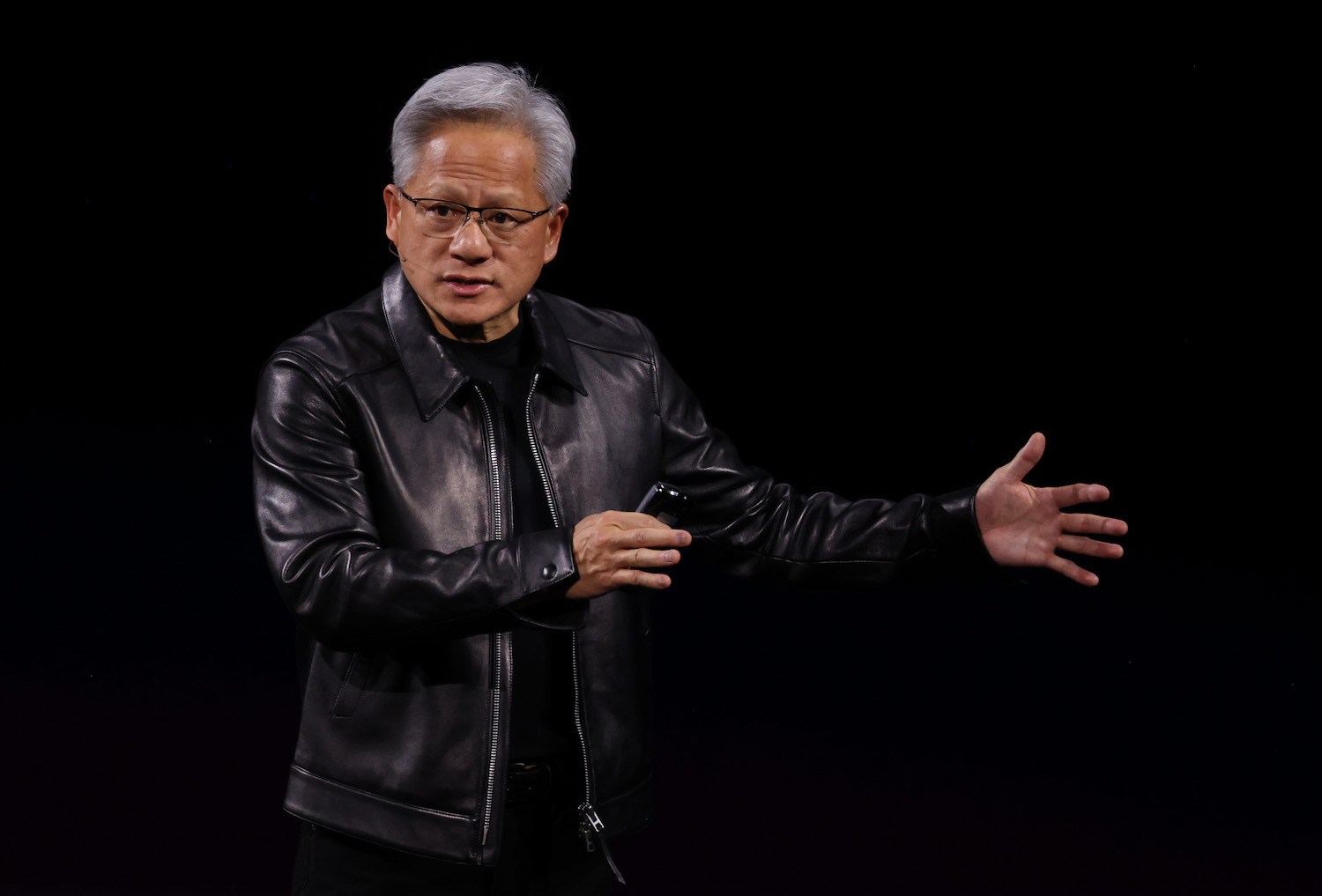
Nvidia, the United States’ foremost national champion in its effort to lead the global technology race, has been rocked by a scandal surrounding CEO Jensen Huang’s affair with a woman alleged to be a Chinese spy. Huang admitted to the affair in an email to Nvidia’s 42,000-plus employees on Sunday, apologizing to his wife and children for the “hurt” his infidelity caused as well as to the company and its employees. “Leading Nvidia is the privilege of my life,” Huang wrote. “My responsibility is to serve you and be worthy of your trust. I have fallen short of that responsibility. I am fully committed to Nvidia and will work to earn back your confidence.” Nvidia, the United States’ foremost national champion in its effort to lead the global technology race, has been rocked by a scandal surrounding CEO Jensen Huang’s affair with a woman alleged to be a Chinese spy. Huang admitted to the affair in an email to Nvidia’s 42,000-plus employees on Sunday, apologizing to his wife and children for the “hurt” his infidelity caused as well as to the company and its employees. “Leading Nvidia is the privilege of my life,” Huang wrote. “My responsibility is to serve you and be worthy of your trust. I have fallen short of that responsibility. I am fully committed to Nvidia and will work to earn back your confidence.” The affair has implications far beyond Huang and his family. As the world’s leading producer of advanced semiconductor chips used to power artificial intelligence models and data centers, Nvidia has become a critical node in U.S. national security; meanwhile, the global demand for its products has seen the company’s valuation balloon to more than $4 trillion. Export restrictions on Nvidia’s most advanced chips—particularly to China—have become a cornerstone of U.S. technology policy, and Huang has developed a close relationship with U.S. President Donald Trump over the past two years. Here’s what you need to know. The allegations first became public on Oct. 29, when the New York Times reported that U.S. intelligence had concluded that a Chinese businesswoman believed to be spying on behalf of Beijing had developed a “close relationship” with the Nvidia chief executive. The woman, Alice Huang (also known as Huang Le), was an executive at the Singapore-based data center company Megaspeed. According to U.S. intelligence, she was recruited by China’s main intelligence agency, the Ministry of State Security, to gather information on Jensen Huang and help China gain access to Nvidia’s most advanced chips, which have been restricted by U.S. export controls since 2022. Megaspeed had previously been investigated by the U.S. Commerce Department on suspicion that it was helping to smuggle Nvidia’s AI chips into China, a claim that Megaspeed has denied. A statement from December 2025 posted on the company’s website says investigations by the U.S. government and Nvidia have produced “no evidence of any violations concerning the illicit transfer of chips or any illegal activities” and that it adheres to “all applicable export control regulations.” It is not clear exactly what role Alice Huang currently plays at Megaspeed. The Singaporean company did not immediately respond to a request for comment from Foreign Policy, but it said in a statement to the New York Times that it took the allegations around her actions “extremely seriously” and would “conduct a thorough internal investigation.” Megaspeed’s website continues to list it as a key Nvidia partner, and Jensen Huang told Bloomberg in an interview last month that the relationship between the two companies was “normal and not unusual.” The Financial Times reported on Monday that Alice Huang had pitched Chinese investors touting her ability to secure advanced Nvidia technology. China has consistently denied spying on Jensen Huang, with Chinese foreign ministry spokesperson Guo Jiakun slamming the allegations as “purely unsubstantiated and directed at smearing China” in a briefing on Monday. Trump—who was reportedly briefed on the intelligence on Huang’s relationship with Alice Huang a year ago but did not act on it—is standing by the tech executive for the moment, telling reporters on Sunday that Jensen Huang was an “honorable guy” who has “done an amazing job for our country.” The U.S. president said he had not spoken to the Nvidia CEO about the allegations. “I think he probably has an excuse for it. You have to hear it,” Trump added. Last December, Huang successfully petitioned the Trump administration to relax some restrictions on sales of the company’s second-tier chips to China—giving the U.S. government a 25 percent cut of some sales in the process. The White House did not immediately respond to a request for additional comment from Foreign Policy on the allegations against Huang. Nvidia’s board of directors announced the launch of its own investigation on Sunday, which it said will be conducted by a “committee of independent directors, assisted by outside independent counsel.” “While the Board has no reason to believe that either national security or NVIDIA secrets were compromised, the Board’s inquiry will examine all available information,” the announcement said. The company also said Huang would continue in his current role during the inquiry. Huang said he would fully cooperate with the investigation. “I love our country and our company,” he wrote in his statement. “I am committed to protecting NVIDIA and supporting America’s national security. I am proud and grateful to be an American.” But the market is already reacting. Nvidia stock dropped more than 5 percent on Monday and has plunged by more than 15 percent in the past week. U.S. lawmakers also want answers. Republican Reps. Brian Mast, John Moolenaar, and Rick Crawford—who chair the House committees on foreign affairs, the Chinese Communist Party, and intelligence, respectively—sent a letter to Huang and Nvidia last week requesting that he testify in front of their committees on Nov. 18, giving him a deadline of Wednesday to respond. The scandal is likely to cast a shadow over Trump’s upcoming meeting with Chinese President Xi Jinping at the Asia-Pacific Economic Cooperation summit in Shenzhen, China, next week—the third time this year that the two leaders will be meeting. Huang attended both of the previous meetings in Beijing and Washington as one of several U.S. tech CEOs whom Trump invited to join. “I think it’s going to be much more difficult for [Trump] to embrace Jensen Huang politically or commercially in the midst of a major investigation that will be bipartisan on what happened, who knew, what was done about it,” said a former senior U.S. official, speaking on the condition of anonymity. “My guess is that the president may not say that he’s distanced himself, but I think Jensen will find that every time … he wants to meet with the president, it will be inconvenient on scheduling.” Asked on Sunday whether Huang would join Trump on his trip to Shenzhen, the president said: “I don’t know, but I’d certainly take him.”
What to Know About Nvidia CEO Jensen Huang’s Chinese Spy Scandal
Full Article
Original Source
Read the full article at Foreignpolicy →KhanList aggregates and links to publicly available news content. We do not host full articles from third-party sources. Always verify important information with original sources.