
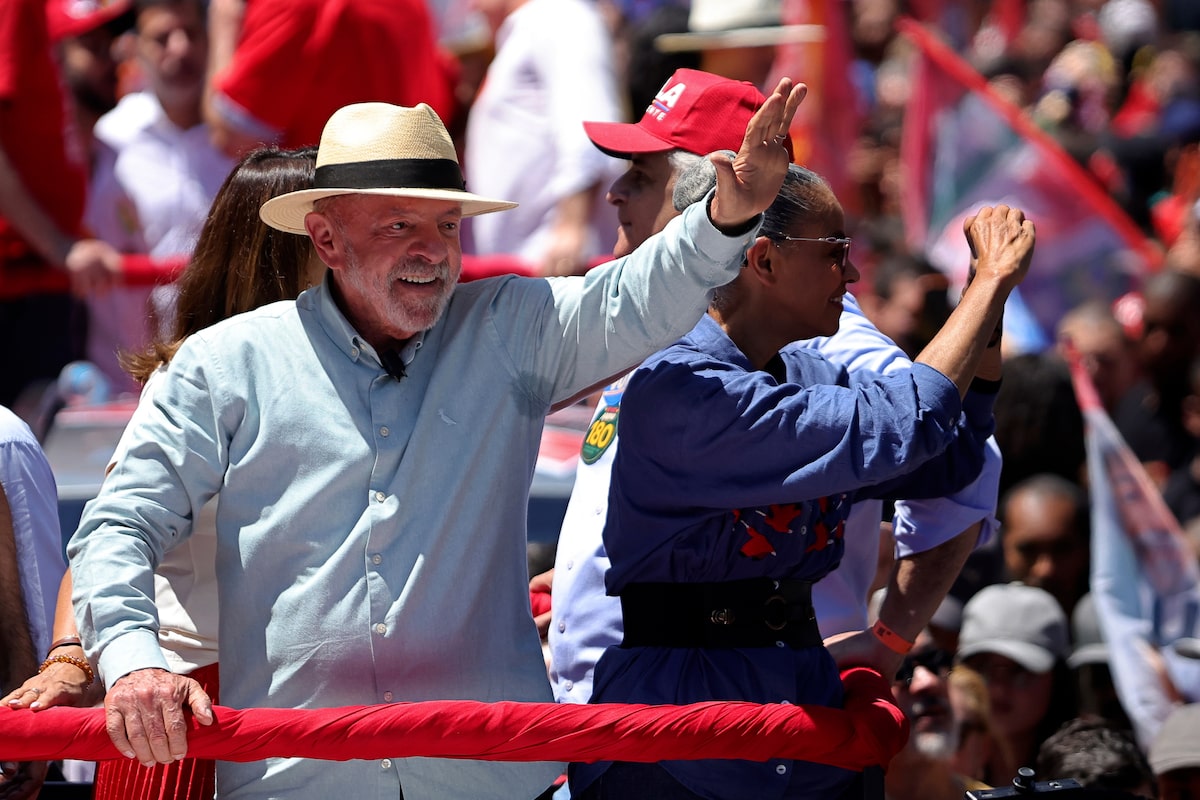
Open this photo in gallery:Brazilian President Luiz Inacio Lula da Silva, who is running for reelection, waves to supporters during a campaign rally in Sao Paulo, Brazil, on Sept. 26.Allison Sales/The Associated PressMillions of Brazilians will vote Sunday in an election dominated by two rivals: incumbent President Luiz Inácio Lula da Silva and Sen. Flávio Bolsonaro, the son of ex-leader Jair Bolsonaro who Lula defeated four years ago.Twelve candidates are on the presidential ballot, but only Lula and Bolsonaro are thought to have a real chance of becoming Brazil’s next head of state. If no candidate receives more than 50 per cent of the vote, the top two will advance to a runoff on Oct. 25.Lula, who at 80 is one of the world’s oldest heads of state, is running in his seventh presidential election. Bolsonaro, 45, is competing in his first and seeking to return his family name to power after his father governed Brazil from 2019 through 2022.The two represent opposite sides of the political spectrum, with conflicting visions on issues ranging from how to tackle organized crime to the relationship Latin America’s biggest country should have with the Trump administration.Here’s what to know about Brazil’s election.Open this photo in gallery:Opposition presidential candidate Sen. Flavio Bolsonaro, third left, waves to supporters during a campaign rally in Rio de Janeiro, Brazil, on Sept. 26.Silvia Izquierdo/The Associated PressElectronic voting machinesBrazil holds general elections every four years, and voting is mandatory. Those who fail to cast a ballot without justification face a small fine.On Sunday, Brazilians will choose a president, state and federal representatives as well as governors and some senators. Elections for mayors and city councillors are also held every four years, but in different years.Almost 160 million eligible voters will use electronic voting machines to punch in the digits corresponding to their candidates, preparing number-heavy lists.Brazilian authorities adopted electronic voting machines in the 1990s to combat fraud. In earlier local elections, ballot boxes were stuffed or stolen, and paper ballots were routinely falsified, according to Brazil’s electoral authority. The country held no direct presidential elections between 1960 and 1989, a period that included military rule from 1964 to 1985.Now, results are reported mere hours after polls close.In the lead-up to the 2022 vote, Jair Bolsonaro repeatedly cast unfounded doubts on Brazil’s electronic voting system. No significant fraud has ever been detected.Open this photo in gallery:A supporter wearing a shirt bearing Brazilian President Luiz Inacio Lula da Silva's campaign number 13 takes part in a carnival party in support of Lula.Silvia Izquierdo/The Associated PressA historically popular leader tries for a fourth termLula, who got his start as a union worker and has a missing pinky finger following an accident in a factory when he was 19, has at times inspired cultlike devotion. He spent more than a year in prison on corruption convictions that were later annulled before winning a third nonconsecutive term in 2022.Former U.S. President Barack Obama once called him “the world’s most popular politician.” But during his current term, Lula’s approval ratings fell as low as 24 per cent, one of his lowest levels. Voters’ concerns about crime and the cost of living could hurt him at the ballot box. He has promised to ensure Brazilians are the ones to benefit from the country’s rare minerals and resources, protect the Amazon rain forest and continue his flagship welfare program Bolsa Familia. Open this photo in gallery:Sen. Bolsonaro, center, gives a thumbs-up to supporters during a campaign rally ahead of the October general election.Silvia Izquierdo/The Associated PressSen. Bolsonaro promises to follow in his father’s footstepsWith former President Jair Bolsonaro barred from running as he serves a 27-year-long sentence for a coup attempt, his eldest son has largely embraced his father’s ultra-conservative agenda, while at times trying to strike a more moderate communication style to attract centrist voters.His hard line security policies have been a pillar of his campaign, and polls show these proposals are popular among Brazilians. The senator has pledged to fight the country’s criminal groups by building El Salvador-style megaprisons, following the Trump administration’s lead by designating transnational gangs terrorist organizations and reducing the age to be tried as an adult to 16.Deforestation in the Amazon rain forest, which plays a vital role in stopping climate change, hit a record high under former President Bolsonaro. His son has also denied human-caused climate change and only committed to stopping illegal deforestation.Sen. Bolsonaro’s admission of accepting millions of dollars from disgraced banker Daniel Vorcaro to produce a film on his father’s life has cast a shadow over his campaign. He is under investigation for corruption, money laundering and tax evasion in connection with the case.Open this photo in gallery:A supporter makes an 'L' sign for Lula with her hand during a carnival party in support of Brazilian President Luiz Inacio Lula da Silva.Silvia Izquierdo/The Associated PressTrump looms largeLula has repeatedly warned the U.S. not to meddle in Brazil’s elections. The Trump administration did not respond to a request for comment on whether it is seeking to interfere in the vote.Last year, Washington imposed 50 per cent tariffs on Brazilian goods, citing – among other reasons – the trial of Jair Bolsonaro, a Trump ally. Earlier this year, the U.S. imposed a new round of tariffs, citing unfair trade practices despite running a U.S. surplus, and classified Brazil’s biggest drug-trafficking groups as foreign terrorist organizations shortly after a visit to the White House from Sen. Bolsonaro. Lula opposed both moves.A victory by Sen. Bolsonaro would add Brazil to a list of Latin American countries – including Argentina, Chile, Colombia, Costa Rica and Peru – that have elected Trump-friendly governments in recent years. Lula has made defending Brazilian sovereignty a major campaign issue. In the days before the election, his team launched a Portuguese version of the Bad Bunny song, “Lo queue le pasó a Hawaii,” which invokes the U.S. colonization of Hawaii as a cautionary tale.
What to know about Brazil’s highly polarized presidential race
Full Article
Original Source
Read the full article at Theglobeandmail →KhanList aggregates and links to publicly available news content. We do not host full articles from third-party sources. Always verify important information with original sources.