
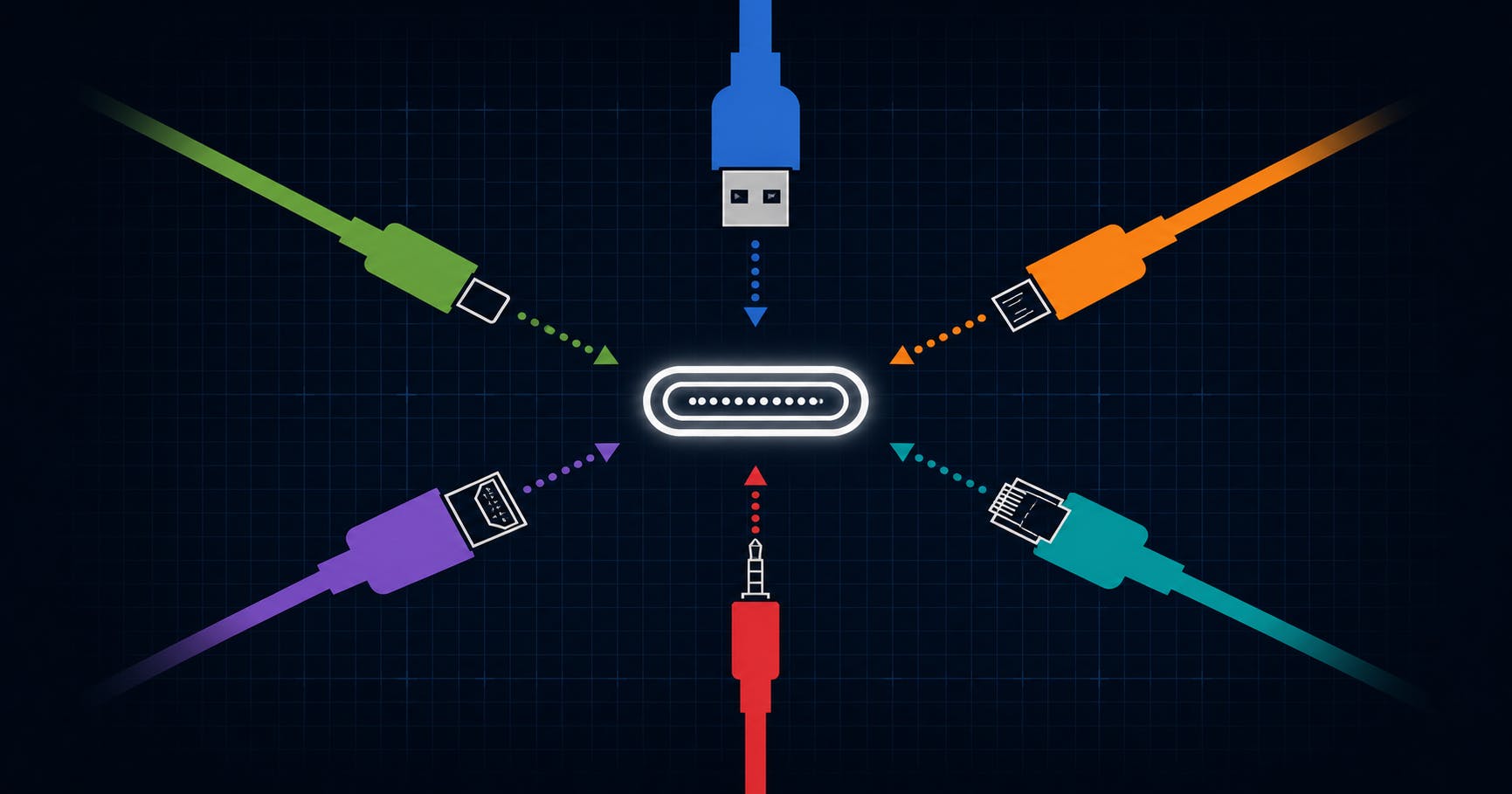
On August 6, 2026, six companies that compete on models, on platforms, and on talent released a shared specification. OpenAI, AWS, Microsoft, GitHub, Anysphere (Cursor), and Vercel jointly published Agent Plugins 1.0.0. It is an open, vendor neutral standard that lets developers package AI agent skills and tool connections into a single portable bundle. Google joined as a core maintainer within 24 hours. Anthropic created both underlying technologies the standard packages together. It was not at the table. The standard itself is compact. A compliant plugin is a directory containing a manifest and a skills folder with reusable instructions. It also includes an MCP server configuration. The promise is straightforward: build a plugin once and it follows your users across ChatGPT, Cursor, Copilot, and VS Code. Agent Plugins 1.0.0 is not about plugins. It is about the AI industry collectively acknowledging that the fragmentation phase is ending and the infrastructure phase is beginning. What the spec includes, what it deliberately omits, and who was absent from the coalition together reveal where agent based AI is actually headed. And what that means for the people who build it. What the Standard Solves The packaging problem is real. Before Agent Plugins, a developer who wanted their tool to work across multiple AI clients had to repackage the same capabilities differently for each one. A skill written for Claude Code used one format. The same skill for Cursor used another. An MCP server connection configured for ChatGPT needed a different wrapper for Copilot. The fragmentation was not a technical limitation - it was a coordination failure. The standard resolves this with a directory structure that bundles two established technologies. Agent Skills provide reusable instructions that teach an agent how to perform a task, along with scripts and reference materials. MCP servers provide connections to external tools, databases, and APIs. A plugin manifest ties them together with a name and schema reference. The implementation speed signals real demand. Within hours of the announcement, Peter Steinberger merged support for the Agent Plugins bundle format into OpenClaw. The pull request was straightforward because the spec is straightforward: a folder, a manifest, skills, and MCP configuration. Nothing more. What the Standard Deliberately Omits The omissions matter more than the inclusions. Agent Plugins 1.0.0 covers packaging. It does not cover security or trust verification. It leaves out publisher identity and code signing. It says nothing about sandboxing, permission models, or runtime behavior. Distribution and installation are left to individual platforms. The spec is explicitly marked as a Working Draft. This is not an oversight. It reflects the single hardest problem in production AI: no one has solved trust at scale. VentureBeat's Pulse Research across 157 enterprises found that 50 percent of organizations have shipped an AI agent that passed every internal evaluation and then failed a customer in production. Only 5 percent of enterprises fully trust automated evaluation today. Yet 66 percent are already engineering toward fully automated deployments with zero human in the loop, targeting completion within 12 months. The numbers do not add up. Autonomy is arriving faster than assurance. A study covered on Hacker News with 330 points found that humans missed one in three security threats while approving AI agent commands across 40,000 game runs. On Reddit's r/ClaudeAI, the most upvoted post the week of the announcement captured the sentiment with brutal economy: "AI Expert != Gets Shit Done." The models have never been more capable. The infrastructure around them - the harness, the evaluation framework, the permissions architecture, the rollback paths - has never been more strained. JumpCloud's analysis framed the gap precisely: "AI Agents Just Got a Standard. Now They Need an Identity Discipline." The standard unifies portable capabilities. It does not unify how those capabilities get trusted. Or verified. Or constrained. You cannot build a security model for plugins that do not share a common shape. Agent Plugins 1.0.0 provides the shape. The security model is the next battle. The Production Reality That Made This Inevitable The standard did not emerge from a working group that met in a conference room. It emerged from the widening gap between what AI agents can do in a demo and what they actually do in production. The capability story of 2026 is extraordinary. OpenAI's Astra solved ten major open math problems - including a 27-year-old conjecture and a 46-year-old sphere-packing bound - for roughly $200 per problem. Tencent's Hyra scientific agent closed a 50-year-old problem in additive combinatorics in 24 hours. Claude Opus 5 sits at number one on the Artificial Analysis intelligence leaderboard. The models work. The reliability story is the opposite. Team8's analysis, "Capable Isn't Reliable," documented the pattern: agents run perfectly for hours or days, then fail silently on a task that a junior engineer would catch. The failure mode is rarely the model getting the answer wrong. It is the model getting the answer right in a way that is subtly, catastrophically inappropriate for the context. A correct SQL query that targets the wrong database. A valid API call that uses production credentials in a test environment. A well-reasoned financial analysis that misses a regulatory constraint the agent was never told about. The agent almost forwarded a bank statement to a stranger, reported one user on r/artificial with 91 upvotes. "Barely anyone knows this attack exists." New Orleans announced it will use AI to answer 911 calls - a r/singularity post with 66 upvotes and 38 comments of raw public anxiety. This is the context in which Agent Plugins 1.0.0 arrived. It is not a solution to the trust problem. It is an acknowledgment that the trust problem is too large for any one company to solve alone, and that solving the easier problem - portability - is a necessary precondition for solving the harder one. What This Means for Software Engineering The consensus across every serious workforce analysis in 2026 is that AI is not eliminating software engineering. It is redesigning it. The scarce skill is shifting. It used to be "can you write the code." Now it is "can you judge whether the generated code is correct, whether it is secure, and whether it aligns with intent." Speed of validation is becoming the premium. Not speed of generation. But there is a structural risk the industry is only beginning to confront. Entry-level tasks - the bug fixes, the test writing, the boilerplate - are the tasks AI automates most reliably. Those tasks are also how junior engineers learn. Microsoft Azure CTO Mark Russinovich and VP Scott Hanselman have warned of an "AI drag" on early-career developers. Harvard research confirms junior employment is declining sharply in AI-adopting firms. University of Washington professor Amy Ko calls the current strategy - relying on existing senior talent while deferring investment in juniors - unsustainable. The economic pattern is Jevons Paradox: as AI makes software creation cheaper, demand for software expands. The US Bureau of Labor Statistics projects 17 percent growth in software developer roles through 2033. Anthropic is simultaneously predicting AI will automate most coding while hiring approximately 450 engineers at salaries up to $570,000 - not to type code, but to orchestrate systems, shape architecture, and govern AI output at scale. A self-taught developer on r/LocalLLaMA landed a Director of AI role with 346 upvotes of community recognition, suggesting the meritocracy pathway is still open, but it narrows with every task that used to teach the craft. The Agent Plugins standard accelerates this shift. When skills and tools become portable across AI clients, the value moves from "which platform has the best model" to "which platform has the best orchestration layer." The engineer who understands agent composition, context window management, evaluation harness design, and governance enforcement becomes worth more than the engineer who writes the fastest code. Three Predictions A security and trust specification will arrive within 18 months. The coalition that builds it will matter more than the coalition that built Agent Plugins 1.0.0. Identity is a hard problem. Sandboxing is a hard problem. Permission models are a hard problem. Whoever defines that governance layer defines the trust architecture for the agent economy. Anthropic has every incentive to lead it. The junior apprenticeship model will be rebuilt. Not by universities or bootcamps, but by the same companies that broke it. Preceptor based organizations where senior engineers are explicitly responsible for mentoring juniors in directing AI agents will become competitive differentiators. So will structured practice environments and intentional feedback loops. The firms that treat AI purely as a headcount reduction lever will discover, five years from now, that they have no senior engineers left. The first Agent Plugins marketplace will launch within 12 months, and the platform that controls it will extract value from the agent economy comparable to what app stores extract from mobile. The standard creates the packaging format. The marketplace creates the distribution channel. These are different layers, and the fight over who controls distribution has not started yet. What to Do Now Learn the specification. It is a Working Draft. It is short. It is readable. And it is still open to influence. Build a plugin for the tool you use most. The format is simple enough to produce something useful in an afternoon. The experience of packaging a skill and an MCP server together teaches more about where the industry is going than any blog post can convey. Pay attention to the security and trust conversation as it develops. The identity layer for AI agents will be one of the defining technical infrastructure problems of the next three years. The engineers who understand it will be among those most sought after in the industry. These are the people who can reason about agent permissions, sandbox boundaries, and trust chains. If you are a senior engineer, mentor a junior engineer. The pipeline problem is real. It will not solve itself. The organizations that solve apprenticeship in the age of AI agents will capture the next generation of talent. Everyone else will be left managing legacy systems with no one trained to understand them. Closing The agent interoperability moment is not about plugins. It is about the industry collectively acknowledging that the period of fragmentation centered on individual models is giving way to an infrastructure phase. During the fragmentation era, every platform built its own silo and competed on benchmark scores. In the infrastructure era, platforms compete on trust, on reliability, and on orchestration quality. The companies that understand this transition will define the next era. The engineers who position themselves at the orchestration layer rather than the code production layer will build it. Task decomposition is the skill that survives framework churn. It is the ability to break a complex goal into composable, verifiable, parallelizable units of work. Agent Plugins 1.0.0 is one answer to the question of how those units get packaged. The question of how they get trusted is still open. That is the one worth working on.
What the First AI Plugin Standard Reveals About AI's Future
Full Article
Original Source
Read the full article at Hackernoon →KhanList aggregates and links to publicly available news content. We do not host full articles from third-party sources. Always verify important information with original sources.