
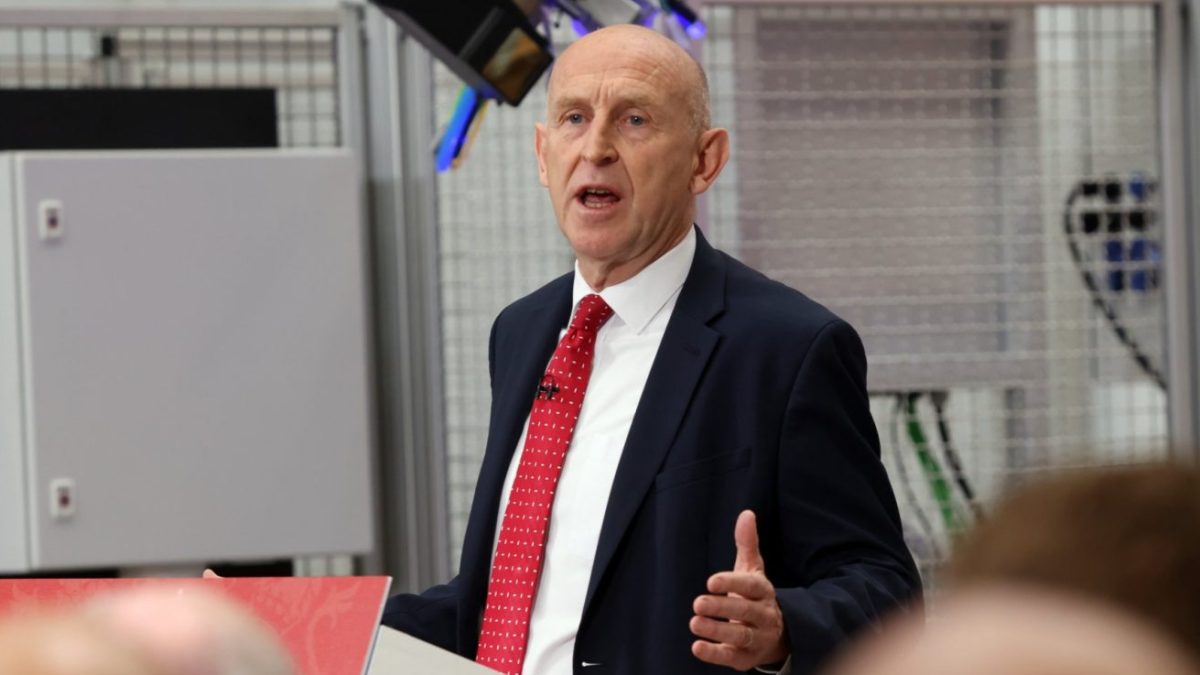
You can’t blame Chancellor John Healey for trying. After Sir Keir Starmer and former chancellor Rachel Reeves – understandably keen to disparage the Tories – talked the economy down and upset business and consumer confidence, Healey decided to take a Beach Boys approach: his first keynote speech was all Good Vibrations. To maintain the more upbeat note that has been a hallmark of Andy Burnham’s administration, Healey tried to tell a “new story of Britain”, involving “optimism, grit and resilience” and a greater partnership between central Government, local leaders and businesses. Shorts But all the evidence is to the contrary. Even as Healey was eating his breakfast on Monday morning, economic data was published showing house prices in Britain have suffered their first annual fall in three years as consumers grapple with higher borrowing costs. Meanwhile, the bond markets were choking on the Weetabix over oil prices. Government borrowing costs rose after the latest flare-ups in the Middle East. Britain’s bond yields – aka what the Treasury pays to borrow money – rose at the fastest pace in Europe in early trading after the latest rise in oil prices. Some estimates suggest higher borrowing costs could take £12bn off the Government’s £23.6bn buffer against its fiscal rules. This makes for an even trickier Budget in late October. Up to another £4bn is expected to have evaporated as a result of lower-than-forecast net migration. Meanwhile, the VAT cut on electricity bills needs to be paid for as well. With borrowing at an all-time high, the signs all point to higher taxes or slashing spending. All signs point to higher taxes or cut spending That’s especially true if Healey tries to hold on to something approaching the headroom he inherited. The Chancellor said: “The Prime Minister and I are in lockstep in our commitment to meeting the fiscal rules at the upcoming Budget, to balancing the books with a buffer to protect against uncertainty. “To controlling borrowing to bear down on inflation and reducing long-term pressures on our public finances.” Healey started his speech with the bad news, firmly blaming the Tories for austerity, Brexit and the Liz Truss mini-budget. No word of censure, though, to Reeves and Starmer for pushing up employers’ national insurance contributions. Healey was in Coventry, just a few miles down the road from where Jaguar Land Rover is planning to cut thousands of jobs to save costs following competition from China for cheap cars, US tariffs on UK vehicles and the after effects of a cyber attack. The Chancellor also outlined his ambitions for pushing public finance institutions, known as PuFins, to deploy more investment into the private sector. These are state-owned, taxpayer-funded institutions that use public money to provide loans, equity investments and guarantees to the private sector. Healey essentially set out an economic vision that costs him nothing. He announced cutting the “sludge” of Government red tape, including that big infrastructure projects will no longer face the hold-up of judicial review from objectors. The other part of his prescription for growth comes through greater devolution to regions outside London. Healey unveiled a £150m fund for companies in the north of England, which is part of a wider plan to generate more economic growth around the UK. In Treasury terms, this is pocket money. UK is uniquely susceptible to inflation Who’d be Chancellor these days? We are in a new world: markets have now got AI companies issuing long-dated maturities too, meaning they don’t just have to trade in countries’ debt. Donald Trump’s Iran war is impacting around the world. But while Healey is not the only finance minister suffering from the volatility, the UK is uniquely susceptible to inflation given how tightly it controls the supply and the prices of the workforce, energy, land and capital. The speech seems likely to be followed up within weeks with a don’t-rock-the-boat Budget. Key decisions, including when the UK will be spending 3 per cent of GDP on defence, have been deferred until next year. Healey’s appointment as Chancellor had suggested support for the defence spending target by 2030. Delaying the decision until the 2027 spending review will lead to another six months of the same unsettling speculation that characterised Starmer’s tenure. Healey’s bluff, trustworthy Yorkshireman approach is reassuring. But the country needs more than good vibrations. As he took over, Burnham promised the biggest change in 40 years. Little sign of it yet.
What the Chancellor isn’t telling you about tax rises
Full Article
Original Source
Read the full article at Inews →KhanList aggregates and links to publicly available news content. We do not host full articles from third-party sources. Always verify important information with original sources.