
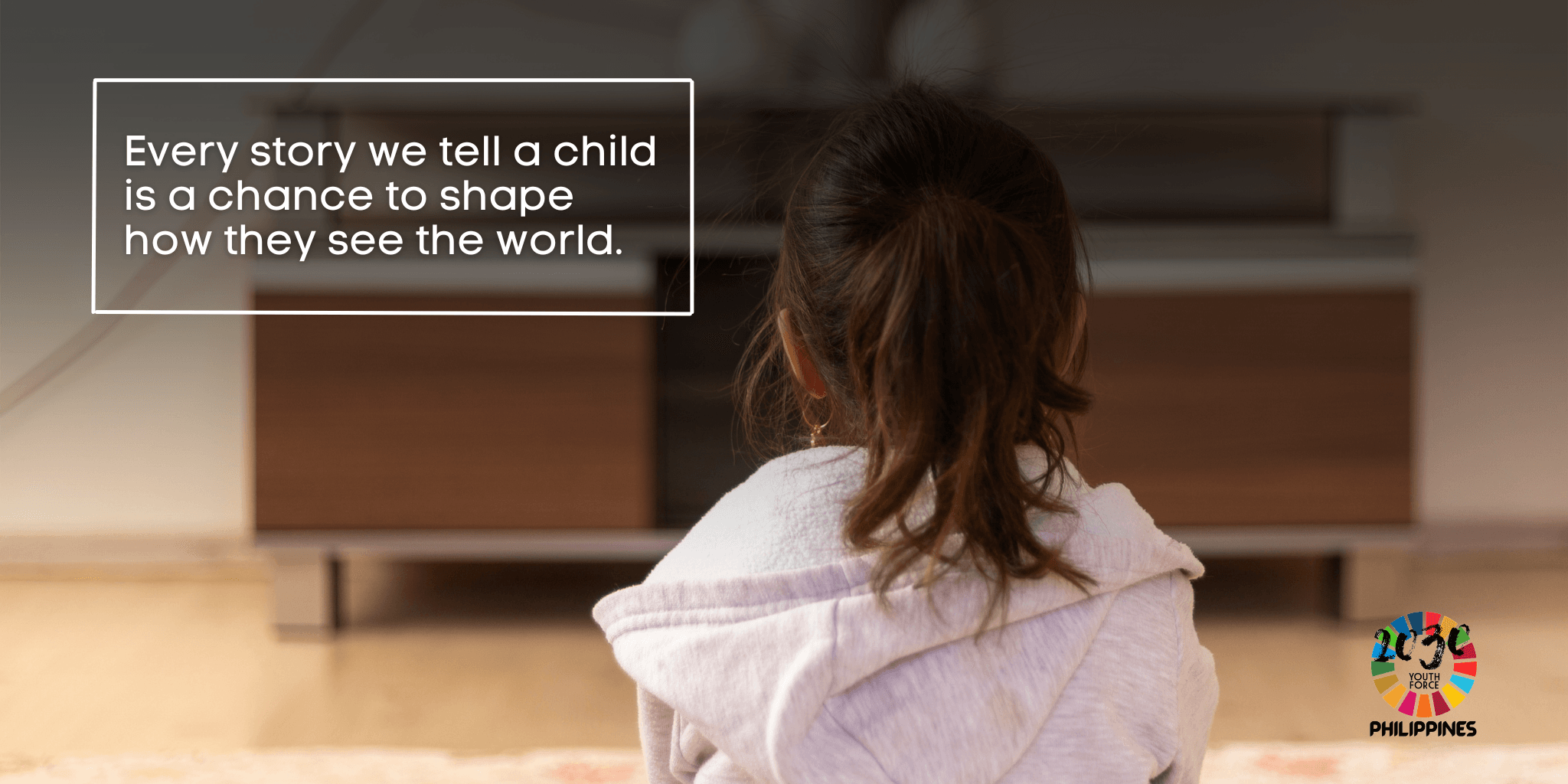
What do children remember from the stories they watch? Sometimes, it is a character who made them laugh. A song they could sing by heart. A lesson they carried long after the episode ended. For many of us who grew up in the 90s, it was Bayani, Sineskwela, MathTinik, and other programs that made learning part of childhood. We watched them because they were entertaining, but somewhere along the way, they taught us how to think, how to understand the world, and sometimes, how to imagine a better one. We may not have realized it then, but those stories were shaping us, and that is the power of media. A story can make a child curious, it can make them question what they see, teach them to empathize with someone whose life is different from theirs. It can give language to something they have experienced but did not know how to express. But the opposite can also be true. A story can normalize violence, it can turn someone’s suffering into spectacle, it can make harmful behavior seem ordinary, or make a child believe that what they are experiencing is something they simply have to endure. And today, children are bombarded by more stories than ever before. They encounter them not only on television, but through YouTube, TikTok, across streaming platforms, games, social media, and the endless scroll of a digital world designed to capture their attention. But when everything is competing to be seen, what happens to the stories that deserve to be heard? This is why child-friendly media matters. Not because children need to be protected from every difficult story, but because they deserve stories that help them understand difficult realities without taking away their dignity, their curiosity, or their hope. Through institutions like National Council for Children’s Television (NCCT), they recognize the responsibility to help create a media environment where children are not simply audiences, but young people whose rights, experiences, and perspectives matter. Because creating content for children is not simply about making something colorful, entertaining, or easy to understand. It is about asking: What kind of world are we helping children make sense of? This responsibility becomes even more important when telling stories about children themselves. As journalist and documentarist Kara David reminds us through her work and advocacy on responsible journalism, stories involving children require extra care as they must be the first priority. Behind every statistic is a child. Behind every headline is a person. And behind every story is a life that should never be reduced to a shocking image, a viral moment, or a convenient narrative. Children deserve to be represented not merely as victims of the world’s problems, but as people with voices, dreams, agency, and dignity. Perhaps this is why documentary storytelling matters. A documentary asks us to slow down, look closer, listen longer, and to sit with stories that algorithms might otherwise ask us to scroll past. Now in its 10th year, NCCT’s DokyuBata continues to provide a space for stories that put children and young people at the center. For a decade, it has helped keep alive the idea that children’s stories deserve to be documented, not because they are always easy or pleasant, but because they are real, important, and worth listening to. In a time when attention is increasingly measured in seconds, telling a meaningful story becomes an act of intention. It says: This story is worth your time. This child is worth listening to. This experience should not be forgotten. And perhaps that is what media literacy should ultimately help us understand. It is not enough to teach children what to watch. We must also ask ourselves: What are we giving them to watch? And when they look back at the media they grew up with, will they find stories that helped them become more compassionate, more critical, more informed, and more hopeful human beings? The stories we tell children today become part of how they understand themselves and the world around them. So let us tell stories that do more than fill their screens. Let us tell stories that open their minds, affirm their dignity, deepen their understanding, and remind them that they, too, have a place in shaping the world. – DokyuBata Dekada is still accepting submissions until September 17, 2026, at 11:59 PM. Because sometimes, the story that changes how a child sees the world is simply the story someone chose to tell. Entry Form: bit.ly/2026DBEntryFormContest Mechanics: bit.ly/2026DBContestMechanicsQuestions and inquiries: dokyubata@ncct.gov.ph
What Stories Will Our Children Grow Up With?
Full Article
Original Source
Read the full article at Youthforceph →KhanList aggregates and links to publicly available news content. We do not host full articles from third-party sources. Always verify important information with original sources.