
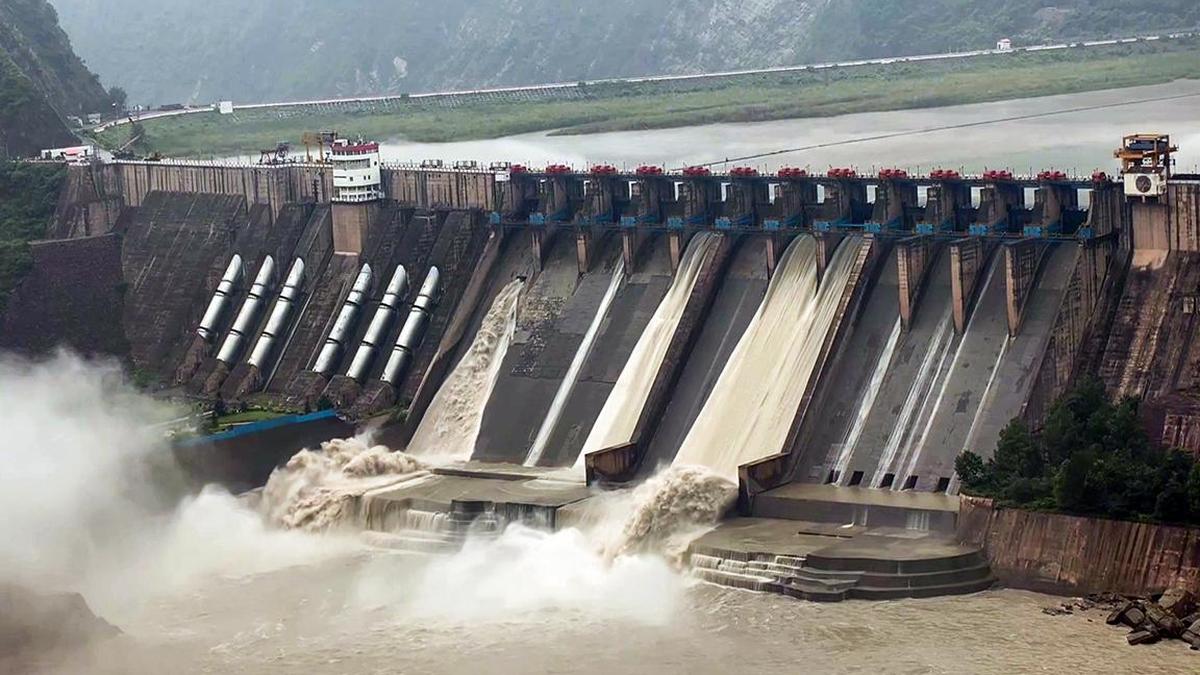
Multiple open spillway gates of the Salal Dam following continuous rainfall in the upper catchment areas of the Chenab. | Photo Credit: ANI Imagine yourself as a bird soaring high up in the sky. Your bird’s-eye view of the unfolding landscape far below includes a silvery ribbon meandering along mountain slopes. You follow this ribbon as it gets wider and wider and then breaks up into several tributaries before it finally gets swallowed up by the ocean. Yes, this shimmering ribbon is a river. It may have been born from a tiny spring gushing out of the earth or from the melting snows of mountain peaks.Helping humansRivers, as you know, have made history. They have given birth to civilisations like those on the banks of the Indus. They have been a source of food and livelihood and also offer a myriad of benefits such as transportation, irrigation and others. For this reason, Indians revere our rivers. But rivers also help in other ways that we tend to overlook. They give rise to mangrove forests and wetlands, and support a plethora of life. The rich biodiversity around rivers helps control climate change.Humans tend to use our intelligence to modify the natural resources around us. So, we build dams across rivers. These huge reservoirs of water help generate electricity, store excess rainwater, and prevent flooding of the neighbouring land. But dams also change the riverine ecosystem and drastically alter the environment downstream. The river undergoes physical, chemical and biological changes. Can you guess how?When a dam is created, vast tracts of forest land get submerged, rendering the fauna in them homeless. Certain fish, such as salmon, need to swim from the sea upstream into the river to spawn. But the dam wall blocks their movement, preventing them from reproducing. This, in turn, affects the other animals that feed on salmon.Rivers carry a lot of silt with them, which makes the soil around deltas extremely fertile. But a dam blocks this silt from flowing further downstream and reaching the deltas. An aerial view of water being released from the Kabini Dam in Mysuru | Photo Credit: - A huge dam can also trigger an earthquake! The weight of millions of gallons of water can exert tremendous pressure deep into the Earth’s crust, triggering seismic activity. In 1967, the Koyna Dam in Maharashtra led to an earthquake measuring 6.3 on the Richter scale.The volume of water flowing downstream is greatly reduced when a river is dammed. This adversely affects communities living along the riverbanks.Thus, while development and infrastructure are necessary for progress and comfortable living, protecting rivers and avoiding interference with their flow are also important so they can continue to sustain us. Published - September 18, 2026 10:16 am IST
What stopping a river entails
Full Article
Original Source
Read the full article at Thehindu →KhanList aggregates and links to publicly available news content. We do not host full articles from third-party sources. Always verify important information with original sources.