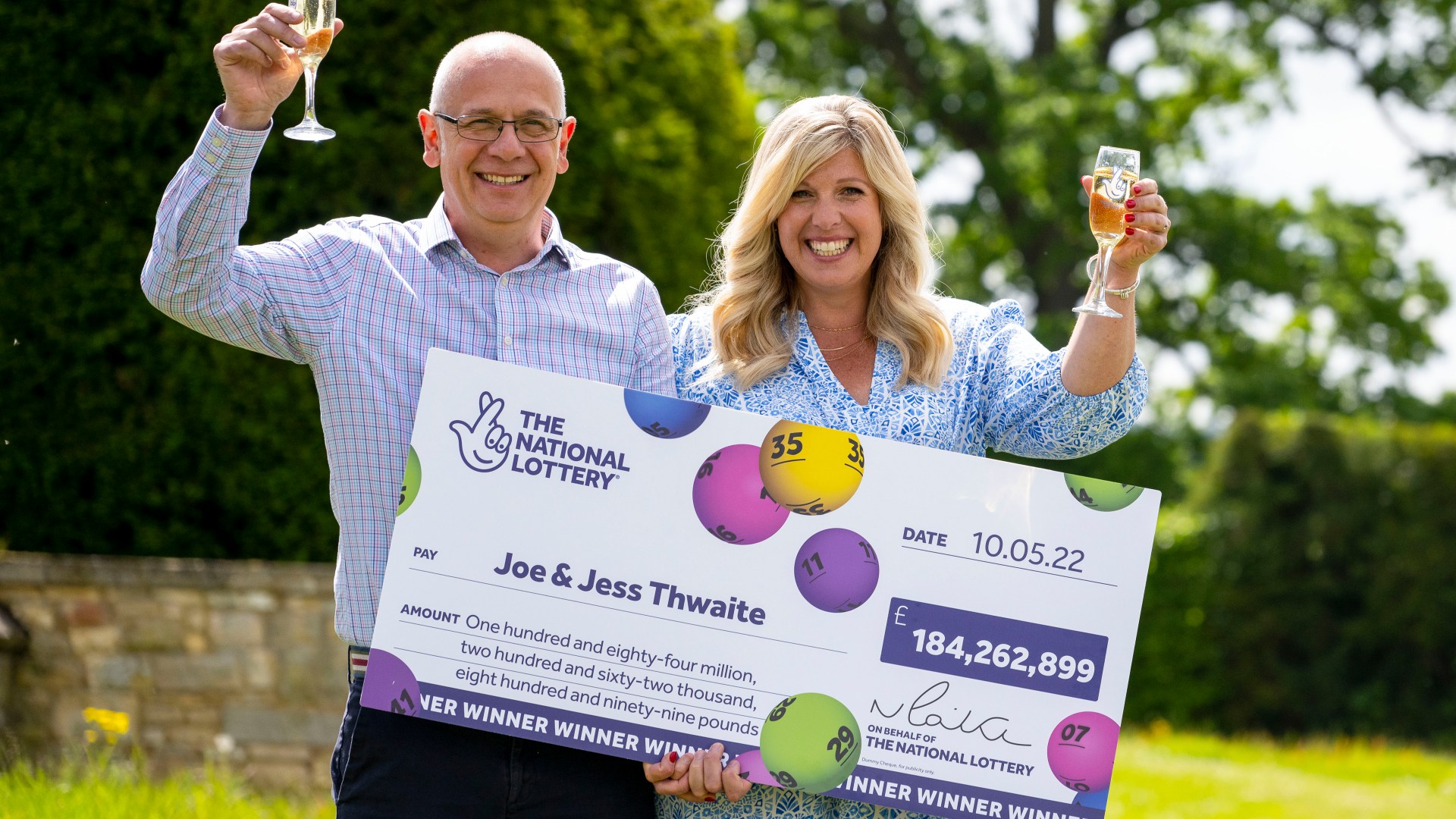
IT’S the conversation everyone has had down the pub – what would you do if you won the lottery? From buying a flashy motor and handing in your notice to jetting off to the Caribbean, everyone has an idea of what their first act as a millionaire would be. Powerball lottery came to the UK for the first time this week, after originating in the US Credit: AP Lottery winner Michael Carroll admitted having to having 19.7g of cocaine plus a number of other drugs offences. Credit: PA:Press Association GIRL, 16, WINS £1.8M ON LOTTERY was the front page of the Sun on 1 july 2003 Credit: News Group Newspapers Ltd Sixteen-year-old, Callie Rogers from Cockermouth in Cumbria celebrates, Tuesday July 1, 2003, after winning £1.8 million on the National Lottery, becoming the second youngest jackpot winner. Credit: PA:Press Association But there’s always one question – would you end up blowing it all? After Michael Carroll, the self-styled “Lotto Lout”, squandered his £9.7million fortune and Britain’s youngest jackpot winner Callie Rogers admitted burning through her £1.8million windfall, overnight millionaires became synonymous with boom and bust. Sign up for The Sun newsletter Thank you! According to the man who’s spent years advising Britain’s biggest lottery winners, however, the reality couldn’t be more different. As the £1billion UK Powerball launches this week, Andy Carter, senior winners’ adviser at Allwyn, which runs The National Lottery, has lifted the lid on what really happens after someone scoops a life-changing jackpot. From personal “fixers” and exclusive WhatsApp groups to why most winners don’t even quit their jobs, it’s a world few people ever get to see. Mr Carter says: “Around the country, in pubs and clubs and cafés, people meet and they talk about what they would do if they won the lottery. “Everyone does it – I do it, and I’m not allowed to play! And then when they win, those things never happen because life becomes more serious.” Even after years of breaking the news, Mr Carter says many winners refuse to believe it’s real. Most read in Money With fraudsters becoming increasingly sophisticated, plenty assume the life-changing phone call is simply another scam. “People are in disbelief, particularly with online wins because they don’t have a piece of paper in front of them,” he said. “They’re in shock, they’re in denial, and people are wary of scams. But once you talk them through the security measures and they start checking their numbers, that initial shock begins to wear off.” Once the disbelief fades, there is another surprise. Unlike most lottery prizes, the £1billion UK Powerball jackpot isn’t paid in one eye-watering bank transfer. Instead, the prize is spread over 30 years, with winners receiving one payment every year on the anniversary of their win. Mr Carter says: “It’s almost like buying a massive pension for somebody, really. We work with an annuity company who sets it up, and then they get one payment on an anniversary every year for 30 years.” While an ordinary pension pot is turned into an income for retirement, he said the process is much the same – only with hundreds of millions of pounds at stake. The National Lottery of winners Mike, 50, and Andrea, 43, Law from Bromsgrove who won £2 million on the Lotto jackpot. Credit: PA Joe and Jess Thwaite from Gloucester have become the United Kingdom’s biggest ever National Lottery winners. The couple scooped £184 million in the draw Credit: Splash That also means far more paperwork than a conventional National Lottery win, where the money can normally be transferred within days. Winning the jackpot, however, is only the start. Every Powerball winner is assigned a team to help them adjust to their new life. Alongside lawyers, financial advisers and wellbeing specialists, they are also given access to a little-known concierge service known simply as The Fixer. “We have a concierge service called The Fixer,” Mr Carter says. “If you’ve won the Powerball and you want to take all the extended family on holiday by private jet, how do you arrange one? I wouldn’t know, but there are people out there who do.” Carter recalls helping one winner fulfil a lifelong ambition to play Elton John’s piano, while another asked for help pulling off a surprise proposal at the top of the Eiffel Tower. The team has also arranged private concerts, luxury holidays and once-in-a-lifetime experiences that would be almost impossible for most people to organise on their own. “There has certainly been a shift since I first started advising winners,” he said. “People have moved away from luxury goods. They want experiences.” But Carter says the biggest help often comes from other winners. Every jackpot winner is invited to join exclusive WhatsApp groups with fellow millionaires. At the same time, regular meet-ups give them the chance to speak to people who’ve already navigated the extraordinary highs – and unexpected challenges – of becoming an overnight millionaire. “The best thing you can do is go and have a cup of tea with somebody else who’s won as well because they’re the people that understand,” he says. “They’re the people that have been through it already.” Another surprise is how many winners decide to keep working. Despite suddenly having enough money to never work another day in their lives, many don’t rush to hand in their notice. Once the excitement settles, plenty discover they still want the routine, purpose and friendships that work brings. Mr Carter said: “People think they’re going to stop work, but actually most don’t. “They might reduce their hours or change what they do, but work gives people structure. It gives them a reason to get up in the morning.” For Mr Carter, perhaps the biggest lesson after years of guiding Britain’s newest millionaires is that winning rarely changes the person – but it often changes life for everyone around them. “If your brother’s won £322million and he wants to help you out, you’re going on that journey with him. If your best mate’s won £322million and he wants to help you out, you’re going on that journey with him,” he says. “It’s not just one lottery winner. It’s their family and friends as well.” After years of watching ordinary people become overnight millionaires, his biggest takeaway is a simple one. “Money doesn’t change people. It just gives them more options,” he says. Is Powerball worth it? By Adele Cooke, Senior Consumer Reporter The overall odds of winning any Powerball prize in the UK is one in 14. In comparison, your odds of winning the National Lottery are currently one in 9.3, although this will increase to one in 4.9 from June. Meanwhile, there are usually around seven jackpot winners each year across all the current participating states. But while these may sound like good odds, the Powerball is still not worth playing on average, according to Ben Parker, a senior lecturer in statistics at Brunel University of London. He said: “Your long term fate is almost surely to lose. In the new Powerball you’ll win less often than the Euromillions or the old fashioned National Lottery, but if you do win you’ll win a bigger amount.” That’s because as with all National Lottery games, for every £1 you play, 50p goes into the prize pot, while 50p is spent on supporting charities and managing the lottery. There’s a very faint chance of winning but you are still likely to spend more entering than you will earn in prizes. If you played the Powerball three times a week for ten years then you would play around 1,500 times. You would have spent around £6,000 on tickets but on average you will only get £3,000 back, Ben said. But it’s important to remember that some weeks you’ll win big while others you’ll lose money. Comment now
What REALLY happens when you win the lotto from secret fixers to winners’ group chat & why most people don’t quit work
Full Article
Original Source
Read the full article at Thesun →KhanList aggregates and links to publicly available news content. We do not host full articles from third-party sources. Always verify important information with original sources.