
Two weeks after Israel’s national elections, opposition leader Gadi Eisenkot has been given a chance by President Isaac Herzog to cobble together a government.But with neither Eisenkot nor Prime Minister Benjamin Netanyahu’s coalition securing the 61 seats needed to secure a majority in the Knesset, who eventually forms the next administration is far from clear.As Eisenkot huddles with members of his alliance and negotiates with potential outside partners who could support his coalition, including Arab parties, Netanyahu remains ensconced as a caretaker prime minister. And if Eisenkot fails to form a government, Herzog might approach Netanyahu to see if he can form a workable coalition government.This transitional status creates a unique political landscape where the incumbent lacks a popular mandate but retains the keys to the state’s most powerful institutions.“Netanyahu lost the priority of forming the government, but he did not lose the current premiership,” Ehab Jabareen, an analyst and Palestinian citizen of Israel, told Al Jazeera. “His power now lies in that his opponents need an agreement to remove him – and their differences are the reason for his current [political] survival.”In the meantime, Jabareen explained, Israel sits in a “constitutional paradox”: The prime minister does not enjoy a popular mandate.So what does that mean for Israel, and what powers does Netanyahu enjoy as a caretaker prime minister?The big pictureIsrael has no single constitution but instead relies on a series of what are known as Basic Laws as its foundational legal principles.Under Article 30 of Israel’s Basic Law: The Government, the outgoing administration continues to operate seamlessly until there is a new one sworn in to replace it.“Consequently, Netanyahu and his government continue to work until a new government gains the confidence of the Knesset under the principle of government continuity,” Jabareen said.“And in this period, the government retains the powers of managing the state, security and foreign relations, but its use is subject to the duty of reservation and restraint.”Security and warThe most pressing concern surrounding Netanyahu’s caretaker status is his authority over the military.He has the authority to make new appointments and security-related decisions. But he is expected to face extra scrutiny over any moves because while he has legal powers, he does not necessarily enjoy “legitimacy” any more, Jabareen noted.While Netanyahu commands the executive branch, Article 40 of the Basic Law: The Government authorises his cabinet to launch a new war if it votes in its favour. He cannot start a new conflict on his own.But Netanyahu can strategically manipulate existing conflicts. “The most applicable scenario is not inventing a war from scratch, of course. We are talking about igniting and employing an existing threat. We are talking about Iran. We are talking about Lebanon,” Jabareen said.Because Eisenkot and his allies are not members of the current security cabinet, Netanyahu wields unchecked influence over how intelligence is framed.“What is presented to the ministers as a danger that can be contained? And what is presented as a final opportunity [for potential attacks] that cannot be delayed? This additional responsibility of the prime minister regarding the information that reaches the cabinet makes the presentation of options extremely important,” Jabareen explained.The Shin Bet, Israel’s internal intelligence agency, reports directly to the premier. That does not change while Netanyahu is a caretaker prime minister.Legislative boundariesWhile Netanyahu commands security forces, his domestic and legislative powers face functional limits.Maysara Bahr, a writer and expert on Israeli affairs, explained that financial decisions Netanyahu makes could impact whoever forms the next government.“Netanyahu can take some actions that may hinder the work of the next government,” so that it inherits greater “indebtedness”, Bahr told Al Jazeera.However, Netanyahu cannot push through new legislation to protect himself from his long, ongoing corruption trial.Political manoeuvringNetanyahu is using his continuing premiership to try to fracture the opposition bloc, Jabareen said.For instance, the analyst pointed out, Netanyahu is trying to appeal to Zionist voters and parties that represent them by portraying Eisenkot’s alliance as likely to be dependent on Arab parties.Bahr warned that Netanyahu might encourage domestic unrest to derail the transition, suggesting that the prime minister would do whatever it takes to try to stay in power.How Israel’s transition compares to other countriesIsrael’s transition process is not very different from that in other parliamentary democracies.In the United Kingdom and India too, for instance, caretaker prime ministers enjoy the same legal powers as premiers with electoral mandates.However, constitutional conventions and norms require them to avoid major policy decisions – including on questions of war – as caretakers.In the United States, meanwhile, an outgoing president works under a rigid two-and-a-half-month deadline towards the inauguration of his successor, facing intense congressional oversight regarding transitions, budgets and appointments in the interim.
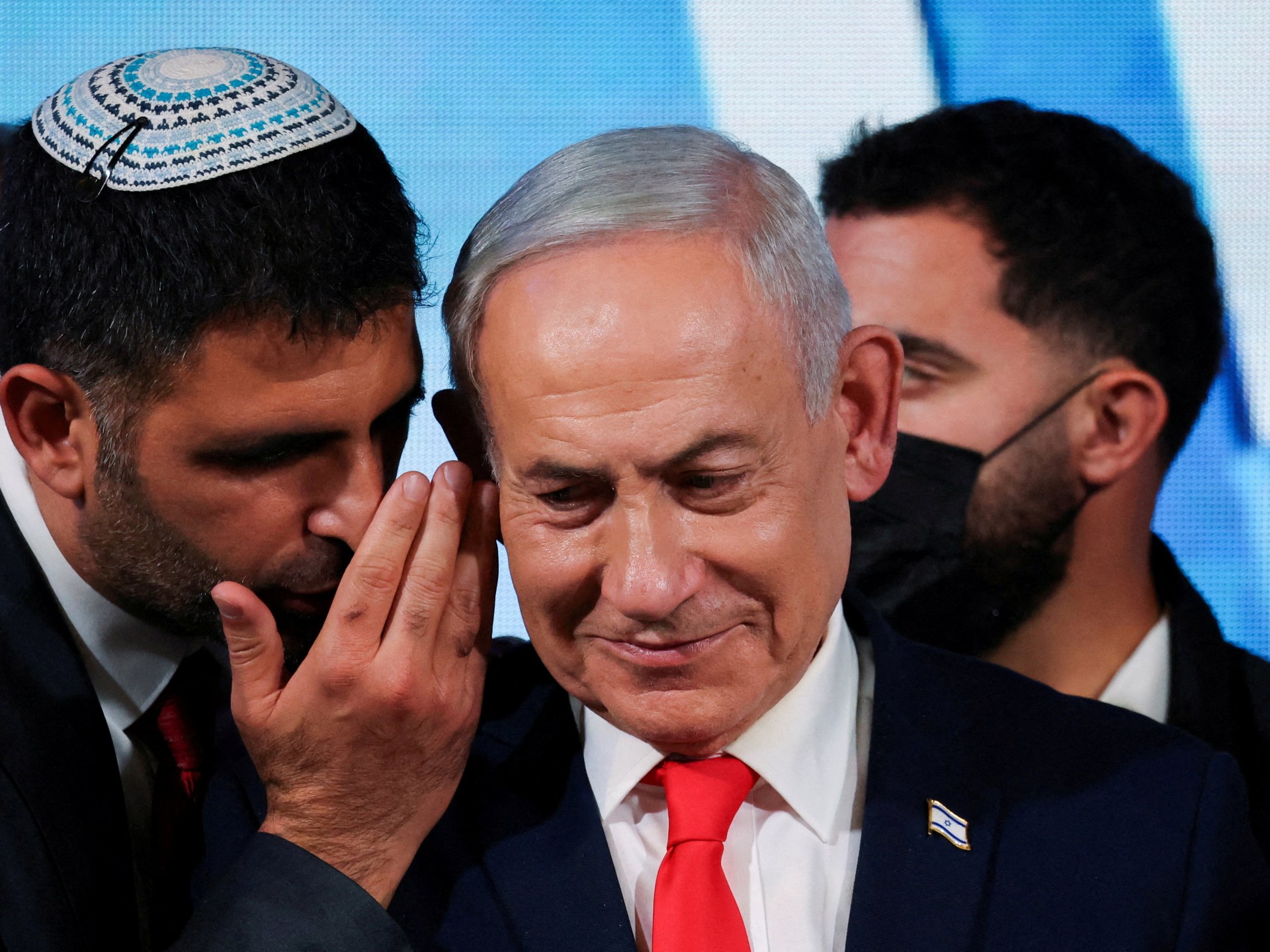
What powers does Netanyahu have as Israel’s interim PM?
Full Article
Original Source
Read the full article at Aljazeera →KhanList aggregates and links to publicly available news content. We do not host full articles from third-party sources. Always verify important information with original sources.