
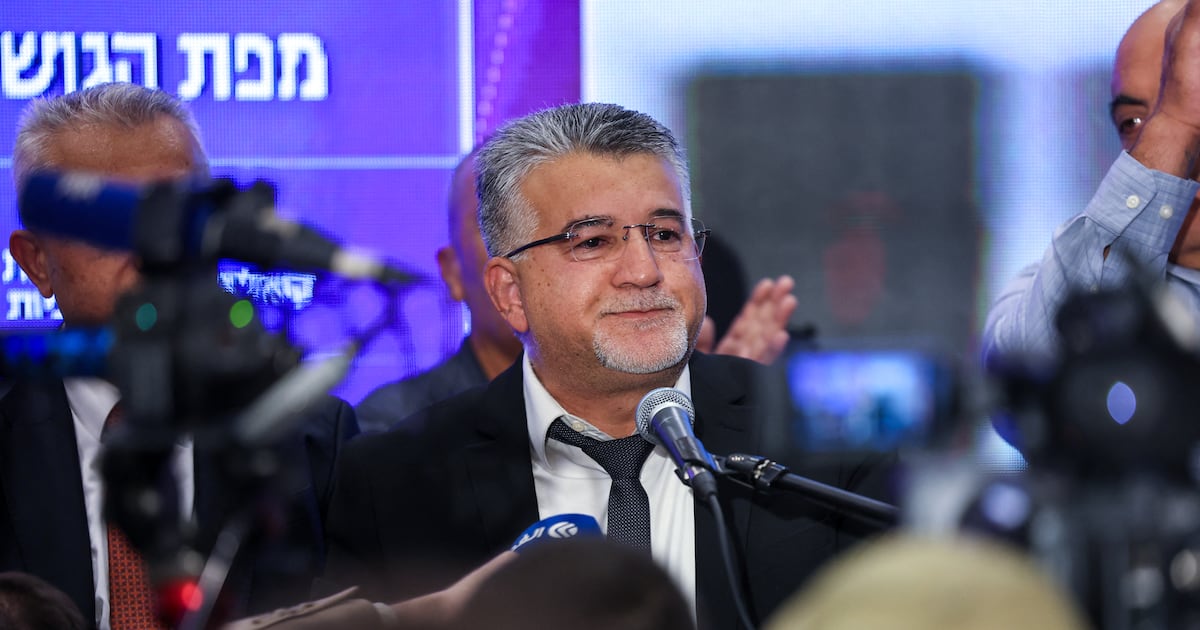
A turnout of 80 per cent in Tuesday’s parliamentary election by Israel’s Palestinian citizens has left them as potential kingmakers in a hung parliament with a record number of seats. Palestinian citizens, who make up about 21 per cent of the population, are descended from those who remained after Israel’s emergence in 1948.Why has this week’s overall Palestinian turnout reached 80 per cent?Palestinian citizens of Israel have been compelled to react politically to rising Israeli pressures and violence. They have been seen as a security threat, particularly since the October 7th, 2023 attack on southern Israel from Gaza by Hamas which killed 1,200 people. The Palestinian citizens voted to oust prime minister Binyamin Netanyahu after what they perceived as a failure to take action against Israeli extremists at home and settlers who have attacked Palestinians in the occupied West Bank. Some members of Netanyahu’s cabinet want to expel Palestinian citizens from Israel. Ahead of the vote, finance minister Bezalel Smotrich proposed a plan to “Judaize” areas around Nazareth and in southern Israel where many Arabs live, comparing it to Jewish settlement expansion in the occupied West Bank.READ MOREPollsters had predicted a high Arab turnout and, on election day, Netanyahu, Smotrich and far-right partner Itamar Ben-Gvir warned that Arabs were voting in large numbers, appealing to their own supporters to turn out.Are Palestinian citizens influential in Israel?Although there are about 2.1 million Palestinian citizens, the community has been politically marginalised. As they are neither Jewish nor Zionist, they are not accepted as political partners by most Israelis. How many Palestinian parties are there?There are two main Palestinian parties: the secular Joint List alliance and the fundamentalist Ra’am. Yousef Jabareen, the leader of the Arab-dominated Joint List, told Reuters this week that his party would seek to use its projected 12 seats “to facilitate getting rid of Netanyahu’s government and hopefully helping to change the political situation in Israel”.[ Israeli election deadlock leaves door open to fresh Iran strikesOpens in new window ]But Jabareen said the Joint List could not join a government with opposition leader Gadi Eisenkot at the helm because of its support for Israel’s military campaign in Gaza and occupation of southern Lebanon. However, he left open the possibility of bolstering Eisenkot’s bloc from the outside, propping up a minority government that could survive confidence votes. The second main Arab party, Ra’am, is led by Mansour Abbas, who joined Naftali Bennett’s government in 2021, the first time an independent Arab party entered an Israeli coalition. That government collapsed after 18 months, partly because of disagreements over the occupied West Bank.This time, Abbas, a dentist-turned-politician, has sought to make Ra’am a more attractive coalition partner, adding a Jewish former police official to its slate and saying he would join an Eisenkot-led government.How has Netanyahu responded to the success of the Palestinian parties?Netanyahu’s Likud Party said the elections were “stolen”. It said on X that “foreign entities” had sought to take control of the Knesset. The claim emerged after Israel’s internal security service made allegations to the election commissioner who certifies the official tally. The Arab parties denied any wrongdoing. Speaking to Al Jazeera, Ahmad Tibi of Joint List said: “There were no violations in the election, and the Likud allegations are the words of sore losers.”
What next for Israel’s Arab parties after huge Palestinian turnout for election?
Full Article
Original Source
Read the full article at Irishtimes →KhanList aggregates and links to publicly available news content. We do not host full articles from third-party sources. Always verify important information with original sources.