
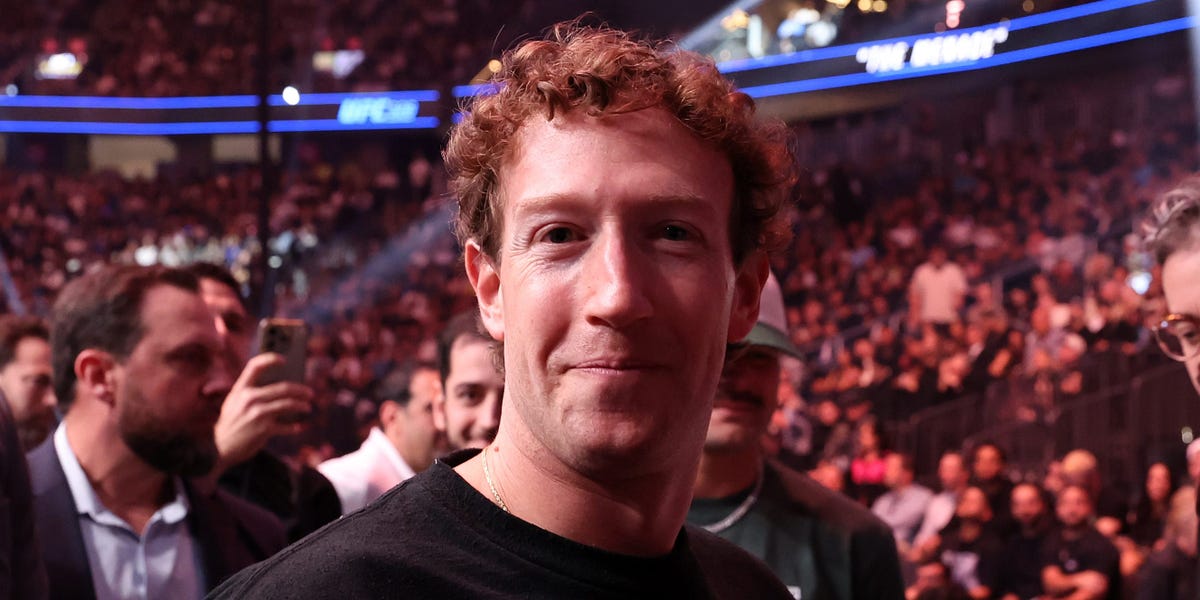
What Meta bought with its $18 billion settlement Meta CEO Mark Zuckerberg Ed Mulholland/Zuffa LLC Last week, when Meta went on trial over allegations that Facebook and Instagram were designed to addict kids, I hunkered down for weeks of testimony from executives, including CEO Mark Zuckerberg.Just eight days later, it was over. On Wednesday, Meta agreed to settle for up to $18 billion, cutting short a trial in which four states were seeking roughly $200 billion, and keeping Zuckerberg off the witness stand.The settlement is historic — the largest that a Big Tech company has ever paid to states.It's also easy money for Meta. Meta's payouts to the states will happen over an entire decade in guaranteed annual installments of roughly $1.17 billion — almost exactly, as one of its former engineering directors noted on X, what its Reality Labs division loses every 24 days. In just the last quarter, Meta made $16 billion in profit, and over $60 billion in 2025.That doesn't mean Meta gets a pass. For the first time, it will meaningfully change how its apps work for teenagers, including defaulting teen accounts to a two-hour daily limit, offering an option to make chronological feeds the default, blocking features overnight, and silencing most notifications during school hours.But it's in the fine print that these limits start looking less absolute. Parents can override them; messaging doesn't count toward the two-hour cap and remains available overnight; and videos that run at least 22 minutes don't count, either.More importantly, Meta has turned its own punishment into leverage against its competitors.It will pay roughly 70% of the settlement regardless, but the remaining 30% — more than $5 billion — will be paid only if YouTube and TikTok adopt similar restrictions and make comparable payments to states. On Thursday, Meta ran newspaper advertisements calling for both YouTube and TikTok to join the company "in supporting teens." One analyst even called the settlement a "win" for Meta.We've already seen a more extreme version of this play out. Last year, Australia barred kids under 16 from social media outright. Usage fell at first, then climbed right back toward pre-ban levels as kids found workarounds, Business Insider's Katie Notopoulos reported. By July, 26% of Australian 13 to 15-year-olds were back on TikTok. If an outright ban couldn't keep Australian teenagers logged off, a two-hour timer with a messaging loophole probably won't do much better.At least one American state isn't buying the "win" either. Florida refused to join the settlement and plans to keep fighting Meta in court."Trying to wipe out a decade of harm to the nation's youth with one month's cash flow is an insult," Florida Attorney General James Uthmeier wrote on X. "Corporations like Meta will never learn a lesson if they don't incur real costs for breaking the law."So what did $18 billion actually buy? A 10-year payment plan, a CEO who skipped the stand, and rules loose enough that the core business of keeping teens hooked barely has to change — all for a guaranteed annual bill of less than 2% of last year's profit.Sign up for BI's Tech Memo newsletter here. Reach out to me via email at pdixit@insider.com. Read next Pranav Dixit is the Meta Correspondent at Business Insider based in the San Francisco Bay Area. He writes about Meta’s products, policies, and internal workings while examining how the company’s decisions shape how billions of people connect and communicate.Previously, Pranav was the India-based technology correspondent for BuzzFeed News, covering the impact of Silicon Valley’s largest companies on the culture, society, and politics of more than a billion people in South Asia. He has also been a senior news editor at Engadget and ran technology coverage at the Hindustan Times, one of India’s largest national newspapers.Pranav’s reporting has shed light on the human consequences of Big Tech’s quest for growth in emerging markets, and sparked widespread conversations about the impact of American technology companies on the Global South. In 2019, he won Syracuse University’s Mirror Award for a boots-on-the-ground feature about how WhatsApp misinformation sparked gruesome lynchings in rural India. He has also reported from Kashmir, a volatile geopolitical hotspot, documenting the world’s longest-running internet shutdown.His work has been widely cited by major national and international publications, and he has been featured on the BBC, Al Jazeera, and podcasts such as Vox Media’s Land of the Giants to discuss his work. He has also spoken in journalism classes including at UC Berkeley’s graduate journalism program. His writing has appeared in The Guardian, Vox, Time, The Information, and Al Jazeera.Pranav moved to the United States in 2021 from New Delhi, India, to be a fellow at Harvard University’s Nieman Foundation for Journalism, where he studied the evolution of the American tech press and ways newsrooms around the world can cover technology and society more effectively.Got a tip about Meta or anything else in Silicon Valley? Contact Pranav via encrypted messaging app Signal (+1408-905-9124), or email him at pdixit@insider.com or pranavdixit@protonmail.com. You can also reach him on WhatsApp at +857-753-3949 or DM him on X (@PranavDixit) or BlueSky (@pranavdixit.bsky.social).Pranav keeps sources anonymous. Please use a non-work device to reach out.Expertise: Meta, Facebook, WhatsApp, Llama, AI, Threads, Instagram, Mark Zuckerberg, social media, platforms, immigration Meta Mark Zuckerberg AI More Trial Teens Social Media Lawsuits Big Tech
What Meta bought with its $18 billion settlement
Full Article
Original Source
Read the full article at Businessinsider →KhanList aggregates and links to publicly available news content. We do not host full articles from third-party sources. Always verify important information with original sources.