
By Nora Shenouda with Budapesti Corvinus Egyetem Published on 26 November 2026 - 15:15 GMT+1 Researchers from Corvinus University of Budapest and the Toulouse School of Economics have used artificial intelligence to analyse the popularity of 150 cities worldwide, based on seven criteria. Within a two-kilometre radius of the city centre Budapest ranks 10th, within five kilometres 15th, and across the entire urban area included in the study it comes 42nd. ADVERTISEMENT ADVERTISEMENT The research team examined 150 cities in 70 countries by analysing more than three million street images. In the project called StreetPulse they used artificial intelligence to assess the urban environment according to seven criteria: beauty, perceived safety, vibrant urban life, pedestrian-friendly design, historical character, comfort and perceived affluence. In the ranking based on Google Street View images, which looks at a two kilometre radius around city centres, Paris takes first place with 6.29 points on a 10-point scale. The French capital is followed by Amsterdam, Saint Petersburg, Barcelona and Vienna. With an average score of 5.83 Budapest ranks 10th, ahead of many other cities included in the list. In the historic inner city of the Hungarian capital Budapest scores 6.38 for historical character, 6.30 for perceived safety and 6.31 for pedestrian-friendly design. Beauty is rated at 6.05, vibrancy of urban life at 4.55, comfort at 4.82 and perceived affluence at 6.40 by the artificial intelligence system. When the five-kilometre radius is taken into account Budapest drops to 15th place, while across the entire urban area examined it ranks 42nd. In this latter comparison Geneva, Amsterdam and Vienna are at the top. Alongside the ranking focused on European cities and built on Google Street View images, a global comparison is also available that covers more than 160 cities, based on the analysis of open source images from the Mapillary and Panoramax databases. Here Venice, Paris and Amsterdam take the top three inner city places, while Budapest comes 26th. The two rankings each have different strengths and limitations. Google Street View provides high quality image data collected using a relatively recent and uniform methodology, but using these images involves significant costs. By contrast, the global ranking is based on openly accessible images, which makes the analysis more cost effective, easier to repeat and allows other researchers to build on the results. However, the quality of open source images can vary and they are updated less frequently, so they reflect the current state of cities less accurately. Help the research by comparing images! On the StreetPulse interactive maps available at cities.ccl.center anyone can explore the scores for different parts of a city, compare cities and create their own rankings. By comparing two street images users can also contribute to the research, helping to examine how closely AI assessments match people's impressions. The site also allows cities to be listed on the basis of a global database that studies how people perceive urban environments and seeks to understand human behaviour. The databases make it possible to analyse the data in more detail and to combine them with other data sources, for example revealing how motorways separate some parts of a city from each other or identifying areas perceived as less safe. They can be a valuable tool for local authorities, civil society organisations, businesses and everyone involved who wants to understand and improve the urban environment, see how the state of public spaces shapes everyday life and achieve a better quality of life by improving the surroundings. "We want to continue developing the StreetPulse platform, assessing cities according to an increasing number of criteria so that we can help municipalities improve the quality of urban spaces. To this end we welcome the involvement of researchers, local authorities and civil organisations that are ready to work with us," said César Hidalgo, lead researcher on the project and director of the Center for Collective Learning. A video overview of the project is available on YouTube: StreetPulse is based on more than a decade of work by the research group at the CIAS research institute of Corvinus University of Budapest and the Center for Collective Learning at the Toulouse School of Economics. Supported by the Driving Urban Transitions European partnership, the development can help both urban researchers and urban planners in their work.
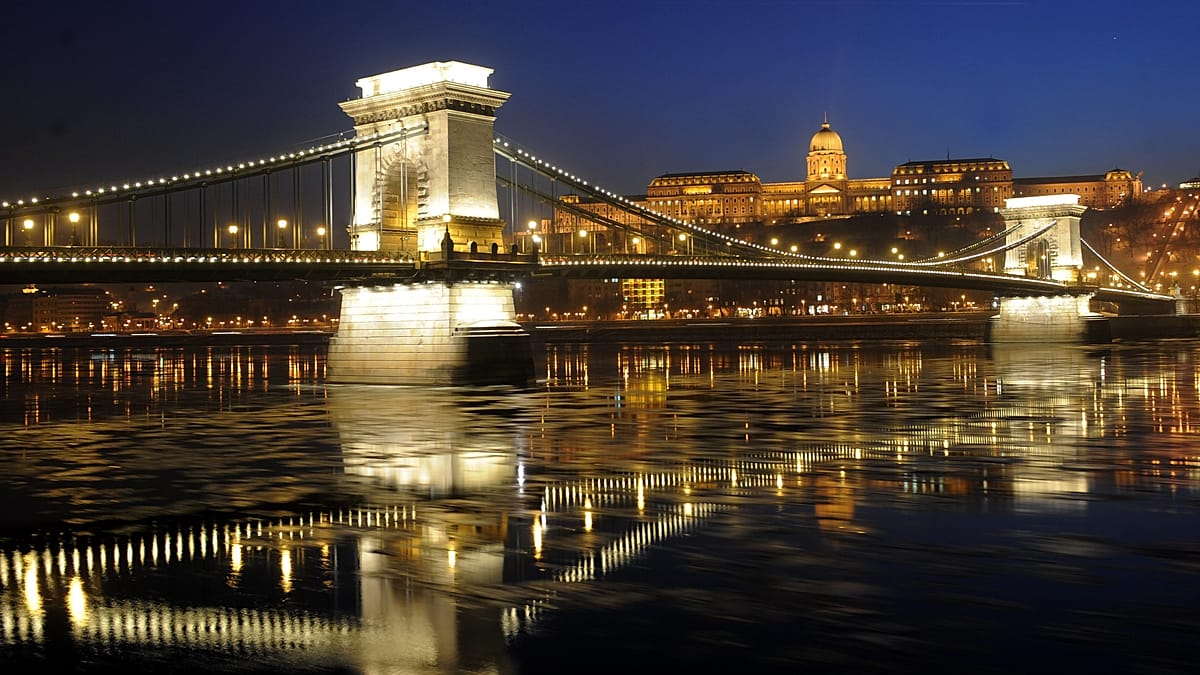
What makes a city attractive? AI ranks Budapest’s centre among the world’s top 10
Full Article
Original Source
Read the full article at Euronews →KhanList aggregates and links to publicly available news content. We do not host full articles from third-party sources. Always verify important information with original sources.