
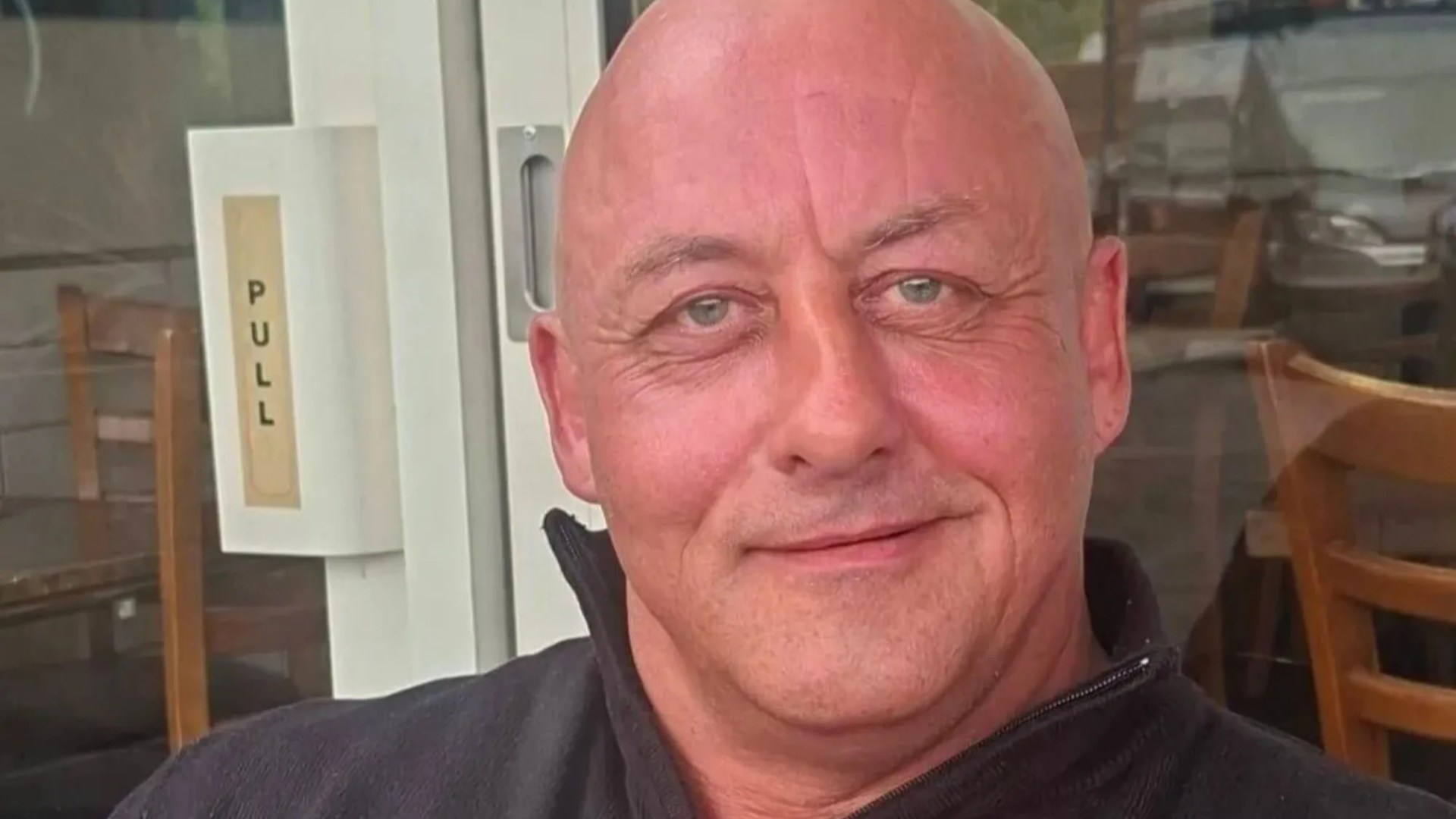
PAUL Knight used to sleep with his door wide open – despite having a serial killer in the neighbouring room. The 53-year-old spent a decade inside Broadmoor, rubbing shoulders with some of Britain’s most notorious criminals including The Yorkshire Ripper Peter Sutcliffe, “Freddy Krueger killer” Daniel Gonzalez and serial killer and cannibal Peter Bryan – but his recollections of his experience will shock many. A former patient of Broadmoor high-security psychiatric hospital has revealed what life was like after living behind its walls Credit: Alamy Paul Knight, 53, spent ten years at Broadmoor Credit: Supplied “You just become desensitised, you’re immune to who you’re around. When you think of evil, I’ve been around it,” he told The Sun. “I used to sleep next door to a serial killer. But in the summer, I used to leave my door open all night to sleep.” That desenstivity to his surroundings led him to described the experience as strangely “boring” – but to an outsider his reality was anything but. Life inside Broadmoor became Paul’s new normal but he said he lost all sense of reality and “when you lose reality, you lose yourself”. Paul was first jailed when he was 18 and had struggled with his mental health. He and ended up being diagnosed with schizophrenia and a personality disorder. And after an episode during which he attacked prison staff, he was sent to Broadmoor – where he would spend the next 10 years. Now rebuilding his life, Paul wants to raise awareness over mental health – and his penned a book about his experiences. Paul told The Sun how a three-month assessment turned into ten years in Broadmoor Credit: Supplied The 53-year-old was housed at the Old Broadmoor with the new Broadmoor pictured above Credit: Scott White and Hookins Paul says he was double-cuffed, forcibly medicated and accompanied by a four-man escort for the journey south to the notorious facility in Crowthorne, Berkshire. But as he approached the high-security psychiatric hospital’s looming Victorian gatehouse – which had seen countless monsters pass through its gates – he still questioned why he had been sent there. Little did he know that he would go on to spend the next 10 years of his life behind its walls. Paul spoke of his surprise at the time, saying: “I thought, ‘they’re not going to take me’. I’m not a major player, I’m not a serial killer or major murderer. “But it was my behaviour – it was me that kept me there and it was me that got me there.” In those first three months, Paul was placed on Luton Ward – one of the oldest parts of the hospital where patients are assessed. One of the most notable patients at Broadmoor was The Yorkshire Ripper, Peter Sutcliffe Credit: Alamy Paul says his room was two doors down from where Ronnie Kray used to be housed Credit: Getty But he was soon moved following two violent incidents. “My behaviour got seriously out of control. They couldn’t manage me. I smashed up their rooms,” Paul said. “As a person, I was quite unpredictable. When I did go off on one, it was quite a major incident.” But he says he became “desperate” and when his behaviour spiralled, he was injected with “liquid cosh”, a powerful drug to keep him sedated. “I’ve got all my risk assessments. Hostages ticked, weapons, all the bad stuff, all ticked,” Paul added. Paul was later designated as a “tilt high-risk” patient at Broadmoor and says he was detained under Section 3 of the Mental Health Act rather than through the criminal justice system. “Tilt high-risk” refers to a patient’s likelihood for dangerous behaviour – to either themselves or others. His initial behaviour saw him sent to Henley Ward – a high dependency care unit, best known for housing long-term detained patients – where he spent most of his years at the facility. His room on the wing was two doors down from where East-End gangster Ronnie Kray was housed during his 16 years at Broadmoor. But it was in the visitor centre or when he went to collect his medication that Paul would mingle with one of Broadmoor’s most infamous patients. Peter Sutcliffe – or more notoriously known as The Yorkshire Ripper – was sent to Broadmoor in 1984 after he was convicted of murdering 13 women. Paul recalled: “I’d be there with my mum or uncle. I said to my brother one time, ‘by the way, look over there. Who do you think that is?’ That’s Peter Sutcliffe, the Yorkshire Ripper‘. “When I told him he nearly fell off his chair.” He added that Sutcliffe used to have a number of “models” and female admirers visiting him at Broadmoor. “You’d think to yourself, what are these women doing visiting this man? It didn’t make sense to me at all.” Paul labelled cannibal killer, Peter Bryan, as ‘the most dangerous man I’ve ever met’ Credit: Paul Edwards – The Sun He also got to know ‘Freddy Krueger’ killer, Daniel Gonzalez Credit: PA:Press Association “People that have hurt him used to do it out of notoriety to get in the paper. Not because of what he done,” he added. Paul believes the same fate awaits Southport triple child-killer Axel Rudakubana who was moved to Broadmoor in July. “He’ll be attacked eventually for what he’s done,” the ex lag said. “Not as bad as in prison. But they’ll do it for the notoriety, not the crime itself.” Sutcliffe was blinded in one eye by Ian Kay, a fellow inmate, in 1997 – someone Paul said he was “very good friends with”. He added that he also got to know Daniel Gonzalez – known as the Freddy Krueger Killer due to his fascination with horror movies – “quite well” who murdered four people and injured two across two days in London and Sussex in 2004. Paul said: “I was quite pally with him. We used to go to the gym together when he was on the ward, when he was allowed. “His mum tried to get him help. When he first came on the ward, he had two nurses around him because he self-harmed. He tried biting out his own veins.” He recalled how Gonzalez was changed to a different ward and how two days later, “they found him in a pool of blood” after he had killed himself with a broken CD case. Paul also found himself around serial killer and cannibal Peter Bryan who, once detained at Broadmoor, killed fellow patient Richard Loudwell and planned to eat him. “I’d say he’s the most dangerous man I’ve ever met,” Paul said. “He didn’t give the vibe of ‘I’m a complete nutcase’. He was a very calm man. I used to see him when I went to therapy, we’d have little conversations.” But Paul said the reality of day-to-day life was “boring” with patients forced to spend all their time “sitting in the day room”. “In prison, they keep you locked up in your cell all day. In Broadmoor, they keep you locked out of your room all day,” he said. “You’re bored, drugged up. People are just sitting there, drugged out their eyeballs. “If you had the money, you could order a TV from a catalogue. I did a bit of table tennis, snooker, chain-smoking. That was about it. “They had fibreglass beds, fibreglass shelves. Everything in there was fibreglass, everything on the wall is plastic. If a spoon goes missing, there’s a major lock-down on the whole ward. Around eight years into his stint at Broadmoor, an emotional Paul recalled one incident where he saved the life of an elderly solicitor who represented another patient. He said he saw both go into a room when he started hearing a struggle and became convinced the solicitor was being attacked. “I got up, ran over, cranked open the door. That sort of situation, where you don’t know what you’re entering,” Paul said. During his time at Broadmoor, Paul became pen-pals with Charles BronsonCredit: Refer to source Bronson spent a stint in Broadmoor where he famously protested on its roof in the 1980s Credit: Getty “I got it right. He was smashing her over the head with a ceramic cup. Killing her. “I went running in there, pinned him against the wall. All the staff came on the ward, I didn’t want to let him go. “She survived and three months later, she come to visit me and said, ‘you saved my life’.” It was also while he was in Broadmoor that Paul became pen-pals with Charles Bronson, who spent a stint in the hospital himself from 1978. “I was speaking to him since 2002. He’s done drawings for me. He’s not talking to me at the minute,” Paul said. “I was friends with his brother Mark and his cousin was a witness at my wedding. “Since I’ve been out, I met up with him in 2014. I went to visit him in Wakefield on an open-visit.” He added that he thought Bronson’s treatment and being isolated in his cell was “unjust”. “Imagine having an hour a day on a Sunday day like this and you’re cooped up in your cell for 23 hours,” he said. But speaking from his own experience, Paul said if Bronson was ever released he would struggle to come to terms with civilian life. “Being institutionalised has got to be one of the biggest mind f***s there is,” Paul continued. “You lose reality, you lose yourself,” he said. He was freed from Broadmoor in 2012 following a tribunal where he grabbed the judge’s hand and said to her “thank you for having some faith in me”. But he struggled to fit back into normal life, saying: “I came out after doing 10 years and I found it hard crossing the road. I couldn’t gauge traffic. It was a different world. “We was on analogue TV when I went in with five channels, using DVDs and mini-discs.” Since leaving Broadmoor, Paul has married and settled into family life and has since written a memoir about his time at the facility with another one on the way detailing his life after. Speaking on his book, High Security High Risk: Memoirs of an Ex-Broadmoor Patient, he said: “I learnt a lot about myself, writing my book. “I want people to understand it isn’t a woe-is-me story. I understand I needed to be there, but the length of time I think was maybe a bit excessive. “But at the time I must have been a very dangerous individual. I was a dangerous man. I’m not proud of my behaviour. “If I didn’t go in there, I’d be dead or maybe I would have killed.” “The man I am today isn’t the man I once was. You can turn it around,” Paul added. “It’s hard sometimes, it’s not a walk in the park. I’m trying my hardest every day but I love life.”
What life is REALLY like inside Britain’s infamous Broadmoor – from a man who spent 10yrs there among infamous killers
Full Article
Original Source
Read the full article at Thesun →KhanList aggregates and links to publicly available news content. We do not host full articles from third-party sources. Always verify important information with original sources.