
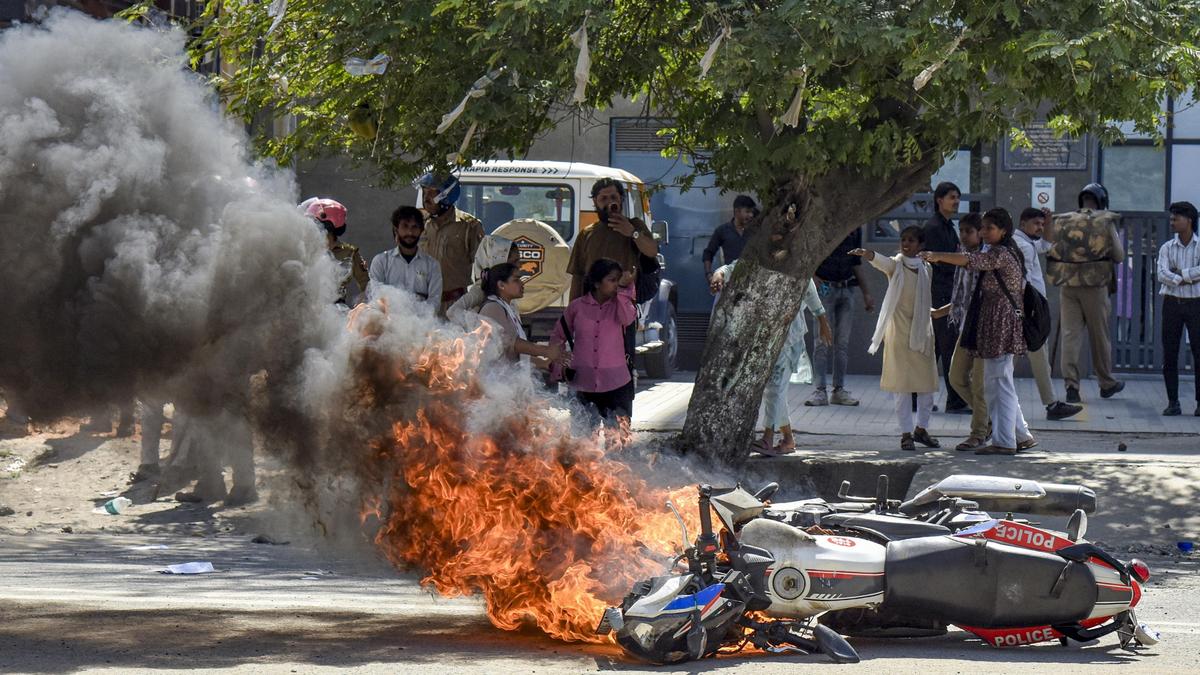
The story so far:The Noida workers’ protest, which escalated into widespread violence on April 13, has become a significant crisis for the Uttar Pradesh government. The unrest, primarily driven by demands for higher wages and improved working conditions, paralysed parts of the city’s industrial zones and triggered a massive security response. On April 14, domestic workers in high-rise buildings such as Cleo County also began protesting for higher pay. The administration took a dual approach of crackdowns and concessions. In a direct response to the unrest, the Uttar Pradesh government announced a 20-21% increase in minimum wages, effective retroactively from April 1. As Uttar Pradesh heads towards the election, the situation has given the Opposition an issue to corner the government on.How Noida workers’ protest landed a DU student in jail under NSAWhy did workers take to the streets?The most direct trigger was the Haryana government’s decision to raise its minimum monthly wage by 35%, from approximately ₹14,000 to ₹19,000. Workers in Noida, doing similar work just across the border, questioned why they were earning significantly less (around ₹11,000-₹13,000) for the same labour. The State typically revises wages twice a year based on the Variable Dearness Allowance (VDA), but workers argued that these routine adjustments were insufficient and left them with lower pay than in Delhi and Haryana, which also have a BJP government at present. A long-standing wage gap became an urgent survival issue due to the sudden rise in LPG cylinder prices and essential food items, driven by the West Asian crisis.Protesters also highlighted systemic violations of the eight-hour workday norm, arguing that 12-hour shifts have become standard in many Noida industrial units. Many workers reported being forced to work extended hours without a corresponding pay increase or any weekly off.Another major grievance is the informalisation of the workforce. Even in large registered factories, many workers lack written contracts or job security. They blamed middlemen/contractors for pocketing portions of their wages, with some being made to sign for double shifts but paid only for single shifts. Difficulties in accessing Employee Provident Fund (EPF) and insurance benefits, along with the absence of formal trade union representation, also came to the fore.How are the wages decided?Minimum wages in Uttar Pradesh are determined through a structured legal framework combining a fixed base wage with dynamic allowances. The process is governed by the Minimum Wages Act, 1948, and the Uttar Pradesh Minimum Wages Rules, 1952, though the transition to the new Code on Wages is influencing current decisions.Under the Code on Wages 2019, the Centre must set a national floor wage — a binding minimum benchmark. No State can go below it, though they set their own rates, often varying.The core wage structure is calculated based on norms established by the 15th Indian Labour Conference (ILC), which ensures a worker can support a family of three consumption units (self, spouse, and two children).What are workers’ demands?The primary demands include a minimum wage of ₹20,000 to ₹26,000 per month for unskilled workers to match the rising cost of living, and direct company hiring to prevent contractors from skimming wages.Workers are also demanding strict implementation of double pay for every hour worked beyond the standard shift, immediate clearance of pending bonuses from the previous financial year, and retrospective payment of wage arrears. They have called for a significant increase in House Rent Allowance, citing the skyrocketing rents in Noida sectors and villages.They also insist that any work beyond eight hours be voluntary and compensated as overtime, along with guaranteed paid weekly holidays. Additionally, they seek the establishment of functional Internal Complaints Committees to address workplace harassment and verbal abuse by managers, as well as the withdrawal of FIRs and unconditional release of those arrested during the April 13 protests.How is the government responding?While the protests have pushed the Centre to hasten the process of deciding the national floor wage, the Uttar Pradesh government is prioritising the resumption of production to protect Noida’s image as a safe investment zone, while using wage hikes to pacify the core workforce. Chief Minister Yogi Adityanath fast-tracked an interim wage increase of 20-21% specifically for the Noida and Ghaziabad regions. By making this retroactive, he aimed to put cash directly into workers’ pockets to offset war-driven inflation in fuel and food.To address concerns about temporary fixes, the State has announced plans to form a Wage Board tasked with developing a long-term salary structure that reflects regional cost-of-living differences, potentially narrowing the gap with Delhi and Haryana.The Labour Department has begun audits of industrial units to identify contractors who skim wages or fail to deposit EPF/ESI contributions. Sources say the government is pushing for direct bank transfers to ensure workers receive their full pay without middleman interference.The district administration has established sector-wise grievance committees where factory owners, worker representatives, and labour officials meet weekly to resolve local disputes.Industry bodies have noted that while some worker grievances are genuine, micro, small and medium enterprises are also under pressure due to global tensions, urging the government to maintain balance while addressing labour concerns.
What led to the Noida workers’ protest?
Full Article
Original Source
Read the full article at Thehindu →KhanList aggregates and links to publicly available news content. We do not host full articles from third-party sources. Always verify important information with original sources.