
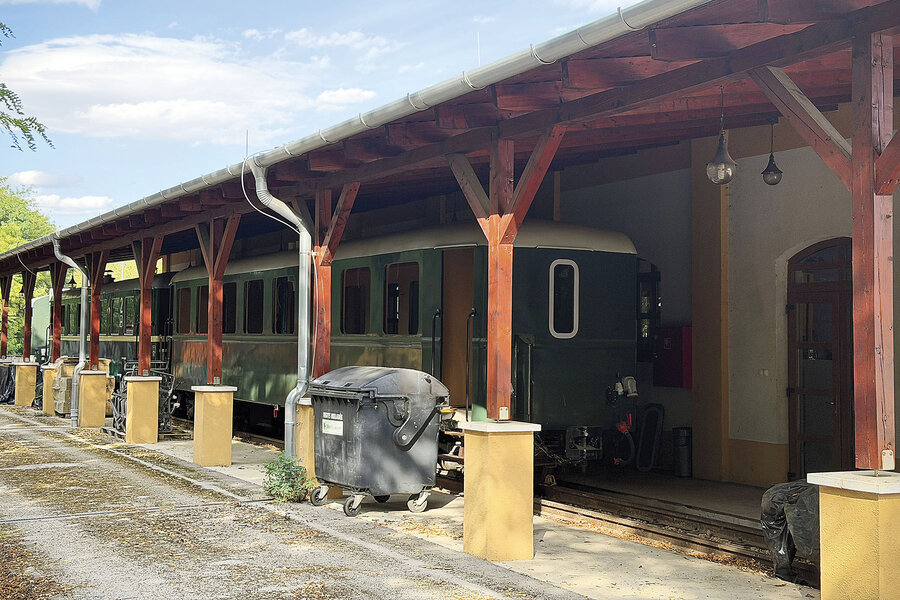
In her story this week, Dominique Soguel takes us to a village about a 40-minute drive outside of Budapest, Hungary. Its name is Felcsút, and it’s the hometown of former Prime Minister Viktor Orbán – a leader who embraced the concept of “illiberal democracy” and oversaw a government that watchdog groups claim was widely marked by corruption.Mr. Orbán still has a mansion in Felcsút. The village also boasts a commuter rail without operating trains, new but empty roads, and a sparkling, vacant sports stadium. These are the memorials of a system that critics say regularly allocated funds to please a leader and his associates instead of meeting the needs of citizens.Now, with a new government in power, the village is a test case for how a society can rebuild trust, and reweave a social contract that has been fraying for decades. Arthur Bright, Dominique’s editor on the Monitor’s international desk, told me that he had been interested in Hungary for just this reason.Countries around the world face weakened social contracts. We feature a number of those cases in this issue. Aakash Hassan, for instance, writes about how young Indians, facing high unemployment rates and repeated testing scandals, are losing faith in their educational system. Simon Montlake explores how many younger voters in the United States, unable to purchase homes and increasingly economically stressed, are pushing back against an older political class they see as out of touch. Mark Sappenfield looks at the unraveling of long-held norms in Europe.But in all of these stories, our reporters are also keeping an eye toward what comes next. Because as Hungary demonstrates, a moment arrives when people begin to rebuild what has been broken. With Hungary, Arthur points out, there was “quick action, not just talk.” That’s in part because the European Union set clear deadlines for progress against corruption before it would release funds the country desperately needed. But it’s also because Hungarians are not only asking for change, but taking new steps to support it. Deepen your worldviewwith Monitor Highlights.Politics with respectGet political stories with respectful analysis.There‘s a world of new ideas in everyBooks newsletter.There‘s more to life, enrich yours withCulture & Learning weekly.Follow humanity‘s discoveries withScience & Nature stories in your inbox.Gain a spiritual perspectivefrom the stories in your inbox.Want to understand the deeper impact of critical events? Learn the Monitor‘s insight.Already a subscriber? Log in to hide ads. Ferenc Biró, president of Hungary’s Integrity Authority, has started to see a new shift in his work trying to unravel fraud connected to EU money. Although he still faces pushback and legal attacks from those who were connected to the old regime, as well as businesses who benefited under it, he is noticing that the public is “starting to provide tips that have more teeth – and, critically, supporting documentation,” Dominique writes.Many observers say that the lessons from Hungary could also include what doesn’t happen. As József Péter Martin, the director of Transparency International Hungary, tells Dominique, reforms should happen in an atmosphere of law and progress, not revenge. ALREADY A SUBSCRIBER? LoginReal news can be honest, hopeful, credible, constructive.The Christian Science Monitor was founded in 1908 to lift the standard of journalism and uplift humanity. We aim to “speak the truth in love.” Our goal is not to tell you what to think, but to give you the essential knowledge and understanding to come to your own intelligent conclusions. Join us in this mission by subscribing.
What it takes to rebuild
Full Article
Original Source
Read the full article at Csmonitor →KhanList aggregates and links to publicly available news content. We do not host full articles from third-party sources. Always verify important information with original sources.