
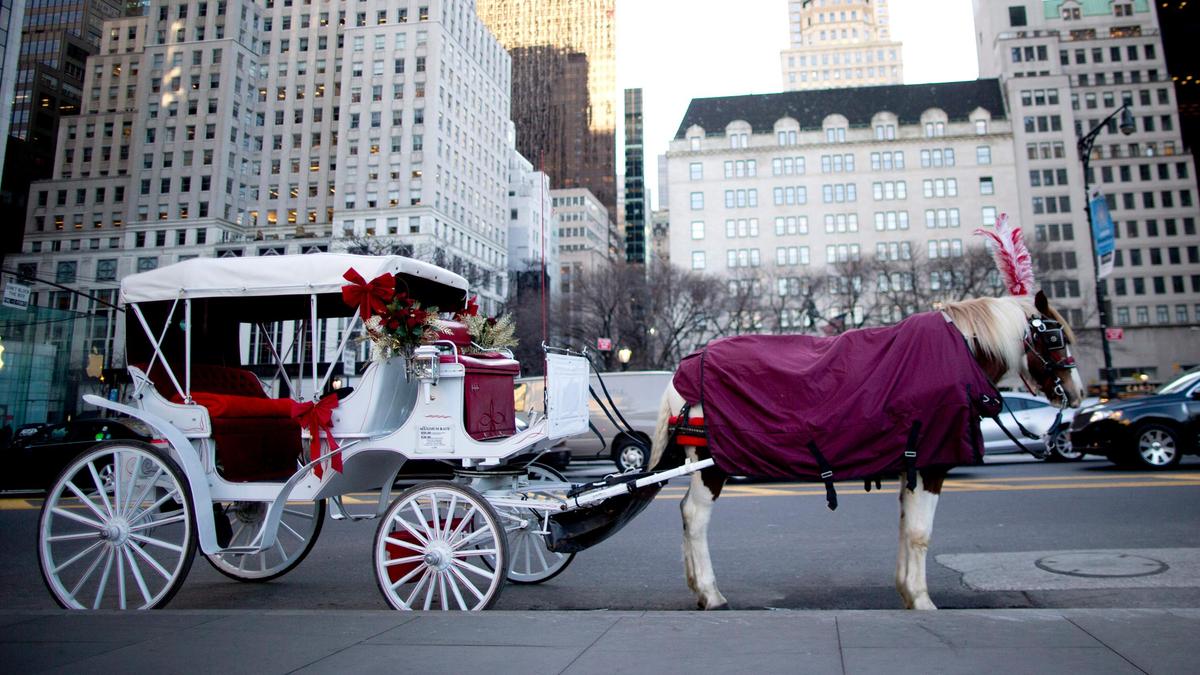
A carriage horse is covered with a blanket, waiting for customers on Central Park South in New York on January 13, 2016. | Photo Credit: AP In a significant move to end a longstanding tradition, the New York City Council voted on Thursday (October 22, 2026) to pass legislation banning horse-drawn carriages from city streets and Central Park. The bill, known as Romanch’s Law, ends the historic tourist attraction after decades of debate over animal welfare and public safety. The bill is named after an 18-year-old Indian tourist, Romanch Mahajan, who died following a carriage accident in Central Park earlier this year.Of the city's 51 lawmakers, 40 supported the bill, backed by Mayor Zohran Mamdani, who had earlier this month said the horse-drawn carriage industry would end. Seven council members voted against it and two abstained.What is Romanch’s Law?Romanch’s Law is a landmark municipal legislation that phases out the horse-drawn carriage industry in New York City by June 1, 2028. First introduced by Council Member Christopher Marte and championed by Council Speaker Julie Menin, the law prohibits operation of horse-drawn cabs while providing a transition plan for affected workers and humane protections for retired horses.The transition program includes job referrals, career counselling, hiring fairs and financial compensation for business owners. The law includes strict animal welfare safeguards requiring horse owners to certify by June 1, 2027, that no retired horses will be sold or transferred for slaughter or any inhumane purpose..The Central Park tragedy that changed the lawAlthough efforts to ban or reform carriage rides date back to 2007, it reached a tipping point following a fatal accident in Central Park on June 17, 2026, when the Indian tourist Romanch Mahajan lost his life during a family trip when a carriage horse bolted after the driver stepped out to take a photograph.As the horse panicked, Romanch’s mother fell from the vehicle and Romanch jumped out to assist her, sustaining fatal injuries. The tragedy led Speaker Julie Menin to convene city council hearing in July 2026 and Council Member Marte subsequently renamed his legislative effort, previously called Ryder’s Law to Romanch’s Law in honour of the teenager's memory.Political reactionsThe ban drew mixed reactions from across political and advocacy groups. Speaker Julie Menin and animal rights organisations such as PETA and NYCLASS celebrated the vote as a victory for public safety and animal welfare, with PETA offering fifty thousand dollars to assist with retiring the horses to rescue farms.Meanwhile, the Transport Workers Union, representing carriage owners and drivers, announced plans to seek temporary restraining orders in court, with their stance being that the law deprives business owners of their livelihood.Medet Fidan, a former cab driver who traded his steering wheel for a set of reins after ride-sharing apps upended the taxi industry, said he felt like he was being targeted.“I think the city is leaving us a big mess,” said Fidan, 56, who has been driving a carriage for 15 years. “We’re going to lose our businesses, we’re going to lose our jobs, we’re going to lose our livelihoods.”President Donald Trump also expressed scepticism on Truth Social, questioning why carriages were banned while cars remain permitted.The bill requires the city to develop a transition plan for the workforce by April and to consider a program to compensate carriage operators for their businesses and help with the disposition of their horses. Under the proposal, the horses could not be slaughtered. Published - October 23, 2026 12:14 pm IST
What is Romanch’s Law? New York City’s historic horse carriage ban after Indian tourist’s death
Full Article
Original Source
Read the full article at Thehindu →KhanList aggregates and links to publicly available news content. We do not host full articles from third-party sources. Always verify important information with original sources.