
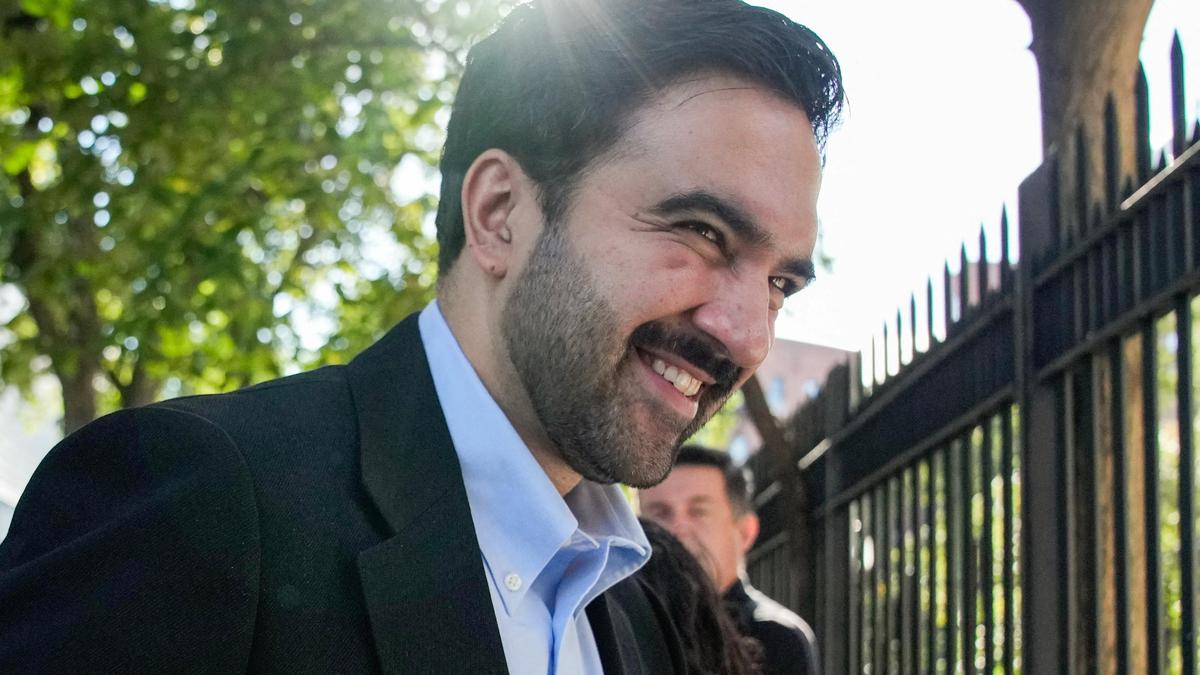
On October 1, New York City Mayor Zohran Mamdani announced the enforcement of the city’s ‘Click to Cancel’ rule that essentially lets residents cancel any subscription just as quickly as they can sign up — ideally with a single click.“No one should need 45 minutes of hold music to stop paying for something they never wanted,” said Mr. Mamdani. “If a company can take your money with one click, you should be able to get your money back with one click.”What’s the need for a ‘Click to Cancel’ rule?It can feel effortless to sign up online for a gym membership, a grocery subscription, a mobile phone plan, or a magazine delivery. When one wants to cancel the same service, however, the process is often so convoluted and time-consuming that customers end up keeping a subscription they’d prefer to eliminate.This unethical retention is commonly achieved through digital “dark patterns” that make it hard for customers to act in their own best interests. For example, subscription cancellation or account deletion buttons might be obscured by multiple menus and sub-menus designed to confuse users. Or, they may require the user to “click” through pages and pages of text, wasting their time and making them likely to give up.Sometimes, customers may not even know they are locked into a subscription, as a free trial is converted into a paid commitment without clearly seeking consent.Alternatively, many merchants who allow easy online subscriptions arbitrarily require buyers to send personalised emails or letters, spend time on the phone, or even visit the business in person just to end their subscription. This lack of parity ends up keeping reluctant customers locked into bad services.Consumers such as time-pressed workers, minors, vulnerable adults, seniors, and non-literate customers face extra hurdles when struggling to offload unwanted subscriptions. In extreme cases, customers may even have to cancel their credit cards and get new ones in order to end a subscription.The problem is so pervasive that media outlets have reported people are resorting to AI agents — such as Meta’s Muse — in order to identify and get rid of unnecessary subscriptions on their behalf.‘Click to Cancel’ rules would force sellers to make cancellation processes easier, quicker, transparent, fairer, and customer-friendly, so that buyers don’t need to depend on external tools and services.As per one estimate cited by the NYC Mayor’s office, the ‘Click to Cancel’ rule could save New Yorkers up to $162.5 million per year.Who is covered by the ‘Click to Cancel’ rule?The rule gives the Department of Consumer and Worker Protection (DCWP) citywide authority for enforcement, adding on to the New York state’s existing regulations that govern subscription terms. The ‘Click to Cancel’ rule covers subscriptions for any type of goods or services meeting the definitions of “automatic renewal” or “continuous service offer,” with exceptions for government-linked businesses and several licensed financial institutions.“A person making an automatic renewal or continuous service offer to a consumer must provide the consumer with the option to cancel at any time using a simple cancellation mechanism that is as easy to use as the mechanism that the consumer used to provide consent and that is through the same medium that the consumer used to provide consent,” stated the ‘Click to Cancel’ rule.For example, an internet-based sign-up process cannot require a call-based or in-person cancellation process. New York City residents can also file complaints in order to seek mediation, while companies could face civil penalties starting at $525 for violations.Does India have a ‘Click to Cancel’ policy?India has a bank-based regulation that is meant to protect customers from deceptive subscription practices. Even so, the reality is that many consumers are often manipulated by the merchants they rely on for their daily needs.Take the Reserve Bank of India’s ‘Digital Payments – E-mandate Framework’ from this April. It directs an issuer (of a mandate/recurring transaction) to send a pre-transaction notification to the customer at least 24 hours prior to the actual charge/debit. The issuer must share the merchant’s name, transaction amount, date/time of debit, reference number of the e-mandate, and the reason for the debit. A post-transaction notification to the customer is also required.In other words, merchants cannot silently deduct funds from customers’ accounts and hope that they don’t notice. However, a lack of regulation targeting “dark patterns” creates avenues for Indian consumers to be exploited by merchants.According to Datum Intelligence’s Dark Patterns Consumer Perception Study dated June 2026, e-commerce platforms Nykaa, Myntra, Flipkart, and Amazon, as well as quick commerce platforms Big Basket, Zepto, Swiggy Instamart, and Blinkit did not offer pre-renewal reminders for free trial billing. The study further noted that cancellation required more than 4 steps on most of the listed platforms.In essence, Indian shoppers are far from being able to click to cancel.
What is New York City’s ‘Click to Cancel’ rule, and does India have a similar policy?
Full Article
Original Source
Read the full article at Thehindu →KhanList aggregates and links to publicly available news content. We do not host full articles from third-party sources. Always verify important information with original sources.