
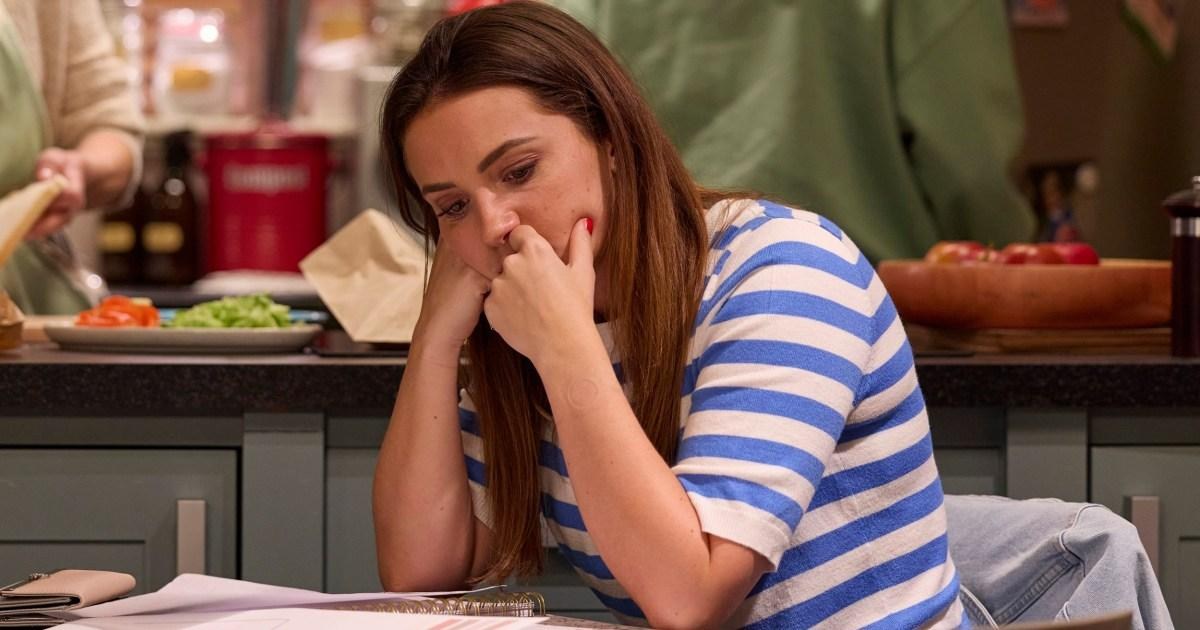
Rosie recently spoke with Metro about how important it is the public take orthorexia more seriously (Picture: ITV) British TV soap Emmerdale has tackled difficult topics over the years, from drug addiction and dementia to domestic abuse. And now, one of its principal characters Gabby Thomas, is shining a light on orthorexia. Viewers have watched Gabby, played by actress Rosie Bentham, battle the eating disorder, which affects between 1% and 7% of the UK population. In a recent exclusive interview with Metro, actress Rosie, described the condition as a pathological obsession with eating what the sufferer believes to be ‘pure’ foods. While it was first defined in 1997, it’s not currently recognised in a clinical setting. Here’s everything you need to know about the lesser-known condition. Orthorexia is can lead to physical, emotional, and psychological harm (Picture: ITV) What is orthorexia? Sufferers of orthorexia put food into two categories: pure and impure. Which foods are placed where, can vary from person to person. According to BEAT, the UK’s leading charity supporting those affected by eating disorders, this doesn’t mean that anyone who subscribes to a healthy eating plan or diet is suffering from orthorexia. Moreover, while orthorexia bears some similarities to anorexia, there are a few key differences. Ask Metro Use AI to go deeper into the stories you care about – powered by Metro and trusted publications. Umairah Malik is the clinical and co-production manager at BEAT. In her opinion, there is still so much we have to learn about orthorexia. ‘Eating disorders account for 9% of mental health conditions, but only get about 1% to 2% of the research funding,’ she tells Metro. She adds that, due to this lack of information, patients are sometimes diagnosed with OSFED, an acronym which stands for ‘other specified feeding or eating disorder’. What are the signs and symptoms of orthorexia? Like all eating disorders, orthorexia has the ability to cause emotional, psychological, and physical damage. Typical behaviours of orthorexia include: Cutting out particular foods or food groups in an attempt to make their diet healthier Judgment about the eating habits of others An obsession with healthy or supposedly healthy diet Alongside a number of physical symptoms which can include weight loss, feeling weaker, tiredness, and low energy levels, orthorexia is also an emotional burden. BEAT highlights psychological signs such as: An obsession with healthy or supposedly healthy diet. Increased focus on meals which interfere with other areas of life, such as their relationships or work. Feelings of anxiety and guilt. Low mood and depression. Experts have found that the spread of nutrition misinformation on digital platforms poses significant challenges to public health and the credibility of nutrition professionals (Picture: Getty Images) Individuals may feel as though they’re unable to put aside personal rules about what they can and can’t eat, even if they want to. Some may also think that their emotional wellbeing is overly dependent on eating the ‘right’ food. What is the treatment for orthorexia? Because orthorexia is not recognised as an eating disorder in clinical setting, there are currently no official diagnostic criteria or specific treatments. However, due to its shared characteristics with both anorexia and obsessive-compulsive disorder (OCD), treatment often follows similar approaches to those used for these mental health illnesses. Typical treatment plans tend to include: Monitoring physical health and nutritional status. Psychological therapy. Dietetic support. How has social media played a role in this? A study published by the British Journal of Nursing found that misinformation, often propagated by individuals without professional credentials, is an issue on social media. Equally pressing is the fact that there is an increased reliance on social media for health information – with young people turning to TikTok and Instagram from dietary advice before consulting a professional. While there are some recognisable signs of orthorexia, you don’t need to exhibit all of them to be suffering with the condition (Picture: Getty Images) Umairah tells Metro: ‘We see how, for someone who might be vulnerable to developing an eating disorder or struggling with disordered eating, seeing a post where someone makes a really broad generalisation about food can be really damaging.’ Actress Rosie also added that her own social media feeds have become ‘extreme’, with dozens of videos from ‘random people with probably no qualification in nutrition’ making claims about food. We need to see eating disorders on screen In a 2020 survey by BEAT, 83% of people with lived experience shared that they felt there wasn’t enough coverage of eating disorders in the media – 48% also felt that their diagnosis wasn’t represented accurately. So, while a difficult story to tell, Umairah is incredibly pleased that Emmerdale has chosen to spotlight this condition. Rosie tells Metro that felt it was a really important subject to touch on and fit Gabby’s narrative of searching for something and trying to take control as much as she can (Picture: ITV) ‘When something like this is done in a safe and responsible way, that doesn’t perpetuate harmful stereotypes, it can be so helpful for people,’ she shares. Umairah emphasises how important it can be for these conditions to be brought into media that’s consumed by Brits on a day-to-day basis. ‘Having people talk about their experiences, whether it’s fictional or not, can sometimes have more of an impact than a bunch of stats,’ she concludes. To learn more about orthorexia and or seek support visit BEAT. Do you have a story you’d like to share? Get in touch by emailing MetroLifestyleTeam@metro.co.uk Deals of the Day Kurt Geiger's new Notting Hill collection is a love letter to London's chaotic weather I’ve found the Hoover gadget that could make cleaning your floors so much easier I tried L'Oréal Paris's new PDRN serum and my skin looked glossier after one use This new Cricut gadget turns your favourite photos into stickers in minutes From kitchen hatches to burgundy walls – the biggest home trends for 2027 Arrow MORE: Should we be worried about Russia’s ‘plague’ outbreak? Arrow MORE: I’m a cancer doctor — these are the 3 symptoms most commonly-overlooked Arrow MORE: What is ‘American Covid’ and how bad is it? The Slice Your free newsletter guide to the best London has on offer, from drinks deals to restaurant reviews.
What is happening to Gabby in Emmerdale? Her condition orthorexia explained
Full Article
Original Source
Read the full article at Metro →KhanList aggregates and links to publicly available news content. We do not host full articles from third-party sources. Always verify important information with original sources.