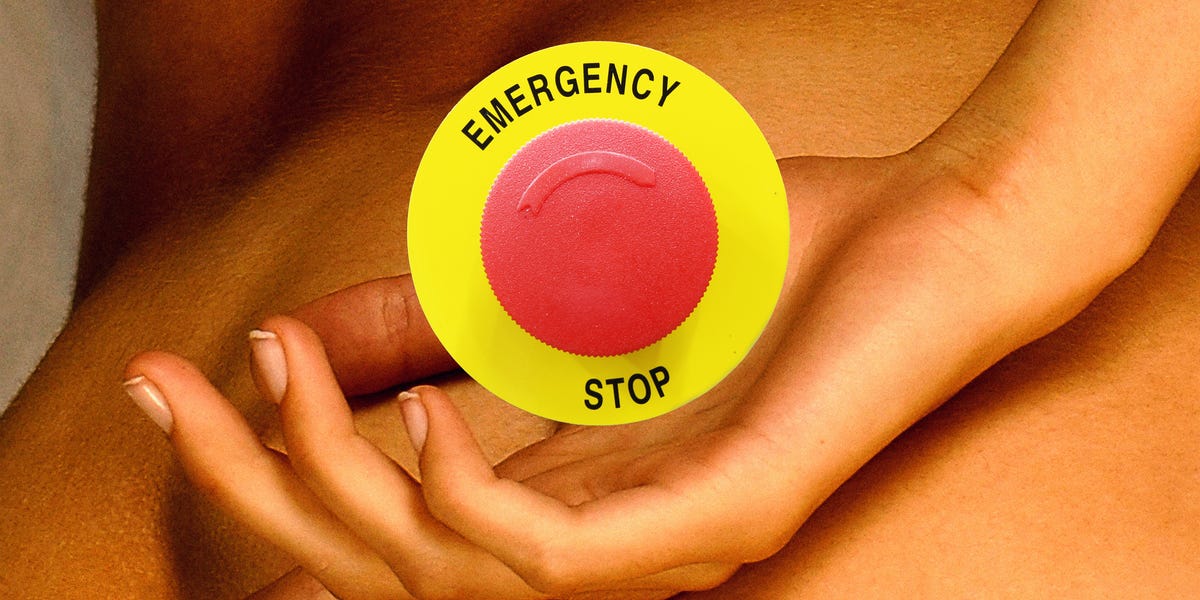
You know when you’re right there—orgasm imminent, brain basically offline—and then you or your partner deliberately...stop? Congrats, you’ve just discovered edging. And while denying yourself an orgasm when you could simply have one might sound like a special kind of torture, there’s a reason people are very into it.So, what is edging, exactly? Essentially, it’s intentionally bringing yourself or a partner close to orgasm, then backing off just before climax, explains board-certified sexologist and Sssh.com founder Angie Rowntree. And then? You do it again. And maybe again. Until you finally decide there’s been enough suffering (complimentary) and let yourself come.“It’s pretty intense as a process, and by prolonging the build-up, the eventual orgasm is often stronger, longer, and more full-body,” Rowntree says. “Edging done right can turn sex into a mindful erotic journey rather than a quick ‘one and done’ destination.”Despite the whole deliberately not orgasming of it all, edging isn’t necessarily kinky, nor is it reserved for people with Olympic-level sexual stamina. It’s a technique that can be practiced during solo sex or with a partner, and there’s no gold medal for how many times you can almost come before you actually do.Ahead, sex experts break down how edging works, why people do it, its potential benefits, and what beginners should know before getting anywhere near the proverbial edge.Edging is essentially the sexual version of getting thisclose to the finish line and then deliberately hitting the brakes. The goal is to approach orgasm without quite reaching what sex therapists sometimes call “orgasmic inevitability”—aka, the point when an orgasm is happening whether you’re ready for it or not.“You need to recognize it because that’s what you’ll be working with: recognizing it is impending and then disrupting it to lengthen the time before orgasm happens,” explains Carol Queen, PhD, resident sexologist at Good Vibrations.That “disruption” might mean stopping stimulation, slowing waaaaaaay down, or changing what you’re doing until the urge to orgasm backs off. Then, you build yourself up again. The trick is learning to recognize your own pre-orgasm signals early enough to back away from the edge before, well, you go over it.Why Do People Like It?Well, for starters, anticipation can be hot. Instead of making orgasm the immediate end goal, edging lets you hang out in that highly aroused state for longer, stretching out the pleasure before you finally climax.“People enjoy it because...it builds up arousal further!” Queen says. “And [it] extends the time you spend in erotic mode,” whether you’re masturbating or having sex with a partner.And for some people, repeatedly building up arousal can make the eventual climax feel more intense. For others? Delaying an orgasm they could be having right now sounds deeply annoying. Both are valid.What Are the Benefits?Beyond potentially intensifying the eventual orgasm, edging can help you get better acquainted with your own arousal patterns. Rowntree says the practice may increase awareness of your body’s signals and, for some people, help build stamina and ejaculatory control over time.Add Cosmopolitan as a preferred source in your Google search results.Use your Google account to add this to your settings.There can be mental benefits too. Because edging requires you to actually pay attention to how aroused you are, both experts say it can encourage mindfulness and keep the focus on pleasure rather than rushing toward orgasm. Queen also notes that intentionally devoting more time and attention to your own pleasure can help normalize the experience of, well, experiencing pleasure.And if lasting longer is your goal, edging may be a useful tool—but it’s not a magic fix. Rowntree stresses that it won’t automatically cure premature ejaculation or permanently give you more stamina. Like most things involving your body, learning more control takes practice.How to Try Edging for the First TimeIf you’re new to edging, both experts recommend starting solo. It’s a whole lot easier to learn your body’s oh shit, I’m about to come signals when you’re only paying attention to yourself. “Edging is easiest to get into and optimize solo,” Queen says, since there’s no partner or additional stimulation competing for your attention.Once you’re sufficiently turned on, Rowntree recommends slowing down or stopping stimulation as you approach the point of no return. Give your arousal a chance to drop slightly, then start building it back up again. You can repeat the cycle a few times before eventually letting yourself orgasm. And don’t forget to breathe: Rowntree says slow, deep breathing can help you stay in control, while lube can help prevent irritation during a longer session.Once you know your own cues, you can absolutely try edging with a partner. Just make sure everyone is on board and communicating throughout. “Partnered edging requires trust, clear consent, and real-time feedback,” Rowntree says. After all, your partner can’t read your mind (tragic), so you’ll need to tell them when you’re getting close enough to back off.And if you accidentally come before you meant to? Congrats on the orgasm. “If you climax and go ‘over the edge’ it is not a failure,” Rowntree says. “It’s all part of the fun.”Common Edging Mistakes to AvoidThe biggest mistake? Treating edging like a challenge you need to win. The whole point is to extend pleasure, not white-knuckle your way through some imaginary orgasm obstacle course. “Don’t push too hard too soon,” Rowntree says. “This is literally not a race.”You also don’t want to back off so much that you lose your arousal entirely. Rowntree recommends slowing down or changing the stimulation rather than stopping for so long that you’re basically back at square one. And while paying attention to your body’s cues is important, Queen cautions against getting so focused on controlling your orgasm that you forget to actually enjoy yourself.Finally, don’t get frustrated if your body doesn’t follow the plan. You might orgasm earlier than intended, struggle to stay aroused, or discover that delaying orgasm simply isn’t your thing. Edging is supposed to make sex more pleasurable, not give you another performance metric to obsess over.Does Edging Make Orgasms Better?Maybe! Plenty of people find that all that buildup leads to a stronger or more intense orgasm when they finally let themselves have one. But that doesn’t mean an edged orgasm is inherently superior to the kind you get without spending half the night almost getting there.“Edging orgasms are not inherently ‘better’ than quick orgasms,” Rowntree says. “All orgasms are worth celebrating—different strokes for different folks.”And edging isn’t a guaranteed orgasm upgrade. Queen notes that not everyone enjoys delaying climax, while Rowntree says some people find the denial more frustrating than pleasurable. Basically, if edging makes sex hotter for you, great. If you’d rather simply have the orgasm that’s right there waiting for you? Also great.
What Is Edging? A Beginner-Friendly Explainer
Full Article
Original Source
Read the full article at Sex →KhanList aggregates and links to publicly available news content. We do not host full articles from third-party sources. Always verify important information with original sources.