
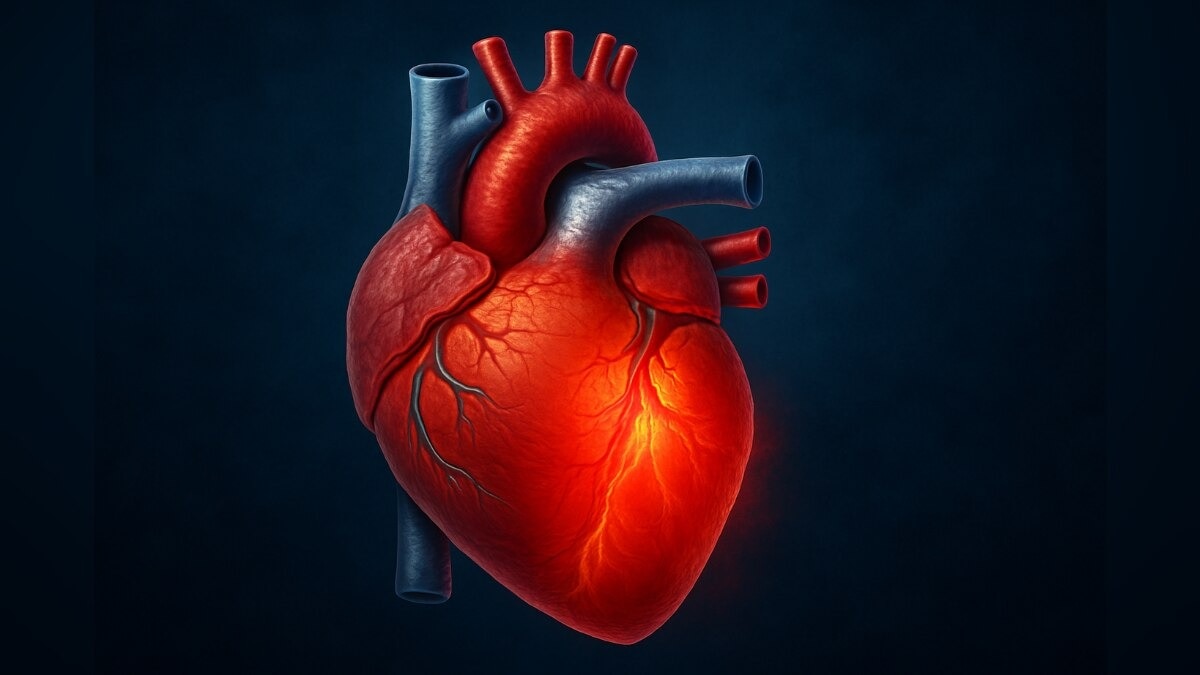
When veteran actor Nana Patekar was found unconscious at his home in Goa and rushed to hospital, doctors reportedly gave him CPR for 45 minutes straight but could not revive him. The cause was a cardiac arrest. Many people read that and wonder why cardiopulmonary resuscitation (CPR) is so often mentioned in these stories if it doesn't always work. The answer is that CPR is not a cure. It is a bridge. It keeps blood moving to the brain and heart while the person gets the treatment that can restart a normal rhythm, and for many people that bridge is the only thing between life and death.CPR, is used when someone's heart has stopped pumping effectively. That includes cardiac arrest, the most common case, and other emergencies that can lead to it. Choking, drowning, trauma, drug overdose and poisoning can cause a person to stop breathing, and cardiac arrest follows if they don't get immediate treatment.The good news is that you don't need a medical degree. The Union Health Ministry ran a nationwide CPR Awareness Week from 13 to 17 October 2025, and over six lakh people across the country were trained in compression-only CPR during it. The message was that bystanders, not just doctors, can save lives. That matters because an analysis by the Observer Research Foundation puts India's bystander CPR rate at between 1.3 per cent and 9.8 per cent, with less than 2 per cent of the population formally trained.The American Heart Association notes that more than 350,000 out-of-hospital cardiac arrests occur annually, and immediate bystander CPR can double or triple a person's chance of survival (raising survival-to-discharge rates from roughly 7-8 per cent to over 10-11 per cent) WHAT IS CPR AND WHAT DOES IT ACTUALLY DO?"CPR is an emergency technique that manually maintains blood flow to the brain and heart when the heart stops pumping effectively, buying crucial time until normal circulation is restored," says Dr Anshul Kumar Jain, Director, Cardiology at CK Birla Hospital, Delhi.In plain terms, when the heart stops pumping, you become the pump. Pushing on the chest squeezes the heart between the breastbone and spine and moves blood around the body. The American Heart Association puts it this way, keeping blood flowing, even partially, gives medical teams a better chance of a successful resuscitation when they arrive. It also doesn't work alone. CPR is one link in what doctors call the Chain of Survival. The chain runs from recognising the arrest and calling for help, to early CPR, rapid defibrillation, advanced care by emergency teams, hospital care and recovery.heartHOW DO YOU KNOW SOMEONE NEEDS CPR?Dr Jain keeps this simple, "If someone is unresponsive and not breathing normally, or is only gasping, treat it as cardiac arrest and begin CPR immediately."That "only gasping" part is important. Seconds after a cardiac arrest, a person becomes unresponsive and may not be breathing or may only be gasping. Gasping can look like breathing, but it isn't. Someone who has simply fainted is usually still breathing normally and will come around. Someone who doesn't respond when you tap their shoulders and shout, and isn't breathing normally, needs CPR now.WHO CAN DO CPR?"Anyone can perform CPR," says Dr Jain. That includes people with no training, and even children. A study found that most sixth graders could perform hands-only CPR in the correct spot and at the right rate. The AHA's latest guidelines go further and recommend starting CPR training in children younger than 12.There are two kinds of CPR, and which one you use depends on your training:Hands-only CPR is for the general public. It is recommended for anyone who sees a teen or adult suddenly collapse outside hospital, and it has two steps: call for help, and push hard and fast in the centre of the chest.Conventional CPR is for trained rescuers. It uses chest compressions plus mouth-to-mouth breaths at a ratio of 30 compressions to 2 breaths.For children, the advice differs. Emergency dispatchers are advised to guide callers through hands-only CPR for adults, but conventional CPR with breaths for children. That is because cardiac arrest in children usually starts with a breathing problem, so breaths matter more.heartTHE STEPS TO BE TAKEN:Dr Jain's instructions, "Call emergency services, place the heel of one hand in the centre of the chest over the lower half of the breastbone, place the other hand on top, and push hard and fast at 100-120 compressions per minute."The AHA adds what "hard" means: a depth of at least 2 inches (5 cm) in an average adult, while avoiding going deeper than about 2.4 inches (6 cm). Other points from the 2025 guidelines:Put the person on a firm surface, such as the floor, not a bed or sofaLet the chest come fully back up between pushes and avoid leaning on the personKeep interruptions as short as possibleCPR for adults with obesity is done the same way as for othersCOMMON MISTAKES, AND THE FEAR OF BREAKING RIBSDr Jain lists the usual errors, "Delaying CPR, pressing too slowly or too shallowly, and failing to allow chest recoil are common mistakes."Then the question many people worry about. "Rib fractures can occur, but fear of injury should never prevent life-saving CPR." A cracked rib can heal. A heart that stays stopped cannot."Continue CPR until the person shows signs of normal breathing or purposeful movement, trained medical help takes over, or you are physically unable to continue." If the person starts breathing normally, "stop compressions, monitor the person and follow emergency-service instructions," says Dr Jain.Practical tip from the AHA: if someone else knows CPR, take turns and switch roughly every two minutes, or sooner if you tire. Compressions get weaker as the rescuer gets tired, so switching is part of doing it well.- Ends
What is CPR? How to do it, who can do it, and what to remember in an emergency
Full Article
Original Source
Read the full article at Indiatoday →KhanList aggregates and links to publicly available news content. We do not host full articles from third-party sources. Always verify important information with original sources.