
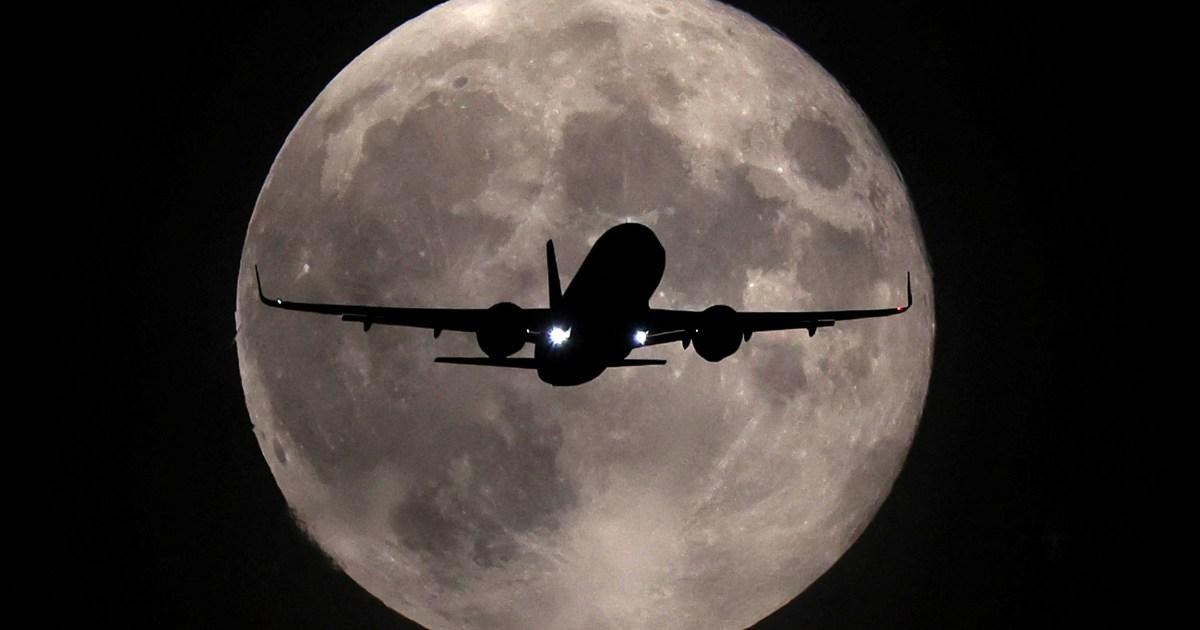
Today’s full moon is also a supermoon, which appears brighter and larger than ordinary moons (Picture: Reuters) The penultimate full moon of the year will rise today, and it is set to be a special one. November’s full moon is the 12th of the year after we were treated to a rare blue moon back in May. The full moon, known as the Beaver Moon, will also be the first of four consecutive supermoons, which appear brighter and larger than normal full moons. The supermoon should be visible later today, but will you actually be able to see it? And why is the November full moon called the Beaver Moon? What is a supermoon? It's time to learn about supermoons. (Photo by Dan Kitwood/Getty Images) A supermoon is a full moon that appears brighter and larger in appearance than a traditional full moon. Supermoons happen when a full moon approaches the closest point in its orbit around the Earth, known as the perigee. When this happens, the moon appears around 14% bigger and around 30% brighter than a normal moon. The supermoon of November 2016 was the closest to Earth since January 26, 1948, and this record won't be beaten until November 2034. According to the Natural History Museum, the closest supermoon of this century will happen on December 6, 2052 - so note that in your diary! There are usually three to four supermoons over a 12-month period, and they usually happen consecutively. November 2026's full moon marked the first appearance of a supermoon, and this will be followed by December 2026, January 2027, and February 2027 supermoons. When is the Beaver supermoon? The Beaver supermoon will rise today and reach peak illumination at around 2.53pm, although it’ll be visible throughout the remainder of the afternoon and the evening. Will we be able to see it? Whether or not you’ll be able to see the Beaver Moon will largely depend on the weather. The Met Office predicts a cloudy but dry day, with its weather map showing significant cloud cover in the north and west of the UK from around 3pm today, while the south remains clear. A clear night sky is crucial for viewing the supermoon, so those in the north will have a harder time catching the Beaver Moon today. Are you going to be keeping an eye out for the Beaver Moon? (Picture: AP Photo/Kin Cheung) For those in the south hoping to view the moon, Royal Museums Greenwich suggests that you find a dark space with an unobstructed view of the clear night sky. If you don’t see the Beaver Moon, you don’t need to worry. There will be another supermoon next month, known as the Cold Moon, which falls on Christmas Eve. This will be followed by two additional supermoons in January (The Wolf Moon) and February (The Snow Moon), and then a series of ordinary full moons after that. Why is it called the Beaver Moon? If you miss this supermoon, there are three more coming up (Picture: EPA) Every full moon is given a name based on Native American culture, as moons were used as a calendar. November’s full moon is called the Beaver Moon, with some people claiming it’s named from when Native Americans set beaver traps throughout the month. Other people disagree and have said it’s named after the high beaver activity that happens throughout November as the animals begin building dams and stocking up on food for the winter. The Beaver Moon is also known as the Frost Moon, thought to be named after the rising cold temperatures and the appearance of frost. Get in touch with our news team by emailing us at webnews@metro.co.uk. For more stories like this, check our news page. Arrow MORE: Scientists may have found a new planet in our solar system – here’s what it could look like Arrow MORE: Fears Russia could launch a nuclear-armed satellite into space ‘within a month’ Arrow MORE: The Gemini Full Moon starts a necessary conversation — your star sign’s tarot horoscope News Updates Stay on top of the headlines with daily email updates.
What is a Beaver Moon? How to see the giant supermoon today
Full Article
Original Source
Read the full article at Metro →KhanList aggregates and links to publicly available news content. We do not host full articles from third-party sources. Always verify important information with original sources.