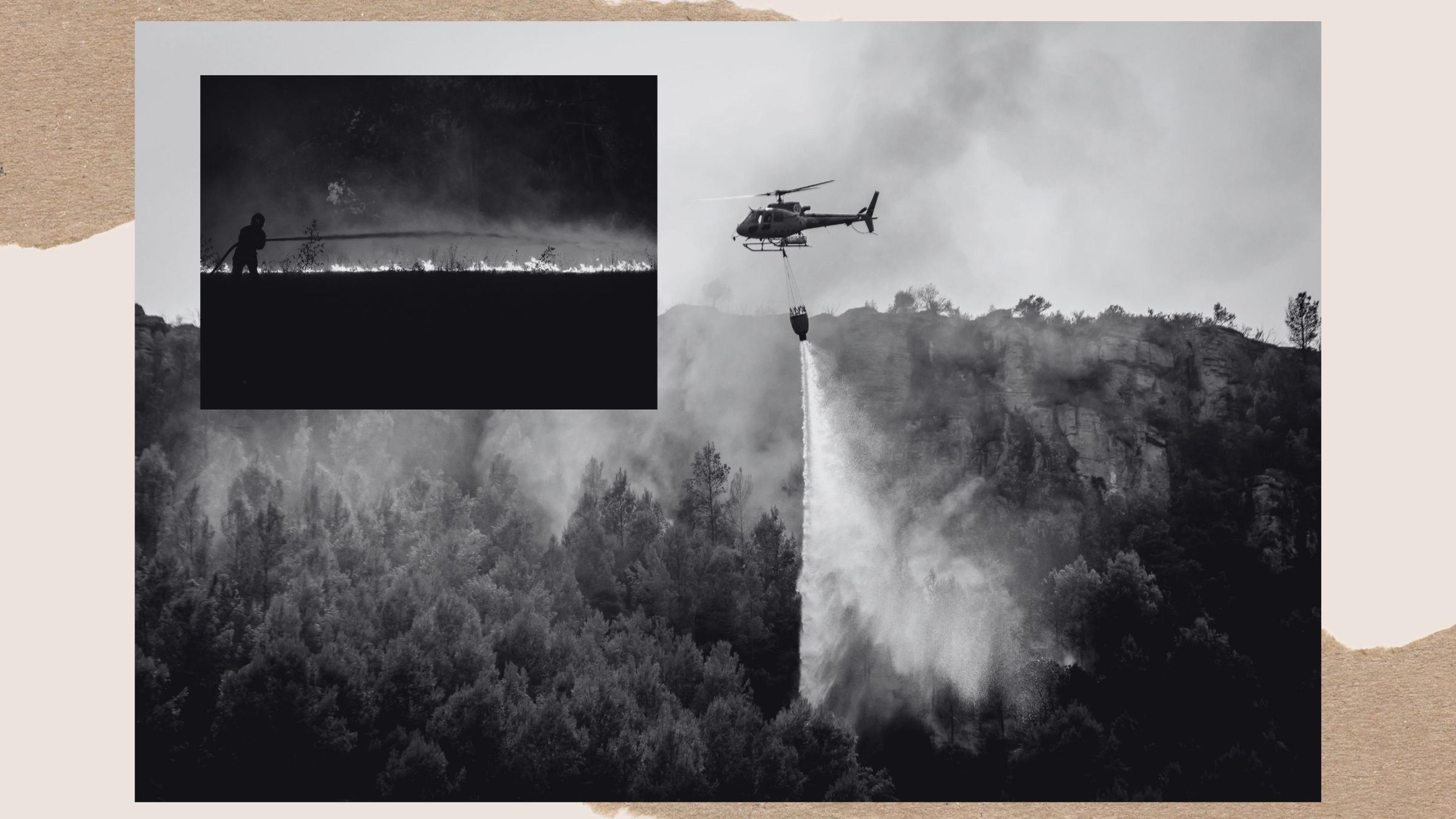
Bearing the brunt of our new climate reality, of course, is the simmering countryside, desert dry and ready to ignite from the first mechanical spark, hot muffler, or flying ember. In many parts of the world—such as southern Europe, North Africa, and the Middle East—many charred and desiccated landscapes are no longer able to support the agriculture they have nurtured for thousands of years. As a result, for instance, wine production is decreasing globally, not just because of changing tastes but because heat, drought, and increasingly unstable weather are disrupting this ancient crop and craft. However, there is another, slower and more insidious evacuation taking place, and that is the steady migration from rural areas all around the world to burgeoning cities, which now host more than half the world’s population. Left behind, landscapes previously managed by seasonal harvesting, pruning, burning, and grazing have gone feral: overtaken by scrub brush and weeds, they are terrifically flammable under current, much hotter weather conditions. Exacerbating this situation in regions like southern Europe and California is what’s being called “weather whiplash.” That is, heavy winter rains and snowfalls that encourage abundant spring growth, only to be dried to tinder by the now-successive heatwaves baking southern Europe and the American Southwest. When will the oil and gas industry’s eye-watering profits be outweighed by all the losses their emissions incur? Cumulatively, they already have. Spain’s prime minister, Pedro Sanchez, who speaks with hard-won authority on this matter, put a finer point on it: “Climate change kills: it kills people, as we’ve seen; it kills our ecosystem, our biodiversity, and it destroys the things we as a society hold dear—our houses, our businesses, our livestock.”If there is a glimmer of hope in the smoke, it can be found in the relatively low mortality rates for these recent urban fires, and their largely successful evacuations, which demonstrate real social cohesion and admirable courage and civic spirit. On the energy front, there is real and tangible good news, but neither the White House nor the CEOs of oil majors and their army of lobbyists are keen to share it: the energy transition to reliable, affordable renewable energy is underway and irreversible. Deploying renewables paired with intelligent energy conservation and grid management, individuals, businesses, municipalities, and entire countries are earnestly curbing their CO2 emissions. Arguably, the biggest hurdle will be curbing the appetites of the wealthiest 10%, not just at the extremes—vanity rockets, super yachts, and spurious wars—but two-day shipping, budget jet travel, F-150s, and the most casual wish granted with the click of a button.
What Happens When the World is on Fire
Full Article
Original Source
Read the full article at Time →KhanList aggregates and links to publicly available news content. We do not host full articles from third-party sources. Always verify important information with original sources.