
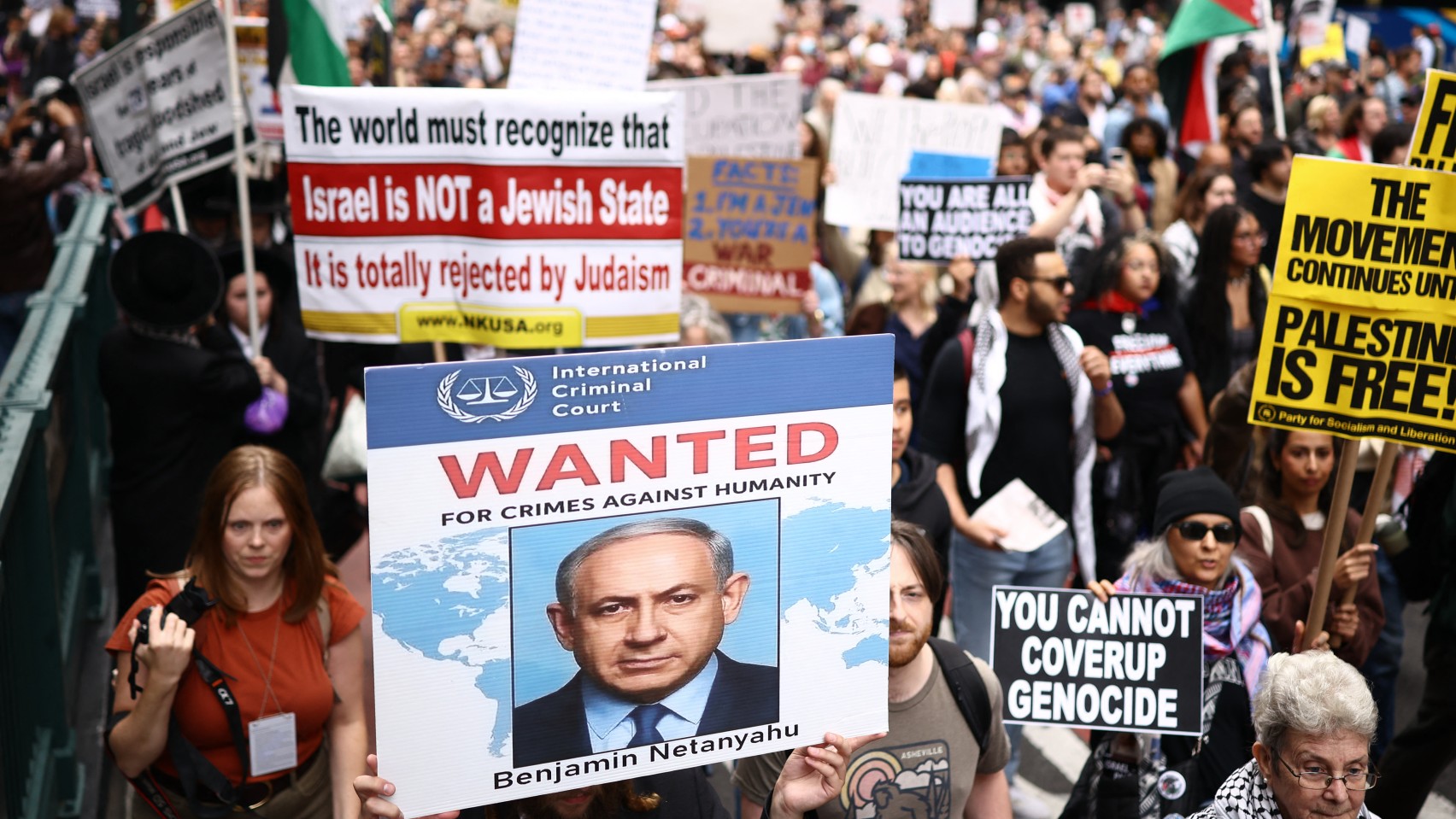
Israel’s election has left Benjamin Netanyahu’s political future uncertain. But if coalition negotiations result in his departure as prime minister, the international legal proceedings concerning him and Israel would survive his government. Leaving office would not cancel his International Criminal Court (ICC) arrest warrant or halt South Africa’s genocide case against Israel at the International Court of Justice (ICJ). Importantly, leaving office would strip Netanyahu of the personal immunity some states have cited to avoid arresting him, leaving him more exposed both to the ICC warrant and to prosecution in foreign national courts. The ICC issued the warrants for Netanyahu and former defence minister Yoav Gallant in November 2024 over alleged war crimes and crimes against humanity in Gaza, including starvation as a method of warfare, murder and persecution. New MEE newsletter: Jerusalem Dispatch Sign up to get the latest insights and analysis on Israel-Palestine, alongside Turkey Unpacked and other MEE newsletters Netanyahu is also facing a trial and arrest warrant in absentia in Turkey on charges including torture and crimes against humanity over Israel’s interception of a Gaza aid flotilla last year. So, what could happen next? Would Netanyahu's ICC arrest warrant remain valid? Yes. The warrant concerns Netanyahu’s alleged individual criminal responsibility for conduct during his premiership and does not depend on him continuing to hold office. A trial, however, can only begin if Netanyahu is arrested and surrendered to the court. Under Article 58(4) of the Rome Statute, an arrest warrant remains effective unless the court orders otherwise. ICC Deputy Prosecutor Nazhat Shameem Khan said in September that the court had taken no steps to withdraw the warrants. But Israel is still contesting the court's jurisdiction primarily based on the fact that it’s not a member of the court’s founding treaty, the Rome Statute. In April 2025, the ICC Appeals Chamber ordered the Pre-Trial Chamber to examine Israel's challenge, but judges declined to suspend the warrants while it does so. Two Israeli appeals remain pending. Would Netanyahu lose his immunity? The immunity rules before the ICC and national courts are different. Before the ICC, being prime minister does not grant Netanyahu immunity. Article 27 of the Rome Statute states that official capacity is no bar to prosecution, and the court's position is that immunities attached to office neither protect a suspect from its jurisdiction nor excuse member states from executing its arrest requests. The court has applied that position to leaders of states that are not members of the ICC. In 2019, the ICC Appeals Chamber ruled that Jordan was required to arrest Sudan's then-President Omar al-Bashir, although Sudan was not a member of the court. In 2024, judges also found Mongolia in breach of its obligations for failing to arrest Russian President Vladimir Putin. Are Netanyahu and Gallant immune from ICC arrest warrants under international law? Read More » Some member states have nonetheless argued that they are not obliged to arrest a serving leader of a non-member state, relying on immunities recognised under international law. International law recognises two types of immunity for state officials, as MEE has previously explained. Personal immunity protects a narrow group - heads of state, heads of government and foreign ministers - from arrest and prosecution in foreign national courts while they hold office, regardless of the conduct alleged. It is temporary and ends when they leave office. Functional immunity covers acts carried out in an official capacity and continues after an official leaves office. However, legal experts have told MEE that in this type of immunity, an exception for international crimes, such as war crimes and crimes against humanity, is increasingly well established. Netanyahu would lose the personal immunity he enjoys as prime minister once he leaves office, retaining only functional immunity. Which countries have invoked immunity? In November 2024, France said that immunities applicable to officials of countries outside the ICC covered Netanyahu and would have to be considered in responding to an arrest request. The claim was rejected by immunity scholars and rights groups. Italy’s Foreign Minister Antonio Tajani also invoked immunity, saying in January 2025 that immunities had to be respected when asked about Netanyahu’s possible arrest. Hungary raised an Article 98 immunity argument in proceedings concerning its failure to arrest Netanyahu during his April 2025 visit. The ICC subsequently found Hungary had breached its cooperation obligations. Still, leaving office would not guarantee Netanyahu’s arrest. The ICC has no police force and relies on national authorities to enforce its warrants. A successor Israeli government could choose to cooperate with the court and surrender him. Could he face trial in foreign courts? Once out of office, Netanyahu would lose the personal immunity that shields a serving head of government from prosecution and arrest by foreign national authorities. Many countries provide for the prosecution of war crimes and crimes against humanity under universal jurisdiction, allowing their courts to hear cases concerning crimes committed abroad, even without a connection to the country. Israel elections: Early results show deadlock as Palestinians make huge gains Read More » For example, Turkey is already prosecuting Netanyahu and several other Israeli officials, including ministers Israel Katz and Itamar Ben Gvir, on charges including torture and crimes against humanity over Israel’s 2025 interception of the Global Sumud Flotilla. Losing personal immunity would remove a significant obstacle to such cases. Whether Netanyahu could still invoke functional immunity, which concerns acts performed in an official capacity, would depend on the law applied by the court. Former leaders have faced similar proceedings. Chile’s Augusto Pinochet was arrested in London in 1998 on a Spanish warrant. The House of Lords ruled the following year that he could not claim immunity for certain torture allegations covered by the applicable legal framework. In July 2025, France’s highest court annulled a warrant issued against Bashar al-Assad while he was Syria’s president, but said a new warrant could be issued following his departure. It also held that functional immunity did not protect former leaders from prosecution for genocide, crimes against humanity or war crimes. Netanyahu’s travel could create an opportunity for arrest, but some countries can investigate and issue warrants without his presence. Securing his custody would remain a practical hurdle as he may avoid international travel fearing arrest, and the state of Israel may not agree to surrender him. What happens to the ICJ genocide case? The case brought by South Africa at the ICJ in December 2023, accusing Israel of genocide in Gaza, concerns the responsibility of the state, not of any individual. A change of prime minister would not affect it. Of course, Netanyahu’s statements and decisions form a key part of the evidence of genocidal intent, even after he leaves office. Israel filed its counter-arguments to South Africa’s accusations in March 2026, including objections to the court's jurisdiction. The court has given South Africa until 22 November 2027 to reply and Israel until 22 May 2029 for a response, meaning a final judgment is years away. What about his corruption trial? Losing office would not end Netanyahu's corruption trial in Israel. He has been on trial since 2020 on charges of bribery, fraud and breach of trust in three cases, and denies wrongdoing. He asked President Isaac Herzog for a pardon in November 2025 without admitting guilt. In April, Herzog's office said the two sides should first try to reach an agreement outside the courtroom before he addressed the request. Opposition leader Yair Lapid has said Herzog cannot pardon Netanyahu unless he admits guilt and leaves political life.
What happens to Netanyahu’s ICC warrant if he leaves office?
Full Article
Original Source
Read the full article at Middleeasteye →KhanList aggregates and links to publicly available news content. We do not host full articles from third-party sources. Always verify important information with original sources.