
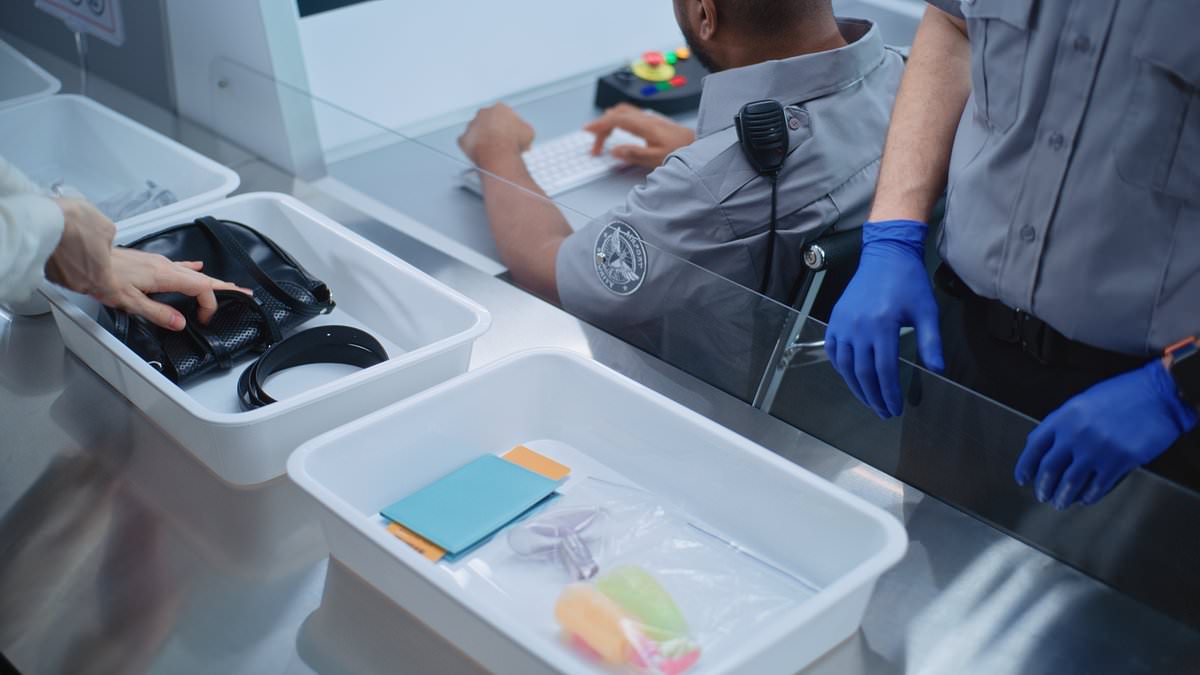
We all know that frustrating moment when, after sailing through security at the airport, your bag is hauled aside for an extra check.Whether it's a pair of nail scissors, a razor or an extra power bank that has you receiving that oh-so-judgemental look from security personnel, it's always frustrating to have your belongings confiscated before jetting off on holiday.But what actually happens to your items once they've been confiscated?Earlier this year, Manchester Airport showcased a selection of items its security officers were forced to confiscate in the space of just one morning. Among almost 100 items removed from bags in Terminal 2 security in July were 24 packs of cosmetic products, seven drinks bottles and seven food items – including two multipacks of yoghurts. Also removed from bags were 12 pairs of scissors, seven corkscrews, four knives and six packs of tools – plus two loose chisels and a pair of pliers. When items are scanned at the airport, disallowed goods can be confiscatedA total of ten toy guns or items resembling firearms were confiscated – including a BB gun with two packs of ball bearings, three Nerf guns, and household items including a handgun-shaped whisky decanter set. A baseball bat and a leg massager were also confiscated – in both cases because of their potential to be used as a weapon.So, what did airport security staff do with such an eclectic mix of goods? Of course, many items end up in landfill; official disposal sites become the final resting place for goods such as liquids, gels and aerosols.But some items, especially toiletries, are actually donated to charity. Non-profit organisations work to reallocate toiletries to homeless shelters and food banks. London Gatwick, for instance, donated two tons of toiletries and hygiene products to local charities The Crawley and Horley Hygiene Bank in 2023.Washington's Ronald Reagan National Airport, meanwhile, has a 'Donate, Don't Discard' initiative, collecting unopened toiletries over the permitted liquid limit.Since the programme's launch, it has donated thousands of items and diverted more than a thousand pounds of waste from landfills, the airport says. But many might be wondering, what actually happens to these items?As for weapons, or items that may be considered as such, the rules are different. David Martin, managing director at specialist tooling supplier Heamar, said: 'What happens to an item stopped at airport security depends on what it is, why it isn't permitted and the procedures at that specific airport.'Items such as prohibited liquids may be disposed of, while other surrendered belongings can sometimes be recycled, donated, sold on or passed to specialist contractors. 'Anything considered dangerous must be handled and disposed of appropriately, rather than put in general waste.'One thing passengers may not realise is that security staff taking an item doesn't mean it has been formally 'confiscated'. If something isn't allowed through the checkpoint, you may be given the opportunity to leave security and put it in your checked luggage if it's permitted there, or make arrangements for somebody to collect it.'This is especially relevant to people travelling with tools. Equipment that is completely normal in a workshop or engineering environment can be restricted in cabin baggage because of its size, shape or potential to cause injury. Some are taken away and sent to landfill, while others are donated to charity'Some tools can travel in the aircraft hold instead, but passengers need to check the rules before arriving at security rather than assuming professional equipment will just be allowed through.'There are also unconventional approaches to handling confiscated goods. Vilnius Airport in Lithuania, for instance, created a Christmas tree out of confiscated knives, bullets and cigarette lighters back in 2019.Similarly, artist Michele Pred made creations from confiscations at San Francisco International Airport, including a pile of sharp items titled 'Confiscated'.So next time, think twice before packing items that aren't allowed – or they could end up a part of someone else's Christmas display. What if you don't want to surrender your confiscated belongings? There are also solutions to the problem, if you're hesitant to part ways with your belongings.If you are travelling through Glasgow, London Luton or London Stansted Airport, for instance, you can use Excess Baggage Company's Post & Fly service to send these goods to safety.The company website says: 'Instead of surrendering your belongings completely and being forced to discard them for good, through our Post & Fly service you have the opportunity to be reunited with your non-permitted and restricted items which cannot be taken through security airside.'With our service passengers can choose to collect their item on return or have their item delivered to the UK or Europe. If you have prohibited or restricted item at Glasgow, London Luton or London Stansted, security staff will place your item safely into a bag and deposit it in the Post & Fly confiscated item bin provided. 'You'll be given a ticket with a reference number. Your item will then be collected and logged by a member of our staff later that day. Once the item has been logged you can choose your method of return by visiting www.PostandFly.com and entering your ticket reference number online.'Once you have deposited your item, you have 30 days to retrieve it. You can choose to have your item delivered to an address in the UK or Europe, or you can collect the item upon your return to the airport.'
What happens to items confiscated at airport security? From baseball bats to whisky decanters, we pull back the curtain on the surprising afterlife of surrendered belongings
Full Article
Original Source
Read the full article at Dailymail →KhanList aggregates and links to publicly available news content. We do not host full articles from third-party sources. Always verify important information with original sources.