
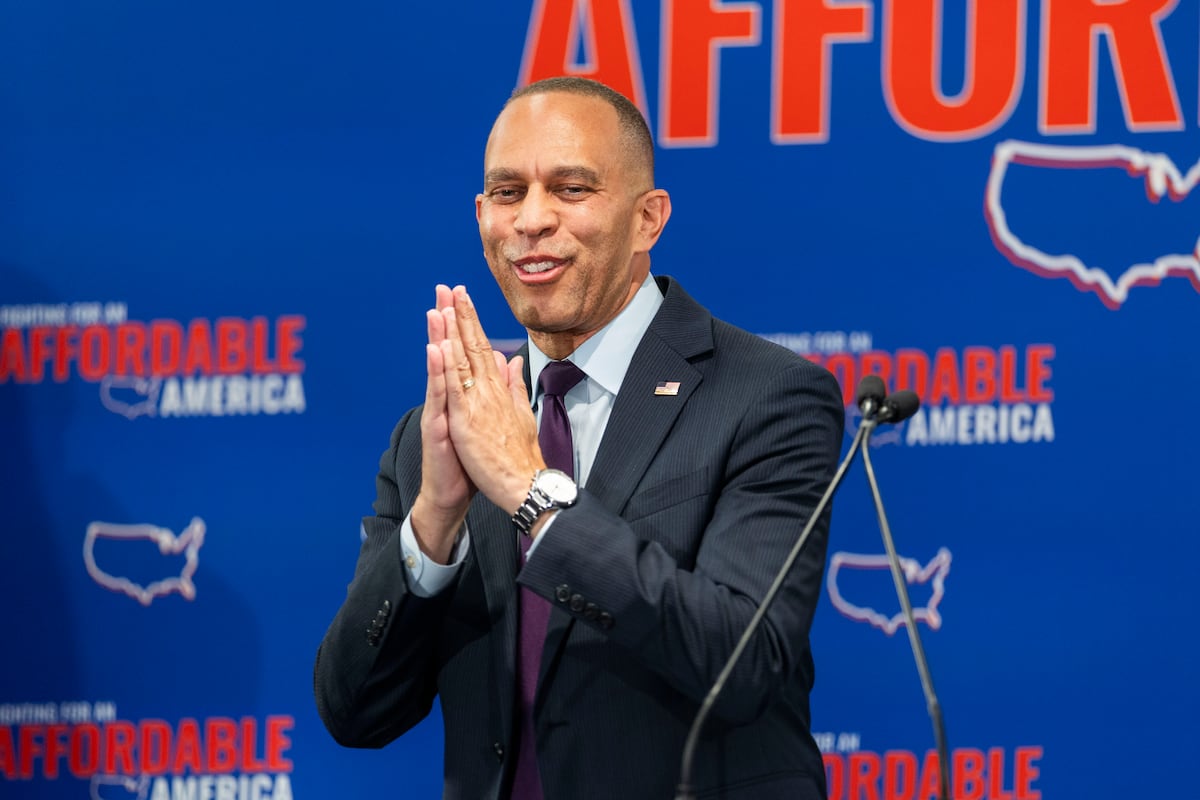
Democrats are still riding high on the blue wave that swept across the United States on Tuesday. A force that allowed the party to regain full control of Congress and hand President Donald Trump a historic defeat in the midterm elections. But after the sweet taste of victory, many are asking: now what? And how will the Republican administration strike back?The first reaction from some Democrats was to demand accountability from Trump, members of his family, and his cabinet for cryptocurrency dealings, ties to foreign powers, and the abuses committed during the first two years of his second term.So it came as little surprise when California congressman Robert García posted a terse message on his social networks that read: “Lawyer up.” García has positioned himself to chair the House Oversight Committee, and his message was a clear declaration of intent. “Subpoenas,” wrote Senator Ron Wyden (D-Ore.), who will chair the influential Senate Finance Committee, on X.Democratic thirst for vengeance clashes with the caution of their leaders. They still remember how two attempts to impeach Trump in 2020 and 2021 ended. Those trials failed to secure the necessary majority, and the Republican used the attention the proceedings brought to cultivate an image as a victim — a tactic that later helped fuel his return to the White House in the 2024 presidential race.“The American people don’t want us to get even. They want us to get things done on their behalf because life is way too expensive,” said Hakeem Jeffries, the House Democratic leader, who will become the new speaker of the House. Jeffries stressed in an interview on Fox News that removing Trump from office is not a priority. “We ran on affordability, we won on affordability, and we’ll govern on affordability,” he told Fox News.Veteran Democratic Senator Chuck Schumer (N.Y.), who is expected to lead the Senate, described the results as a repudiation of Trump’s policies. “Elections have always been the strongest lever Americans have to counter a wannabe king,” he warned. For months Democrats have argued that the president displays authoritarian tendencies. They used the 250th anniversary of American independence to compare him to a king and to invoke the meaning of the Americans’ decision to break from the British monarchy.“We are going to work hard to drive costs down, with the president or without him,” Schumer said, declining to say whether they will launch an impeachment process against Trump or investigations into his associates. “This is a change election. And we understand as House Democrats we need to deliver dramatic change,” Jeffries said, prioritizing above all ending the war with Iran and tackling the affordability crisis.Analysts, however, believe that at some point the Democrat-controlled Congress will open probes into the Trump family’s murky cryptocurrency dealings, their business ties with foreign countries, certain scandals touching his administration, or his obsession with leaving his mark on Washington’s monuments — even when some projects exceed his authority.Two figures face a real possibility of having to endure the unpleasantness of public House scrutiny: Defense Secretary Pete Hegseth, against whom an impeachment petition to remove him has already been filed by a fellow Republican, Thomas Massie, a libertarian at odds with Trump and his cabinet. Requests for removal have also been filed against Health Secretary Robert F. Kennedy Jr. and Education Secretary Linda McMahon, although, unlike Hegseth’s case, those did not advance while the Republican bloc still held more support.Another figure who could come under investigation is Elon Musk. The Tesla founder played an active role in the early months of the Trump administration. He took charge of the Department of Government Efficiency (DOGE), through which he attempted to cut large swaths of public spending — action that mostly resulted in the dismissal of thousands of civil servants from federal agencies essential for human rights, environmental protection, and public health, among others, and that do not fit Trump’s MAGA agenda. It is therefore likely Musk will face scrutiny as well. Democrats are also demanding explanations for the outage of his Starlink satellite network that disadvantaged the Ukrainian military, allegedly to pressure them into accepting a Russia-imposed ceasefire.The lame-duck vetoAs of Wednesday night, U.S. President Donald Trump is a lame duck, a term in U.S. political jargon for leaders who can no longer seek re-election and whose exit clock has started to run. But although his political capital was drastically reduced after Tuesday night’s Democratic surge, he still has a number of significant tools to impose his will and agenda. The first of them is the veto.The president threatened several times in the closing days of the campaign, and on election night, to use it. On Tuesday night, as nearly every key tally fell to the Democrats, he posted on his social network, Truth, an image of his iconic red cap with the word “Veto” replacing the MAGA initials.Article I, Section 7 of the Constitution stipulates that the president may veto bills passed by Congress before they become law. The legislature can override the veto, but it requires a supermajority in the Senate — 60 votes — and two-thirds in the House of Representatives, out of a total of 435 seats.The veto does not allow the president to change the content of legislation. But by threatening to use it he can try to force changes to a bill before it is drafted and voted on in both chambers. Trump has vowed to veto proposals left and right for a couple of months once the new Democratic-majority legislature takes the Capitol in January. After that — he estimates — he will negotiate with his rivals and “we’ll work something out.”A variant of the veto that could be especially damaging to Democrats is the so-called pocket veto. This occurs if the president does not sign a bill within 10 days after Congress presents it. If Congress adjourns before that period ends (because of the summer recess or due to a public holiday, for example) and the president has not signed the bill, the measure dies. This type of veto is particularly effective: with lawmakers absent, they cannot vote to override it.Beyond the veto, Trump also has other options to exercise power without Congress’s approval. For example, he can make unilateral foreign policy decisions, negotiate directly with foreign leaders, or impose tariffs — one of his favorite tools during his first year in office.What he cannot do in those cases is declare war, a power the Constitution grants to Congress. Nor can he sign and implement an international treaty without lawmakers voting to ratify it.The easiest path for both branches of U.S. government (the White House executive and the Congress legislature) would be to reach some understanding and cooperate to pass measures with the approval of both. That has been done before — the Democratic president Bill Clinton had to negotiate with a Republican Congress in 1995 to pass federal budgets — although growing polarization has turned what used to be routine into an increasingly rare exception.Sign up for our weekly newsletter to get more English-language news coverage from EL PAÍS USA Edition
What happens now? Democrats and Republicans are beginning to map out their strategies in the wake of the electoral upheaval
Full Article
Original Source
Read the full article at English →KhanList aggregates and links to publicly available news content. We do not host full articles from third-party sources. Always verify important information with original sources.