
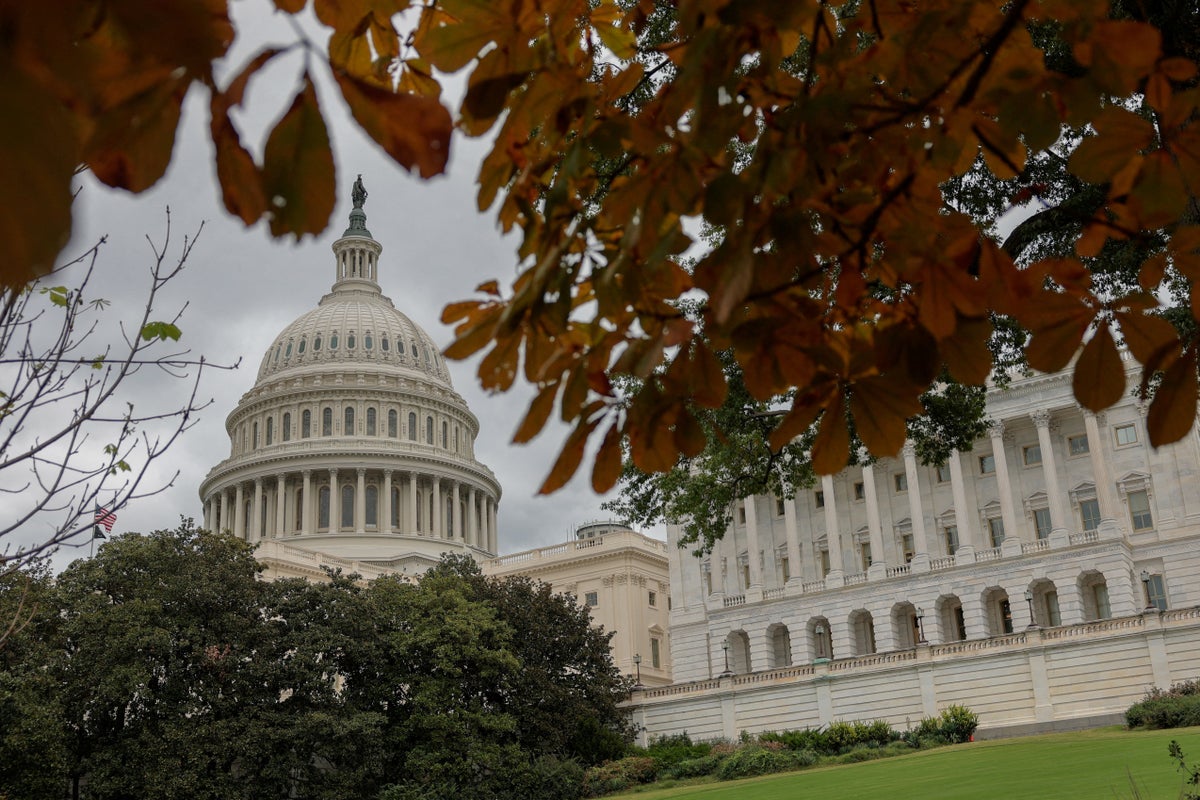
Control of Congress could hinge on a handful of races, and when a House or Senate result is contested, the chamber itself has the final say.Some of Tuesday's U.S. midterm races may take weeks to clear recounts and court challenges.The U.S. Constitution makes each chamber of Congress "the judge of the elections, returns and qualifications of its own members," giving lawmakers the final say when a House or Senate result is contested.Fall foliage frames the US Capitol building on a cloudy day on Capitol Hill (Reuters)States run federal elections and state officials certify them.Nearly six years after supporters of President Donald Trump attacked the U.S. Capitol on January 6, 2021, as Republicans sought to overturn his 2020 loss to Democrat Joe Biden, experts say competitive races could be close enough to trigger challenges, starting at the state level, as the two parties jockey for control of Congress."Those within the recount or contest margin of error – the candidates, outside groups and the administration – will fight those tooth and nail," said Victoria Bassetti, senior advisor at States United Democracy Center, a nonprofit group focused on protecting free, fair and secure elections.Candidates and sitting members can challenge congressional election results in both the House and the Senate.In the House, a losing candidate can challenge a state-certified result under the Federal Contested Election Act.Challenging election results The House Administration Committee considers the challenge and can recommend to the full House who should be seated.In the Senate, the Senate Rules Committee reviews challenges and makes recommendations to the full Senate.Donald Trump has used his numerous appearances on the campaign trail this fall to spread conspiracy theories about election fraud (Reuters)Since the first Congress met in 1789, the House has grappled with 634 contested elections, according to its website.Senators have been chosen by direct popular election since 1914.Senate records show the chamber has had at least two dozen contests since then.The House has averaged just over five contested races per election since 1789, with most occurring during the 19th-century Civil War, Reconstruction, the Gilded Age, and the early Jim Crow era.In 1895, after Republicans swept to power in a landslide election driven by public anger over hard economic times, a record 38 House races were contested.Many races remained undecided more than two years after that election, according to official House records.Thin House and Senate margins Election litigation has surged since the 2000 U.S. Supreme Court ruling that resolved the presidential contest between Republican George W. Bush and Democrat Al Gore.Arguably, the most infamous disputed election in U.S. history was the 2000 presidential election contest between Al Gore and George W. Bush (AFP via Getty Images)A sampling compiled by UCLA law professor Rick Hasen found a record 756 cases during the 2023-2024 election cycle, up 14.3% from 2019-2020 and roughly triple the level before 2000.Experts say partisan politics can play a major role in determining what happens if one side is set on challenging election results.If, say, a sitting Republican planned to object to seating a Democrat and filibuster the issue, Democrats could respond tit-for-tat or boycott the chamber to deny it a quorum to convene.Senate control and empty seatsAny House contests still unresolved when the new Congress convenes in January would fall to the new House, not the outgoing one.That could complicate control of the chamber if enough races remain unsettled.The new House must also organize and elect a speaker.Partisan gridlock has sometimes left contested seats vacant for extended periods."I don't think it's a good idea for people to get panicky or alarmist about it," Michigan State University law professor Brian Kalt said. "But after January 6, it would be naive to say there's no potential for shenanigans."The House and Senate, which Republicans currently control by slim margins, could change hands if Democrats manage to pick up a net four seats in each chamber.House in turmoilAll 435 House seats are up for election, while only about one-third of the Senate's 100 seats are.The nonpartisan election analysts at Inside Elections rate 18 current House races as toss-ups, while more still appear competitive.If Democrats win control of the House, experts say a large enough wave could make contested races irrelevant to the outcome.The Trump administration has already intervened in this year's elections, suing to block Alaska from certifying results if Republican Senator Dan Sullivan loses and to prevent California from counting more than 20,000 mail-in ballots.The House and Senate have each established the practice of seating candidates provisionally in contested races, while results are being litigated or investigated.
What happens if disputed midterm results leave Congress unable to function?
Full Article
Original Source
Read the full article at Independent →KhanList aggregates and links to publicly available news content. We do not host full articles from third-party sources. Always verify important information with original sources.