
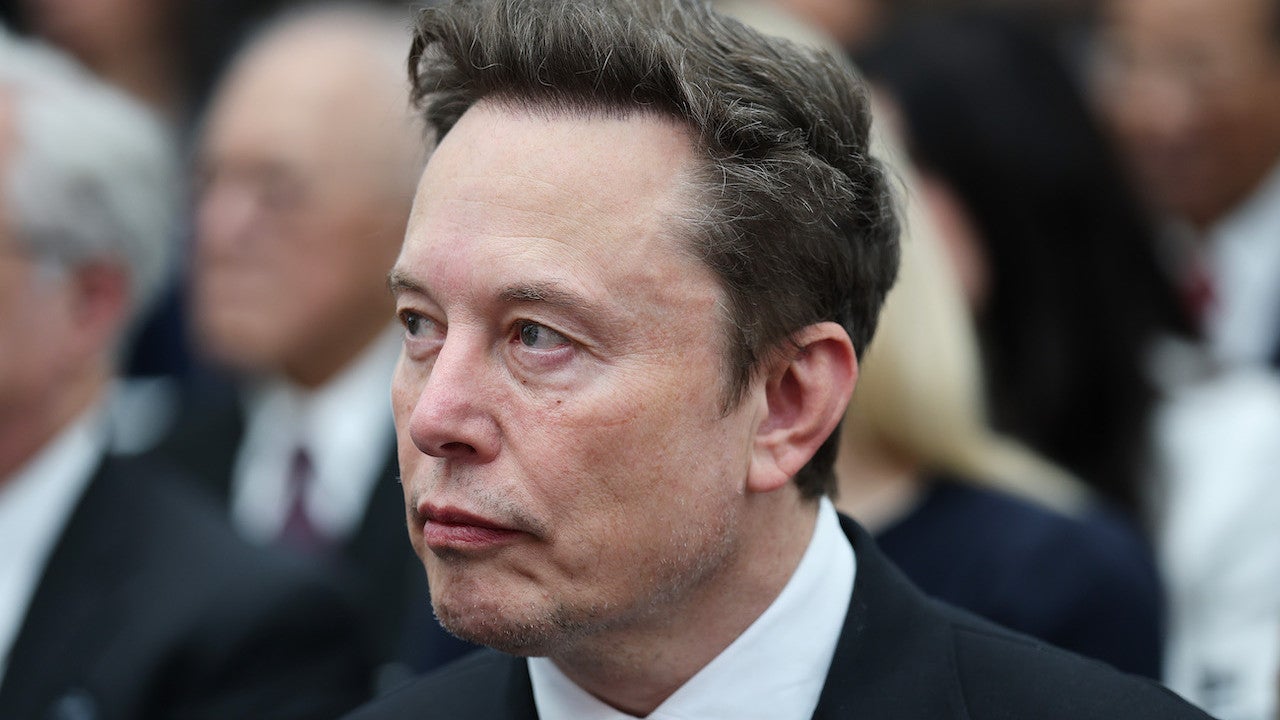
John Malone was clearly onto something. Beaming into the Paley International Council Summit in New York on Wednesday, the legendary media mogul and Warner Bros. Discovery chair emeritus predicted Elon Musk’s SpaceX could strike an $8 billion to $10 billion investment and distribution deal with David Ellison’s Skydance. Less than 24 hours later, Semafor reported that Musk had invested roughly $1 billion in the newly combined media company. Malone’s prediction was considerably larger than the reported investment, and there’s no indication yet that a broader agreement is in place. But the timing was striking, particularly coming from a man whose decades of dealmaking earned him the nickname “The Cable Cowboy” — as a former boss of mine liked to call him. The bigger question is what Musk gets out of the investment — and what it means for a company that now controls CBS News, CNN, Warner Bros., HBO and Paramount. There’s already one particularly awkward example: Alex Gibney’s documentary “Musk,” a critical examination of the billionaire’s business and political influence, is expected to stream on HBO in early 2027. HBO is now part of Skydance, the company Musk has reportedly invested in. Skydance has reasons to welcome another deep-pocketed investor. Weeks after completing its acquisition of Warner Bros. Discovery, the company is carrying roughly $80 billion in debt and targeting at least $6 billion in annualized merger-related cost reductions within three years. Fresh capital could help strengthen its financial position. But Musk isn’t just the world’s richest man looking for a financial return. He owns X and runs SpaceX and its Starlink satellite internet business. That gives him interests in both digital media and the infrastructure used to deliver it. One possibility would be offering Skydance’s streaming services alongside Starlink internet subscriptions, although no such arrangement has been announced. For now, the precise terms of his reported investment, including his ownership stake and any accompanying commercial agreements, haven’t been publicly disclosed. And there’s more at stake here than Skydance’s balance sheet. Its portfolio includes two of America’s most prominent television news organizations, CNN and CBS News. While David Ellison has pledged to protect their editorial independence, another politically influential investor raises questions about where financial relationships end and editorial influence begins. The Gibney documentary illustrates how those questions can become complicated. The nearly four-hour film opened in theaters earlier this month. Musk has denounced it and threatened legal action against its makers. The rollout has already encountered obstacles. Gibney has said Universal, which holds international theatrical distribution rights, wavered amid legal threats, though the studio insists its release plans haven’t changed. Advertising faced restrictions on several technology platforms, including Musk-owned X, while YouTube and Meta subsequently cleared their ads and attributed earlier rejections to errors. The concerns now extend beyond Gibney. In a statement Saturday, the Writers Guild of America East and West accused technology platforms of restricting advertising for the film and warned that the growing concentration of media ownership among billionaires threatens independent expression. Gibney also expressed concern about the documentary’s future at HBO in a new interview with Status, although he said he’d been assured David Ellison remained committed to releasing it. “Of course, I’m concerned,” the filmmaker said. There’s no evidence Musk invested to block the film or that his investment will affect its streaming release. A financial stake doesn’t automatically confer authority over programming, and the Ellison family and RedBird Capital Partners held all of Skydance’s voting shares when the Warner Bros. Discovery acquisition closed earlier this month. Still, the situation presents a revealing test for the newly combined company. The Ellisons’ financial ties to Musk aren’t new. Larry Ellison, David’s father and a major Skydance backer, invested $1 billion in Musk’s 2022 Twitter acquisition and previously served on Tesla’s board. Malone cited those ties in his prediction Wednesday. What’s changing is the scale of the media assets involved. Wealthy investors have shaped news and entertainment for decades. Moguls like Malone built empires through ownership stakes, acquisitions and distribution deals. Today’s Silicon Valley titans bring something more: technology platforms, political relationships and direct access to enormous audiences. For traditional media companies, that kind of backing is hard to turn down. But it also blurs the boundaries between investors, distributors, publishers and the people those publishers are expected to cover. David Ellison has publicly committed to editorial independence, and there’s no indication Musk has been given authority over CNN, CBS News or HBO’s programming. But there’s a difference between holding formal authority over editorial decisions and having enough financial or commercial leverage to make those decisions more complicated. For CBS News, CNN and HBO, the challenge isn’t simply who invests in their parent company. It’s whether the journalists and filmmakers working under that corporate umbrella can continue covering those same investors without worrying about the consequences. That test of editorial independence may prove more consequential than the size of Musk’s investment itself. Yahoo’s CEO Warns AI Could Break the Economics of Digital Publishing For decades, publishers operated under a straightforward arrangement with search engines: Their content helped power the internet, and search engines sent readers back to the websites producing it. Yahoo CEO Jim Lanzone says that arrangement is breaking down. Speaking Wednesday at the Paley International Council Summit, Lanzone warned that AI-powered search tools increasingly provide answers without directing readers to the original sources, calling the threat to publishers an “existential issue.” He cited traffic declines of 60% to 70%, though he did not identify specific publishers or a timeframe. Bluesky COO Rose Wang, appearing on the same panel, raised concerns about the growing concentration of control over online information among a handful of technology companies. Yahoo is developing its own alternative through Yahoo Scout, an AI search product designed to provide answers while directing users to their sources. The question for publishers is whether they can preserve the advertising revenue, subscriptions and audience relationships that sustain original journalism when AI companies increasingly become the primary destination for information. My full piece: Yahoo CEO Warns AI Poses ‘Existential’ Threat to Publishers Trump’s Fight With the Press Keeps Escalating The Trump administration’s contentious relationship with the news media intensified this week, with separate confrontations involving CNN, Politico, The Independent and NBC News. CNN continued challenging White House restrictions on presidential travel coverage despite a federal injunction protecting its access. Meanwhile, Politico pushed back against White House demands to retract reporting about Chief of Staff Susie Wiles, acknowledging one factual error while defending its broader coverage. The White House also removed The Independent’s Andrew Feinberg from a presidential travel pool assignment following a tense exchange with Trump, prompting the White House Correspondents’ Association to condemn the move as retaliation. On Thursday, Trump called NBC News correspondent Monica Alba a “horrible little reporter” after she repeatedly questioned him about a controversial political ad targeting Ohio Democratic gubernatorial candidate Amy Acton. And on Saturday, Trump suggested he might move the White House press corps to another location, calling reporters “Fake News,” although no formal relocation plans have been announced. The incidents range from legal disputes over access to the president’s treatment of individual journalists. Together, they illustrate the different ways the administration’s confrontations with news organizations have played out this week. My coverage: White House Pulls Reporter From Trump Press Pool After Oval Office Clash ; Politico Fires Back at White House Threats, Corrects Susie Wiles Story ; CNN Threatens New Legal Action Against Trump White House Over Air Force One Access Meta’s $25 Billion Penalty Shows the Rising Cost of Big Tech’s Privacy Failures Meta was ordered Wednesday to pay $25 billion in civil penalties after a New Mexico jury found that Facebook repeatedly misled users about its privacy practices, resulting in one of the largest financial penalties ever imposed on an American corporation. The ruling stems from litigation tied to the Cambridge Analytica scandal, in which data collected from millions of Facebook users was used for political profiling. A jury found in September that Meta had committed nearly 44 million violations of New Mexico consumer protection law. Judge Francis Mathew concluded that the violations justified a substantial penalty, although he imposed a far smaller amount than the maximum potentially allowed under state law. Meta plans to appeal. Chief Legal Officer C.J. Mahoney argued that the ruling would make it difficult to operate in New Mexico and characterized the case as an attempt to regulate online speech through financial penalties. The ultimate amount Meta must pay remains uncertain. But the ruling underscores the growing financial consequences of how technology platforms handle user data. As Tess Patton reported for WrapPRO, Meta’s latest quarterly results showed that even nearly $10 billion in separate litigation-related charges did little to undermine its powerful advertising business. My full piece: Meta Hit With $25 Billion Fine in Cambridge Analytica Privacy Case Christiane Amanpour to Leave CNN After 43 Years as Network Faces More Anchor Changes Christiane Amanpour, whose reporting from war zones and international crises helped establish CNN as a global news powerhouse, announced Monday that she will leave the network next June after 43 years. The longtime chief international anchor will end her PBS program at the end of this year and scale back her daily CNN International show to a weekly format in early 2027. That program will conclude in May, with Amanpour leaving CNN in June. Amanpour joined CNN in 1983 and became synonymous with the network’s international reporting, covering conflicts from Bosnia to the Persian Gulf and interviewing world leaders across decades of geopolitical upheaval. The announcement was followed Thursday by another CNN International departure: Bianna Golodryga, co-anchor of “One World,” said she was leaving for a new opportunity. Zain Asher will remain with the program. Neither departure has been publicly established as a consequence of Skydance’s ownership. But together, they mark a significant transition for CNN International as the network enters a new corporate era without one of the journalists most closely associated with its global identity. My coverage: Christiane Amanpour to Leave CNN After 43 Years ; Bianna Golodryga Leaving CNN for New Opportunity
What Elon Musk’s Skydance Bet Really Means
Full Article
Original Source
Read the full article at Thewrap →KhanList aggregates and links to publicly available news content. We do not host full articles from third-party sources. Always verify important information with original sources.