
Minneapolis | Oct. 28, 2026, 5:00 a.m. ET | 10 min read Harry Boyte, co-chair of the Braver Angels Civic Scholars Council, served as a field secretary in the citizenship school program of the Southern Christian Leadership Conference, Martin Luther King Jr.’s organization, and later founded and directed the Center for Democracy and Citizenship at the University of Minnesota.Trygve Throntveit is Research Professor in Higher Education at Ball State University and a National Civics Fellow at the Hoover Institution at Stanford University.In January and February of this year, something remarkable happened. Everyday people in Minnesota captured the attention of a dispirited, doomscrolling nation by being good neighbors. We know, because we were there. Responding to what they viewed as the arbitrary and excessive conduct of federal agents deployed by Immigration and Customs Enforcement (ICE) and Customs and Border Protection (CBP), we saw Minnesotans from all walks of life connect across divisions too rarely bridged. They brought food to families whose earners were scared to work; gave rides to students whose guardians were afraid to take them to school; used whistles and cellphones to alert their neighbors to what their government’s agents were doing in their communities; and congregated peacefully by the thousands to express their opinions, share their grief, and buoy one another’s hopes for a community and nation of wider, more orderly freedom.To some Americans, in Minnesota and elsewhere, these actions seemed just the opposite: disorderly, disrespectful, and destabilizing to law enforcement. But many in the Twin Cities – including ourselves – saw these acts as constructive, creating threads of trust and support across partisan and other differences. “We broke out of ‘bowling alone,’” said Jaylani Hussein, director of the Council on American-Islamic Relations, referencing Robert Putnam’s 2000 book about the erosion of social capital in America. “The idea of community was present again.”Around here, many came to call this phenomenon “neighboring.” But there’s an older word for such personal concern channeled into collaborative, public work. That word is “citizenship,” and the rich history of its meaning provides an invaluable resource for our distracted and divided nation. Conceiving citizenship as the public work of neighbors building a better common life together does not require ignoring or undermining the legal meaning of the term. But it might help address the current crisis of faith in democracy: the sense among many Americans that they are powerless subjects and observers not only of an increasingly assertive executive branch, but also of grasping and manipulative social media empires, cancel-happy schools and congregations, or workplace hierarchies that make them feel like cogs in a machine. Citizenship, in its broadest and most powerful sense, is neither a legal status nor a cultural inheritance. It is the aspiration and practice of governing and building one’s public world in partnership with those who share it. ■ ■ ■This “public work” conception of citizenship (as we call it) recalls the nation’s founding, when the idea of colonists as citizens – autonomous individuals with the right and obligation to shape and sustain their commonwealth – created an electrifying alternative to the idea of colonists as subjects – wards of the crown whose privileges and obligations were defined by its ministers. In 2010, scientists at the Library of Congress discovered stirring evidence of the shift from “subject” to “citizen” in Thomas Jefferson’s thinking, after painstaking analysis of the layers of his July 2, 1776, working draft of the Declaration of Independence. In his original text, Jefferson addressed his fellow “subjects.” In his revision, he crossed out the word and replaced it with “citizens.” Jefferson’s change of phrase signaled recognition that whoever was to be included in the new polity must not rely on the benevolence of a new arbitrary sovereign, but must actively build and sustain an emerging democracy.Two generations later, when the French aristocrat Alexis de Tocqueville visited America in the 1830s, he found that the notion of citizens as autonomous yet neighborly co-workers was not revolutionary, but commonplace. Americans of all backgrounds and stations, he observed, banded together in voluntary associations to achieve what Europeans left to aristocrats or the state, driven by what he called “self-interest rightly understood” – the recognition that one’s long-term interests are inseparable from the well-being of one’s neighbors. Then and later, this conception of citizenship was embraced by many who, like Jefferson, left out many others critical to the nation’s development. But the ideal itself, again and again, moved those excluded to mount courageous democratic efforts to expand it. Throughout the 19th and early 20th centuries, working people organized mutual aid societies, recreational spaces, print and broadcast media networks, self-education initiatives, and industrial and financial cooperatives, as well as guilds and unions to develop their civic agency and widen the circles of public life. Their efforts not only improved their personal working conditions and expanded their civil rights, but also yielded health and economic benefits to the broader public and set examples that farmers, women’s organizations, consumer groups, and many others adapted to their own contexts – a clear example of citizenship as public work. Similarly, in the post-Reconstruction American South, the African American freedom movement emerged from the work of citizens – however disenfranchised – building power and achieving shared goals together across regional, cultural, religious, and racial differences. Beginning in the 1910s, using modest but critical grants from Sears, Roebuck and Co. President Julius Rosenwald, thousands of Black female teachers across the region organized Black communities to invest in, build, and maintain schools and libraries that not only educated their children, but also built centers of power, hope, and citizen education in their communities. In the 1950s, the success of Highlander Folk School inspired the spread of citizenship schools across the South, which taught Black residents how to register to vote, organize for community improvement, and embrace what Martin Luther King Jr. called a “deep sense of somebodiness”: a confidence in their own capacity to be agents of change. In 1961, Dr. King’s organization, the Southern Christian Leadership Conference, trained local leaders across the South to create more than 900 informal citizenship schools – in church basements, beauty parlors, Rosenwald Schools, and other sites. According to Andrew Young, then an SCLC leader and later the United States Ambassador to the United Nations, these schools prepared the leaders who were “the foundation of the nonviolent movement.” But they also supported everyday people who chose to work with neighbors to build common goods and contribute in creative ways to their communities, despite headwinds of discrimination and disenfranchisement.The dignity of such aspirational, agentic citizenship and its contrast with the legalistic, subject citizenship of colonies and empires left its mark on our own state. A flood of Scandinavian immigrants arriving to Minnesota in the late 19th century recorded what one described as their escape from “caste” and discovery of “democracy”: a condition in which “everyone was a landlord and servants sat down to table with masters.” Another described it simply but powerfully: “I am my own master, like other children of God.”This idea of citizenship as egalitarian, mutually respectful interaction across differences long shaped Minnesota’s politics – so much so that the organic relationship between effective institutions and empowered, responsible communities was sometimes taken for granted. As former Democratic senator for the state and U.S. Vice President Hubert Humphrey told the Minnesota Legislature on Jan. 2, 1973, “The caliber of government is pretty well measured by the quality of citizenship.” This was a cross-partisan sentiment, and not merely that: Mr. Humphrey, for example, worked closely with his friend Albert Quie, longtime Republican congressman and later governor of the state, on multiple policies to involve the people of Minnesota more meaningfully in government. A major cause and consequence was Minnesota’s well-earned reputation as the most civically engaged state in the nation, topping state league charts in volunteer hours, involvement in neighborhoods, charitable giving, voter participation, and many other measures for many decades. To acknowledge traditions conceiving citizenship as the work of everyday people building a shared public life is not to deny the term’s legal meaning and importance. It is rather to find in our own American past a potent response to the present crisis of democratic faith: the sense among many Americans that they are powerless subjects of distant elites – political, economic, cultural, technological – whom they cannot hold to account.The challenge is that for many who recognize and deplore this crisis, the very words “citizen” and “citizenship” have become toxic.■ ■ ■When one of us (Dr. Boyte) returned to the Twin Cities from South Africa in early January, he was struck by the scale of citizen action. Most adults and many children in his local congregation in St. Paul were actively engaged in ensuring that everyone who contributed positively to their community – regardless of their legal status – was treated as someone worthy of respect, support, and opportunity. In other words, they were citizens in the revolutionary, Tocquevillian, freedom-movement sense of the word. (Dr. Throntveit observed the same in his Minneapolis church.) But when Dr. Boyte asked a group of fellow congregants why no one was challenging the Department of Homeland Security’s insistence that “citizenship” was defined entirely by a few legal documents, most were confused. “What other kind of citizenship is there?” asked a friend.Citizenship in general parlance has been reduced to legal status. Under the Trump administration, the sanctity of legal citizenship is used to attack Democrats as the betrayers of “real” Americans and deployed against immigrants to justify deportations of those born elsewhere, however long their residence or whatever their contributions to the polity. This strict legalism often has an ethnic coloration, distinctly hostile to immigrants from the Global South even when they have legal permission to live and work here.■ ■ ■ The left has largely acquiesced in this ethno-legal commandeering of citizenship. Neither the Democratic Party nor the leadership of most progressive nonprofits, faith communities, schools, colleges, or cultural institutions has advanced any alternative to legal status with citizenship remotely comparable to the exhilarating shift from “subject to citizen” that motivated the founding generation.Valerie Lemmie, senior adviser on state and local government for the Kettering Foundation, says that “skepticism about using the word ‘citizen’” has been growing among city managers and other local executives for years. Seattle’s government helped set the pattern, banning the use of the word “citizen” in official statements in 2013 on grounds the term was “potentially offensive.” Liberal and progressive nonprofits, worried that the ethno-legal connotations of “citizen” could turn off many of the people they serve, have largely replaced the word in their communications with phrases like “community member,” rather than redescribing citizenship in more inclusive terms.The turn against citizenship has been especially prominent in higher education. Entire disciplines in the humanities have developed a culture of critique that focuses with laser intensity on the country’s democratic deficits and neglects America’s rich tradition of citizens – with and without legal papers or privileges – banding together to solve common problems and achieve common goals. Beginning a decade or so ago, institutional style guides across the academy began purging the word from official campus discourse. Many K-12 systems have taken the academy’s lead. In 2022, an American Enterprise Institute report on the 100 largest American school districts found that none mentioned either “patriotism” or “America” in mission statements, and only 29 used the term “citizen,” mostly as part of the phrase “global citizenship.”To erase citizenship from the story of American democracy in this way is to erase the efforts of groups throughout history that have organized to claim and practice it – including the efforts of undocumented immigrants. As William V. Flores of the University of Houston-Downtown has detailed, the increasing precarity of life for undocumented Latin American residents over the past decade has spurred movements among many such immigrants to convince neighbors and officials that they are citizens because they act like citizens: following current events, volunteering in local causes, organizing to provide help for those in need, and advocating for legal rights commensurate with their personal dignity and public contributions.■ ■ ■ As we reflect on 250 years of the Declaration of Independence, it is worth remembering that founders and rivals like Thomas Jefferson and John Adams, early educators like Benjamin Rush and Noah Webster, and even the pater patriae himself, George Washington, all saw education as the means by which everyday citizens and local communities would develop and maintain their ability to practice democracy and sustain the nation as a republic and a commonwealth. And as our Constitution also approaches its semiquincentennial, it is noteworthy that, as so many excluded, dispirited, and downtrodden Americans before us (and among us) have done, those whom that text identifies as the primary agents of the nation’s destiny are “We the People.”There are hopeful signs. The National Civic League maintains a database of more than 11,000 organizations working in all 50 states and hundreds of different ways to support the public work of everyday citizens building democracy. Organizations like the Industrial Areas Foundation work across partisan and cultural divides to build civic agency around local community problems. Educators across the country are developing civics curricula that engage students in the practice of democracy, rather than drilling them in recitations of rights and procedures. After 10 years of building respectful relationships across partisan divides, Braver Angels – a volunteer organization with more than 100 local chapters, thousands of members, and hundreds of partner groups – embraced in September 2025 the promotion of “courageous citizenship,” or the willingness to take risks for action with public-spirited purpose. To advance this goal, BA has created a Civic Scholars Council of leading scholars and reflective practitioners to define, challenge, and shape its meaning and practice in modern American life. (We are both members of the council.) Deepen your worldviewwith Monitor Highlights.Politics with respectGet political stories with respectful analysis.There‘s a world of new ideas in everyBooks newsletter.There‘s more to life, enrich yours withCulture & Learning weekly.Follow humanity‘s discoveries withScience & Nature stories in your inbox.Gain a spiritual perspectivefrom the stories in your inbox.Want to understand the deeper impact of critical events? Learn the Monitor‘s insight.Already a subscriber? Log in to hide ads. All these Americans stand in a venerable tradition that has reemerged, again and again, in previous eras of economic and social inequality, government imbalance, and public malaise. As future Supreme Court Justice Louis D. Brandeis stated in a 1903 address on effective and accountable government – at a time when the progressive-era revolt against unaccountable power was gathering force – “The most important office, and the one which all of us can and should fill, is that of private citizen.” From the perspective of today’s America, Brandeis’ sentiment might sound striking: quaint, even naive to some; inspiring and empowering to others. But to everyone, it should stand as a reminder and challenge: Citizenship has never been simply a legal tool for sorting and dividing the governed. It has always been, and remains, a station to which “We the People” are called to meet our common challenges and improve our common lives. ALREADY A SUBSCRIBER? LoginReal news can be honest, hopeful, credible, constructive.The Christian Science Monitor was founded in 1908 to lift the standard of journalism and uplift humanity. We aim to “speak the truth in love.” Our goal is not to tell you what to think, but to give you the essential knowledge and understanding to come to your own intelligent conclusions. Join us in this mission by subscribing.
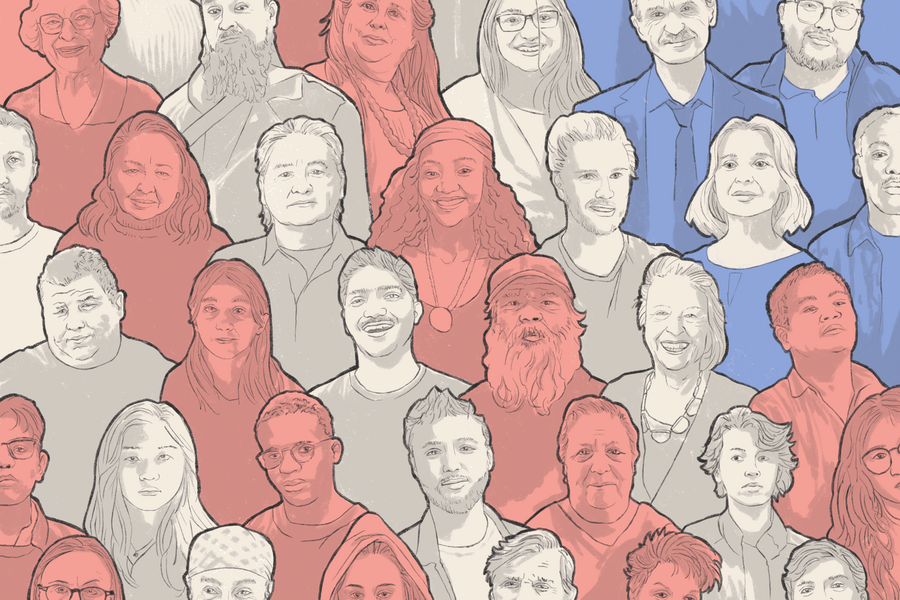
What does citizenship mean? A case for a broader definition.
Full Article
Original Source
Read the full article at Csmonitor →KhanList aggregates and links to publicly available news content. We do not host full articles from third-party sources. Always verify important information with original sources.