
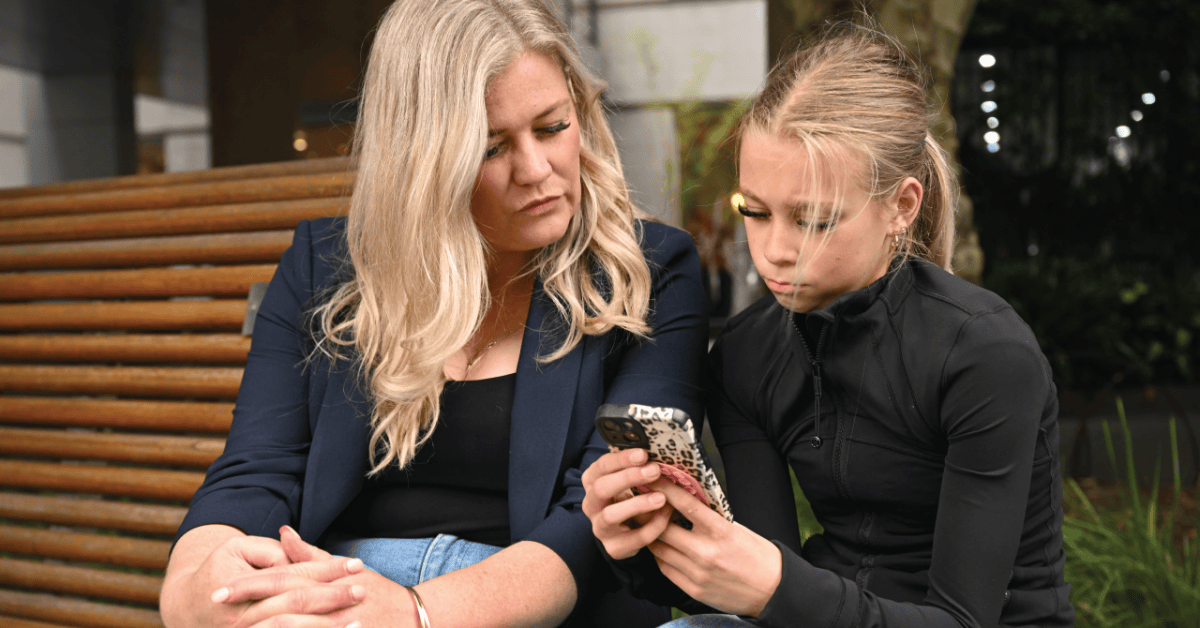
Ava Chanel Jones, a 12-year-old Australian social media influencer, with her mother in Melbourne, Australia, on Nov. 18, 2025. (William West/AFP via Getty Images) On Dec. 10, 2025, Australia enacted a first-of-its-kind law to restrict children’s access to social media. The law requires social media platforms, such as TikTok, Instagram and Snapchat, to verify the ages of all account holders and remove any accounts that belong to children under 16 years old. Older Australians are especially supportive of restricting children’s social media access % who __ restricting access to social media for children in Australia Note: Those who did not answer are not shown. Source: Survey of Australian adults conducted March 30-April 13, 2026. PEW RESEARCH CENTER Older Australians are especially supportive of restricting children’s social media access % who __ restricting access to social media for children in Australia NET opposeStrongly opposeSomewhat opposeSomewhat supportStrongly supportNET supportGroupingAustralian adults18612305182TotalMen21813324679GenderWomen15312285785GenderAges 18-2926918363873Age30-4920614324880Age50-6415510335285Age65+1138216889AgeUses social media daily21615334679UseUses social media less often945296190UseDoes not use social media18612196382UseParent of kid(s) <1618514315182ParentNot a parent of kid(s) <1618612305282ParentSupports the Labor party19613305081SupportDoes not support the Labor party14411305686Support Note: Those who did not answer are not shown. Source: Survey of Australian adults conducted March 30-April 13, 2026. PEW RESEARCH CENTER Despite mixed reports on the efficacy and impact of the ban, 82% of Australian adults support restricting access to social media for kids. This includes 51% who strongly support it, according to a new Pew Research Center survey. Since we fielded the survey in the spring, the Australian government has strengthened the law, including by doubling the maximum fine for social media companies that don’t comply. Australians’ support for restricting children’s social media use is high overall, but the strength of that support varies. About this research This Pew Research Center analysis explores Australians’ support for restricting children’s social media access. Why did we do this? Pew Research Center does research to help the public, media and decision-makers understand important topics. This research is part of the Center’s annual Global Attitudes Survey, which covered 37 countries in 2026 and topics ranging from views of the U.S. to views of AI and more. How did we do this? The data for this analysis is from a survey of 2,064 Australian adults from March 30 to April 13, 2026. Everyone who took part in this survey is a member of the Social Research Centre’s Life in Australia™ panel. The survey is representative of the full Australian population. Here is the survey question used for this analysis along with detailed responses, and the methodology. Young adults show the least support for limiting access. About seven-in-ten Australians ages 18 to 29 support restricting children’s social media access. They are roughly split between strong and mild support. Among Australians 65 and older, 89% support restrictions, including 68% who strongly support them. Those who use social media and those who do not use it are equally supportive of restrictions. However, lighter users support restrictions more than heavy users do: 79% of those who use social media every day support bans, compared with 90% of those who use social media less often. Seven countries have implemented social media restrictions for children. Brazil, for example, became the first Latin American country with this type of law in March. Accounts for children under 16 now require parental consent. That same month, Indonesia began implementing similar restrictions. Several other countries have passed or are considering restrictions. In addition, the European Commissioner has pledged, but not yet implemented, a bloc-wide ban for children under 13. There is no difference in opinion between adults with and without kids under 16. But more mothers than fathers of children under 16 show strong support for restrictions. Overall, parents of children 10 and under also show more support for restrictions than those with kids 11 to 15 do. In addition: Women overall are more supportive of restrictions than men are. People who do not identify with Australia’s current governing party, Labor, show more support than those who do identify with it. Those who say social media has been more of a bad thing for Australian democracy are more supportive than those who say it’s been more of a good thing (87% vs. 76%). Those who say social media has made people more divided show more support than those who say it’s made people less divided (83% vs. 69%). Those who say social media has made people less informed show more support than those who say the opposite (86% vs. 80%). Related: Across the Globe, People Increasingly Say Social Media Is Harming Democracy The United States does not restrict social media for children at the federal level. However, 56% of U.S. adults support banning anyone under the age of 16 from using social media sites, according to a Center survey from May and June. This survey took place before Meta and 47 U.S. states reached a settlement in a landmark case over teen social media addiction. Notably, adults ages 30 to 49 are the most likely to support a social media ban for children. And Americans who have kids under 18 are much more likely to support a ban than those who don’t have minor children. Note: Here is the survey question used for this analysis along with detailed responses, and the methodology. Laura Clancy is a research analyst focusing on global attitudes research at Pew Research Center.
What Do Australians Think About Social Media Restrictions for Kids?
Full Article
Original Source
Read the full article at Pewresearch →KhanList aggregates and links to publicly available news content. We do not host full articles from third-party sources. Always verify important information with original sources.