
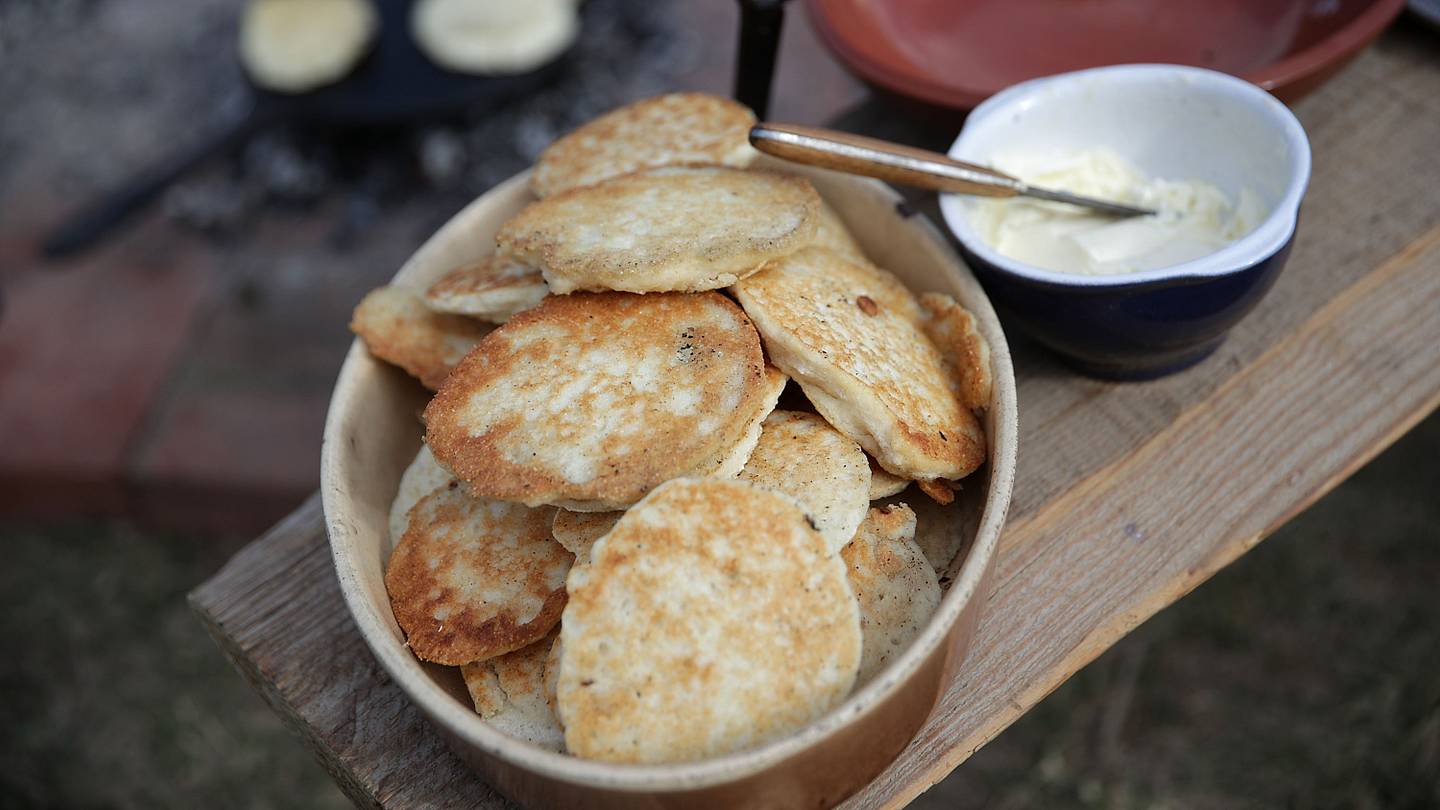
George Washington's original vision for America included peace, prosperity—and possibly, pancakes—for all. The latter is arguably the most successful of the three to come to fruition in modern-day 'Murica. At least, that's the feeling if you make your way to one of the places it all started: Williamsburg, the historic colonial capital of Virginia and the current Pancake Capital of the World.If the almost comically packed row of pancake houses along Richmond Road misses you on your way into Williamsburg, the smell of warm maple syrup and sizzling griddle batter is sure to stop you in your tracks. That's especially true during the Williamsburg Pancake Festival, where frenzied pancake-eating contests and all-you-can-eat flapjack feasts paint the town golden brown each fall. But step off the main strip and onto the cobblestones of Colonial Williamsburg, and you quickly learn that 250 years ago, mornings looked—and tasted—drastically different.To understand how Jamestown's neighbor turned into IHOP's rival, you have to look at what was actually cooking over 18th-century hearths. Mental Floss got a taste of Williamsburg's current food scene while attending the second annual Williamsburg Pancake Festival, along with a whiff of what fed some of colonial America's earliest residents, courtesy of local historian Trish Thomas, owner of Williamsburg Walking Tours.According to Trish, the country's current breakfast hyperfixation isn't a departure from history—it's an evolution. "We've always had something like pancakes in this country," Trish explains, describing the cornmeal cakes settlers once started the day with. "They are pancakes, except they're using corn because wheat flour was expensive," she says. "As wheat becomes less expensive, people move to wheat because it's finer—it makes you feel a little more elite. But poor people will always use the corn."The Colonial Breakfast Class DivideHoecakes sizzling on a cast-iron griddle over an open hearth fire. | Courtesy Exchange PlaceFor enslaved laborers and working-class settlers in colonial Virginia, breakfast was a quick, no-frills affair. Think coarse cornmeal simmered into porridge, or mixed with water, a pinch of salt, and cooked with lard on whatever metal tool was on hand—often a garden hoe or shovel. These hearth-cooked hoecakes were adapted from Native American ash-cooked cornmeal cakes and were often topped with thick, nutrient-dense molasses rather than maple syrup. More realistically, though, the most important meal of the day was often built on leftovers from the day before. The people's breakfast was a practical mix of "something new, something from last night," Trish says, where fresh hoecakes were paired with whatever survived from yesterday's dinner. Of course, this was all contingent on the rare occurrence of having time to eat before the workday began.For the Virginia elite, the morning meal was far more refined—and took its time. Wealthy aristocrats like William Byrd II often eased into the day with plain or boiled milk mixed with seasonal fruit before having a larger meal later on. But when upper-class Virginians did crave cakes for breakfast, they pulled out all the stops."George Washington used a fine white cornmeal, and he liked his to rise, so it was mixed with yeast and set overnight," Trish notes. "In the morning, they would cook his on a griddle, and he liked his with a bunch of butter and honey."How Williamsburg Became the Pancake CapitalStacks of extravagant pancakes on display at the Williamsburg Pancake Festival. | Courtesy Visit WilliamsburgSo, how did breakfast in Colonial Williamsburg go from the occasional hoecake to towering stacks of pancakes served with enough side dishes to feed the whole family?It all goes back to the Greeks, who, coincidentally, are credited with writing the earliest recorded recipes for pancakes in ancient times. Closer to home, Williamsburg's transformation began in the mid-20th century, when World War II brought military families to the area.With local motels lacking built-in dining rooms, Greek-American restaurateurs from nearby Newport News stepped in to fill the void with diner fare that was "Quick, easy, inexpensive, and filling," says Trish, a Virginia Beach native who has been studying the history of Southeastern Virginia for 30 years. "We kept them because we're traditionalists here and we like them."Fluffy flapjacks kept sightseers full until an early dinner, saving families time and money while exploring the restored colonial capital and, by the mid-1970s, nearby Busch Gardens. Over the decades, generations of Greek-American families kept the griddles going to feed the tourism boom. It started in 1956 with early local institutions like The Jefferson Restaurant, followed by Mama Steve's House of Pancakes in 1968—now recognized as the town's oldest continuously operating pancake house. The breakfast scene continued to boom with Capitol Pancake House in 1982, while the Prassus family helped feed the growing stream of Historic Triangle tourists by opening National Pancake House in 1986 and Colonial Pancake House in 1997. The cheeky signage at Not Another Pancake House along Williamsburg's famous Richmond Road strip. | Nitya RaoToday, this dense strip gives Williamsburg roughly one independent pancake house for every 1,450 residents—boasting the highest per capita ratio of pancake houses in the country and earning the city its official title as the "Pancake Capital of the World."These days, cinnamon bun pancake hybrids and trending toppings—from Biscoff cookies to pumpkin pie—have made their way onto breakfast menus across town, a far cry from the modest hoecakes of Washington's heyday. And while the rush of the corporate American routine has made the sit-down morning meal feel increasingly rare, long, slow mornings at pancake houses still prevail in Williamsburg.In fact, the tradition runs so deep that the town hosts an entire festival dedicated to the staple, complete with a jaw-dropping (or in Joey Chestnut's case, jaw-unhinging) competitive eating competition, a pancake mascot named "Short Stack" roaming the grounds, and even a side of sausage—the "Sausage Sprint" dachshund race, that is.No matter how you stack them, the sentiment stands strong. Two hundred fifty years later, Williamsburg is still doing what it has always done best: fueling the American morning, one flapjack at a time.More Like This:
What Did People Eat for Breakfast in Colonial Williamsburg?
Full Article
Original Source
Read the full article at Mentalfloss →KhanList aggregates and links to publicly available news content. We do not host full articles from third-party sources. Always verify important information with original sources.