
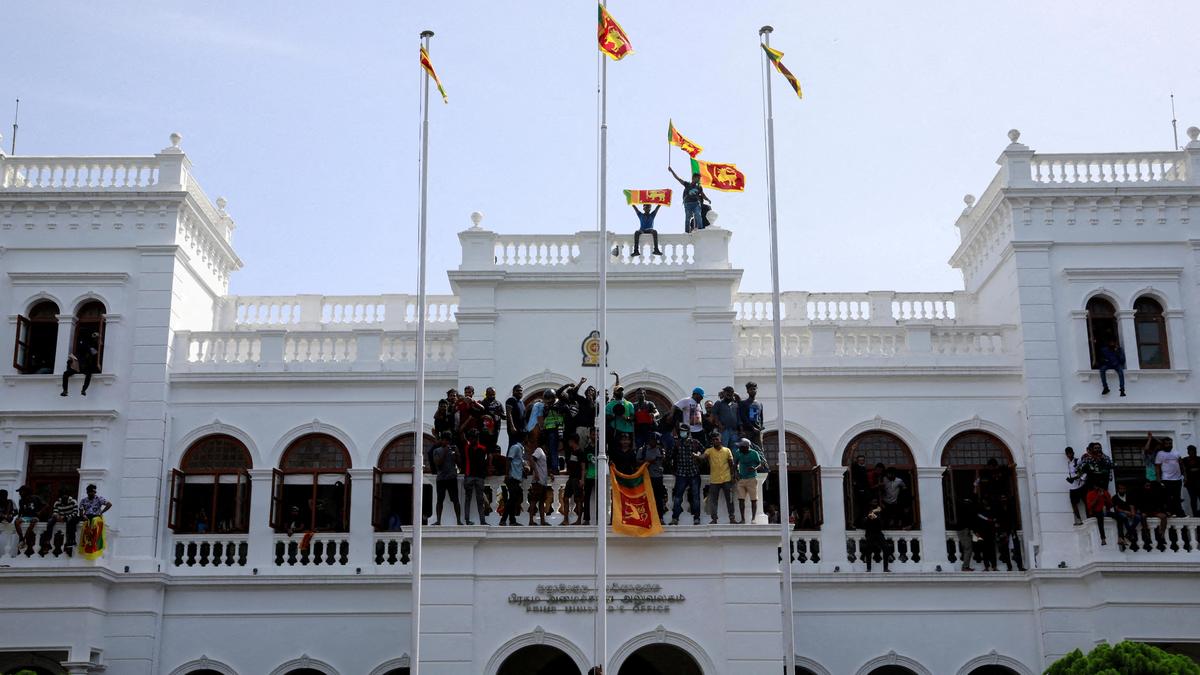
Political upheavals are increasingly watched live, narrated through the media in real time. The build-up to crisis, the anger of crowds and finally the fall of an unpopular order can be compelling. It is easy to be swept up in the euphoria when justice seems to have won a battle.It can conceal a longer history of institutional failure and social fracture, the different motives carried by those in the streets, and the harder question of what follows once the common adversary has been removed.In his novel about the French Revolution, A Tale of Two Cities, Charles Dickens was concerned with both what produced the revolution and what followed it. His warning was double-edged.The ancien régime had become insulated from the increasingly unjust order from which it benefited. When the Marquis St Evrémonde’s carriage kills a child, what matters is not simply one aristocrat’s cruelty but what his reaction reveals: privilege has created such distance from ordinary lives that suffering itself has become almost invisible.But Dickens does not stop there. The collapse of an unjust order does not guarantee that what follows will be more just. Grievance can become vengeance; the crowd that rises against arbitrary power can itself begin to exercise power arbitrarily. Madame Defarge, quietly knitting into her register the names of those marked for revolutionary punishment, gives Dickens’s warning a chilling human form: justice has begun to harden into vengeance.Destruction of restraintBetween the blindness of the old elite and the vengeance of the revolution lies the destruction of restraint.South Asia has no single ancien régime confronting a single dispossessed population. Universal suffrage and democratic competition have produced a more plural and polarised order, with power dispersed among competing elites. Different groups carry different memories of exclusion, and each can regard itself as historically wronged while remaining insensitive to others.Sri Lanka’s Aragalaya, Bangladesh’s uprising, Nepal’s upheaval and India’s recent youth mobilisation invite comparison, but each arose from its own history and differed in violence, duration and consequence. Dickens is useful not because these episodes resemble the French Revolution, but because he illuminates recurring dynamics: insulation, grievance, weakening authority, the exhilaration accompanying its collapse, and the difficulty of controlling what follows.Sri Lanka is particularly instructive. The Aragalaya emerged from frustration and desperation. Petrol queues stretched for hours and sometimes days; cooking gas became scarce; electricity failed; inflation destroyed household security. Yet shared adversity also produced genuine civic spirit. People from very different social worlds encountered one another as equals before the same hardship.That solidarity was real, but situational rather than structural. The professional, student, businessman, labourer and unemployed youth might all have stood in the same petrol queue, but that did not remove the inequalities separating their lives or repair a dysfunctional system. Fellowship could bridge a social gulf without bridging the gulf in understanding.Professional, intellectual and relatively privileged participants became especially visible, possessing the vocabulary and networks through which the movement was explained at home and abroad. Their critique of corruption, injustice and failed governance became dominant.But visibility is not control. A family unable to afford food, a professional demanding reform and organised political actors could occupy the same space without imagining the same future. Agreement about what must end is easily mistaken for agreement about what should follow; the best organised may ultimately shape the aftermath.Sri Lanka also demonstrated the fragility of authority. At the decisive stage, President Gotabaya Rajapaksa chose to leave rather than allow the confrontation to become prolonged and potentially bloodier. That restraint helped avert a greater tragedy, but it also had a psychological consequence. Protesters discovered that boundaries presumed formidable could suddenly be crossed at little immediate personal cost.The President’s House was entered by large crowds. Galle Face had created an exhilarating sense of an alternative civic order; after the President’s departure, the residence became part of a national spectacle, a political tamasha. But the unrest had also taken a darker turn. The homes of politicians, including that of the Prime Minister, were burned, and a Member of Parliament was killed. The violence was eventually halted when protesters approached the precincts of Parliament.The point is not that greater repression would have been preferable. It is that the absence of resistance can be mistaken for the absence of limits. Political authority also rests on shared conventions: a collective belief that institutions matter. The fall of an office-holder and the degradation of the office are not the same political act.Once institutions become objects of ridicule, occupation or attack, a psychological barrier has been broken. Courts, legislatures and public offices cannot function through coercion alone. Restoring authority is harder than breaching it.Dickens’s darker warning is especially relevant here. Apparent victory may be the beginning rather than the end of the danger. In a modern democracy, the erosion need not arrive as revolutionary terror; it can creep in when an establishment is divided and a political vacuum opens.It may begin with retribution against figures associated with the discredited order. Investigations or prosecutions can appear to be overdue accountability, while the safeguards weakened in pursuing them attract little defence. Retribution can be mistaken for justice; due process can begin to look like protection for the undeserving.But institutions are weakened through precedents as much as intentions. Once selective treatment becomes acceptable, the category of those deserving it can expand. Courts, universities, bureaucracies, professional bodies and media can remain standing while their independence is gradually eroded. Those who first defended the process may recognise its arbitrariness only when it reaches their own allies or liberties.Meanwhile technological, economic and social change is unsettling assumptions about employment, advancement and security. People can recognise that something is failing without knowing what should replace it. Mobilisation is often better at identifying what is intolerable than what is practicable.Governing therefore becomes harder at precisely the moment when governments are most distrusted. Serious reform creates winners and losers and requires compromise and sacrifice. Polarised politics rewards the opposite: immediacy, certainty and moral absolutism.Ethnic, class, religious and historical grievances complicate the problem. Each group sees its own wounds clearly and those of others dimly. Practices tolerated when one’s allies ruled become intolerable when opponents benefit. Political energy goes into changing who controls a defective system rather than repairing why it produces inequity and resentment.Defective machineryNew groups gain influence through institutions long dominated by others but inherit the same defective machinery. Political opportunism thrives, while better-organised forces can shape an uprising’s direction and outside actors its narrative without living with its consequences.Dickens’s insight therefore remains. Those protected by an order can fail to perceive its injustices until the consequences reach them. Those intoxicated by its apparent defeat can mistake righteous anger for political wisdom. And those who tolerate the weakening of institutions against their enemies can discover too late why those restraints existed.The moment when justice appears to have won a battle may be when society most needs to preserve its judgement.That is the darker side of revolution — and perhaps the part Dickens understood best.Milinda Moragoda is a former Cabinet Minister and diplomat from Sri Lanka and founder of the Pathfinder Foundation, a strategic affairs think tank
What Dickens understood about revolution and modern politics has forgotten
Full Article
Original Source
Read the full article at Thehindu →KhanList aggregates and links to publicly available news content. We do not host full articles from third-party sources. Always verify important information with original sources.