
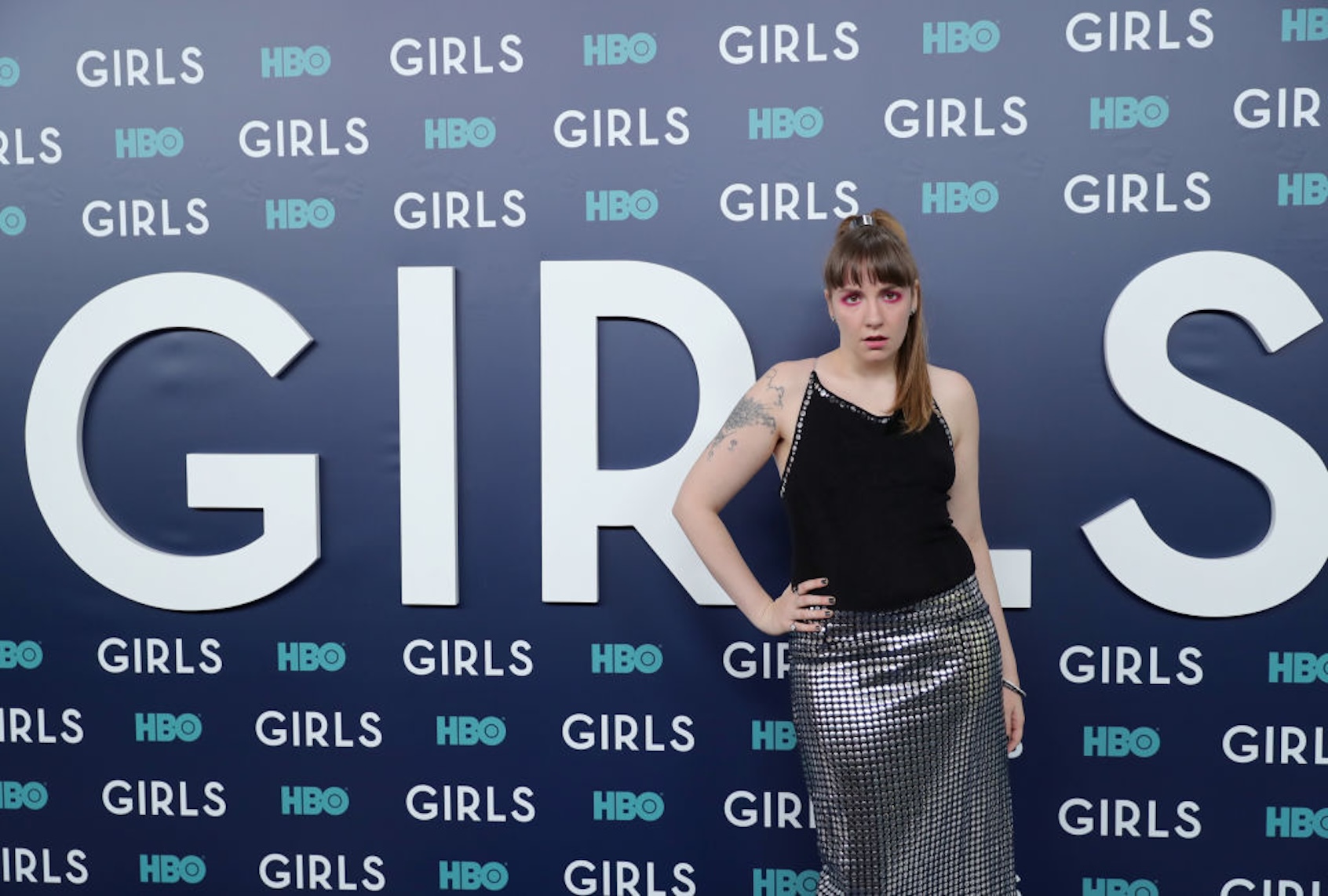
commentary The internet can't agree on what makes a show millennial. "Girls" provides the key Published August 30, 2026 9:00AM (EDT) Lena Dunham attends the New York premiere of the sixth and final season of "Girls" on Feb. 2, 2017. (Neilson Barnard/Getty Images) A shaky Rolling Stone exposé published earlier this month set out to examine comedian Reggie Watts’ potential culpability in his ex-girlfriend’s suicide. On the page, the story morphed into a wider examination of his possibly suspect behavior in previous relationships, culminating in a claim of assault. Through his lawyers, Watts has denied the allegation. But the murky situation didn’t stop commenters from falling back on a cliché of cancellation: “I never liked his stuff anyway.” A clip from Watts’ parody track “F*ck Sh*t Stack” spread on X with the caption “lock his cringe millennial a*s up bro I’ve seen enough.” Millennials old enough to remember Watts’ rise responded that he was nearly 40 at the time the song was written, placing him solidly as a member of Gen X. The slapfight spiraled into a broad argument about what makes a piece of art — specifically television — “millennial.” Is it, as younger generations might argue, simply being embarrassing? Is it an ethos of earnestness? Suffocating irony? Following the conventions of the last decade’s headlines, is being a millennial simply anything you don’t like? Although they premiered more than 20 years apart, the television shows “Bluey” and “South Park” have been tarred with the “millennial” brush. “The Office,” with its belief in finding salvation and love through the surrogate family at your soul-sucking work job, was millennial, but so was the shaggy anti-ambition of “Workaholics.” The naive can-do-ism of “Parks and Recreation” was millennial, but so was the go-nowhere nihilism of “It’s Always Sunny in Philadelphia.” Like all generational debates, to define what makes “millennial art,” we have to start with what it is not. It’s not television and music that was enjoyed by or even aimed at millennials. Culture that is primarily consumed by one generation does not inherently make it of that generation. The audience for Nickelodeon’s “SpongeBob SquarePants,” for example, was primarily young millennials, but the sensibilities of its Gen X writers are all over it. The Tiny Tim needledrops, an in-universe parody of Adam West’s Batman, the irony of its main character finding fulfillment as a fry cook — it all pointed toward Gen X’s wry, detached view of culture. Another way to put it: “Easy Rider” was an important movie for Baby Boomers, a cultural touchstone for a generation that liked to see themselves in the maverick Dennis Hopper, but it was not “boomer art.” The film’s shocking ending, in which his and Peter Fonda’s characters were shot and killed on the highway, was too grim and grounded, and Hopper was too old and jaded, to represent a generation on its way up. “American Graffiti,” on the other hand, is of and about the Baby Boom. Truly generational art, that speaks to, for and about a given generation, has to be made by a member of that group. As for millennials, if you’re looking to draw that line for the current crop of thirty-to-fortysomethings, the point that separates Gen Y’s art and all that came before, look no further than Lena Dunham. The star and showrunner of “Girls” is the best possible line of demarcation for “millennial art” for meta-textual and arithmetic reasons. Having sold her show about young, hip and irritating urbanites to HBO at the age of 24, Dunham was one of the first millennial showrunners, period. The star and showrunner of “Girls” is the best possible line of demarcation for “millennial art” for meta-textual and arithmetic reasons. Having sold her show about young, hip and irritating urbanites to HBO at the age of 24, Dunham was one of the first millennial showrunners, period. She used her opportunity to create a warts-and-all portrait of her over-educated and downwardly mobile milieu. In the wake of the Global Financial Crisis, her characters scraped together jobs to support passion projects that were overwrought and beyond their grasp. They lived in makeshift apartments and partied in retrofitted warehouses. Social media allowed them to be endlessly self-obsessed, without ever coming around to liking what they see. As Hannah Horvath, Dunham staked her claim in the series’ opening episode. While begging her parents to keep sending her money, Hannah admitted that she thinks of herself as “the voice of my generation. “Or at least a voice. Of a generation,” she added sheepishly. It’s the sort of line that doesn’t stand up to an unkind reading. Dunham’s slightly exaggerated portrait of people in their twenties being as annoying as every group of twenty-something artist types before and since struck a nerve, and there were plenty of people willing to scrape away the obvious humor to get a dunk in on the youth. “Is this what we’re like?” viewers around Dunham’s age asked. “This is exactly what you’re like,” every other generation sneered back. “Girls” ran for six seasons and remains as divisive today as it was when HBO regularly rolled out new adventures of Hannah. The passage of time hasn’t softened anyone’s read, and few people are rushing to publicly declare their love for the show in 2026. Dunham’s haters then are just as likely to groan upon a rewatch. For their part, her fans are still likely to watch the uncomfortable show through their fingers. But whether the millennial showrunners who came in Dunham’s wake will admit it or not, they’re following the model she laid out. Start your day with essential news from Salon. Sign up for our free morning newsletter, Crash Course. Millennial television is uniquely economically anxious. In “Succession,” the unfathomably rich Roy children are trying and failing to reach the benchmarks set by their father. Quinta Brunson’s scraping schoolteacher Janine Teagues in “Abbott Elementary” hopes to grow into the roles modeled by classroom veterans before rent and bills push her out of the profession. Even as millennial showrunners themselves find success and approach middle age, precarity is taken as a given in the stories they tell. The Emmy Award-winning HBO comedy “Hacks” debuted nearly a decade after “Girls,” and it was still centered around a struggling creative grasping for whatever work she could find. Given that grunt-work and dues-paying are such common themes across Millennial TV, it shouldn’t surprise anyone that many of the era’s most beloved shows grapple with a lack of fulfillment from work and love. Characters forced to make do either lash out, like raging overreactors on Lee Sung Jin’s petty, brutal “Beef,” or fall into holding patterns, like the unlucky in love leads of Issa Rae’s dramedy “Insecure.” Millennial television’s leads are also constantly striving to hit adult milestones, established either by their elders or their own anxious minds. Since they frequently fail, millennial protagonists suffer from a modern sort of arrested development. The sitcom “New Girl,” which aired for seven seasons between 2011 to 2018, plopped the endlessly quirky Zooey Deschanel into an apartment of similarly spritely man-children and followed them through their late ‘30s, growing older while barely growing up. The “Girls” finale approached this problem head-on, as Hannah and her youthful crew are forced to confront the fact that their Peter Pan, Brooklynite days are done: They’ve become adults while no one was looking. Adulthood also crept up on millennials themselves, and the end of their era of cultural dominance caught them completely by surprise. The news that “Stranger Things” debuted 10 years ago and “Hannah Montana” is nearly old enough to drink kills off a few neurons in the parts of their brains that insist they’re still young. Millennial TV is reaching its definitional upper limit. We can once again delineate the end of the era via new shows that don’t belong to it. The first Gen Z showrunners are already here. And they’ve brought along their own problems. Rachel Sennott is lampooning L.A.’s influencer set on “I Love LA.” Zach Hadel brings the bloody, madcap nature of the internet to his animated sitcom “Smiling Friends.” FX’s “Adults” is reflecting Gen Z from an uncomfortably close distance. Thankfully, Millennials already have a pretty good example of how to rage toward irrelevance. They’re the responsible adults now, watching Gen Z characters that wrestle with generation-specific problems in ways that look confusing from the outside. If contemporary reviews of “Girls” taught Millennials anything, it’s that your first response to the next generation of TV should be contempt. Related Topics ------------------------------------------ Related Articles
What defines millennial television? Just ask Lena Dunham
Full Article
Original Source
Read the full article at Salon →KhanList aggregates and links to publicly available news content. We do not host full articles from third-party sources. Always verify important information with original sources.