
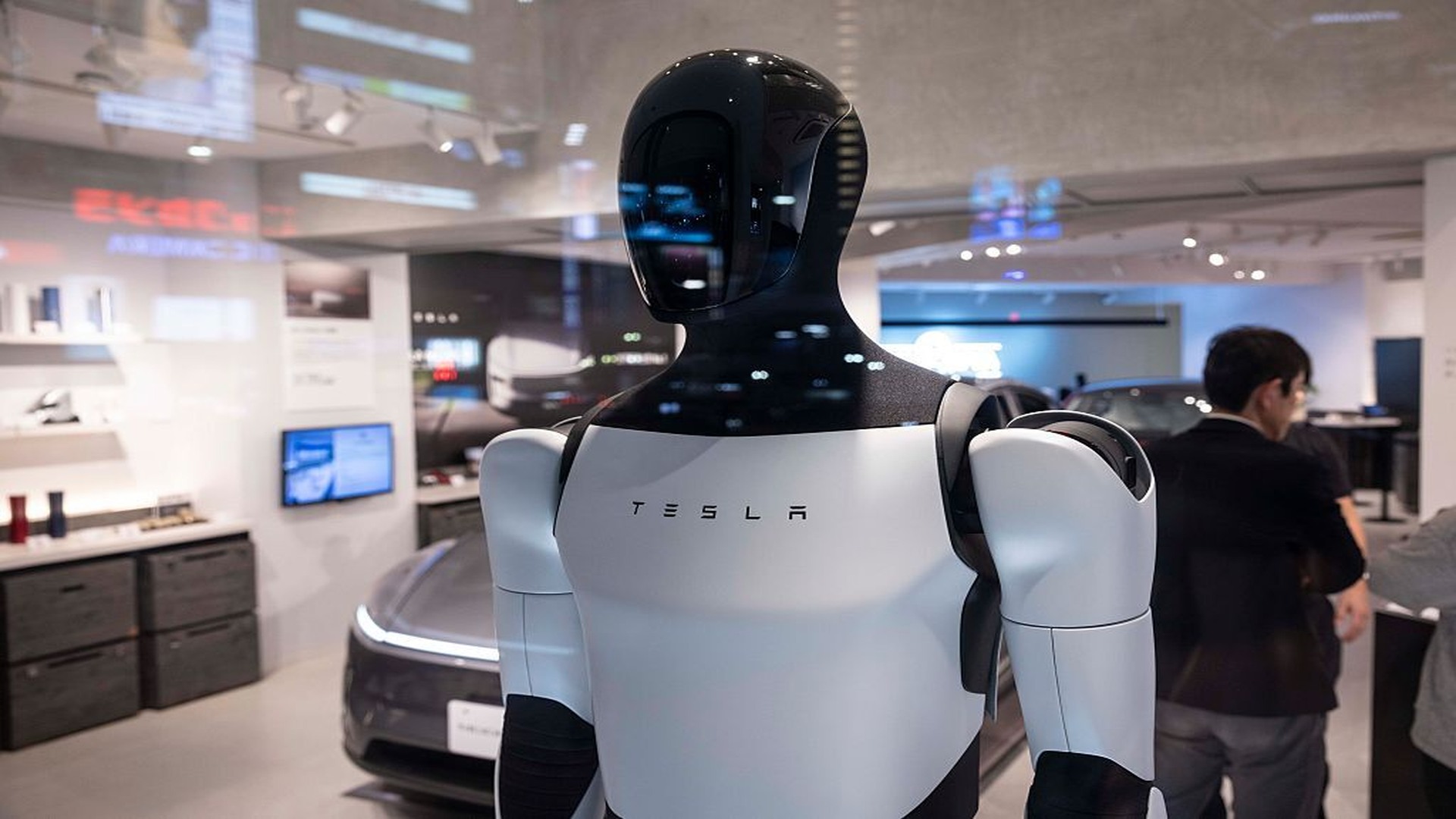
At a robotics conference in Austin, Texas, in November, Tesla’s Optimus handed out snack packets to attendees. The robot could grasp a packet and hold it out for someone to take. A human was operating it remotely, according to footage from the event and reporting on the demonstration. Tesla had already begun early production of the humanoid robot in Fremont, California, by the time of the demo. The company expects its first customers to put Optimus to work on repetitive or hazardous industrial jobs. CEO Elon Musk said in October that deliveries to companies outside Tesla could begin around the end of 2027. A robot that can handle a range of chores at home is a longer-term goal. What has Optimus already done? At the World Economic Forum in Davos in January, Musk said some Optimus units were already doing simple tasks in Tesla’s factories. He expected them to take on more complex work by the end of 2026, still in an industrial setting. He gave few details about the jobs the robots were doing or how much human supervision they needed. The Austin demo showed how Optimus can handle a small object under remote control. Doing the same task autonomously would require the robot to work out where to grip the packet and adjust its reach as the recipient moves. It would also need to know when to let go. Those decisions matter even when the task itself looks straightforward. What jobs could Optimus do first? Musk expects industrial customers to use Optimus for jobs that people would prefer to avoid. That could include repetitive work that puts strain on workers or jobs that need to be done around the clock. Tesla has yet to specify what tasks the first customers would assign to the robot. Moving parts between workstations illustrates why a factory is a practical place to start. A part can arrive in roughly the same position each time, and the robot can repeat the same sequence. The test comes when a part is slightly out of place or slips from the robot’s grip. On a production line, the robot would need to recover and keep working without holding up the next station. Tesla plans to train Optimus by having it learn from people performing tasks and then practice those tasks in simulations and in the real world. Those practice runs would give Tesla data on how the robot moves and handles objects, which it could use to improve the software. Could Optimus do your laundry? An earlier Optimus demonstration showed the robot folding a shirt. Doing a full load of laundry would involve picking garments out of a pile, separating tangled items and working out how to fold everything from a T-shirt to a pair of jeans. A sleeve hanging over the edge of the table can change where the robot needs to grip the fabric. The hands are one of several areas Tesla says still need work. They need the dexterity to handle objects of different shapes and sizes, while the software has to adjust when something moves or a task goes wrong. The robot also needs to hold up through repeated use and operate safely around people. In October, Musk said Tesla hoped to show Optimus performing unscripted tasks within a month or two. A useful test would be to put the same snack packet in a different spot and see whether Optimus can find it, pick it up, and hand it over on its own. Get the latest in engineering, tech, space & science - delivered daily to your inbox.Atharva is a full-time content writer with a post-graduate degree in media & amp; entertainment and a graduate degree in electronics & telecommunications. He has written in the sports and technology domains respectively. In his leisure time, Atharva loves learning about digital marketing and watching soccer matches. His main goal behind joining Interesting Engineering is to learn more about how the recent technological advancements are helping human beings on both societal and individual levels in their daily lives.
What could Tesla’s Optimus humanoid robot actually do in 2027?
Full Article
Original Source
Read the full article at Interestingengineering →KhanList aggregates and links to publicly available news content. We do not host full articles from third-party sources. Always verify important information with original sources.