
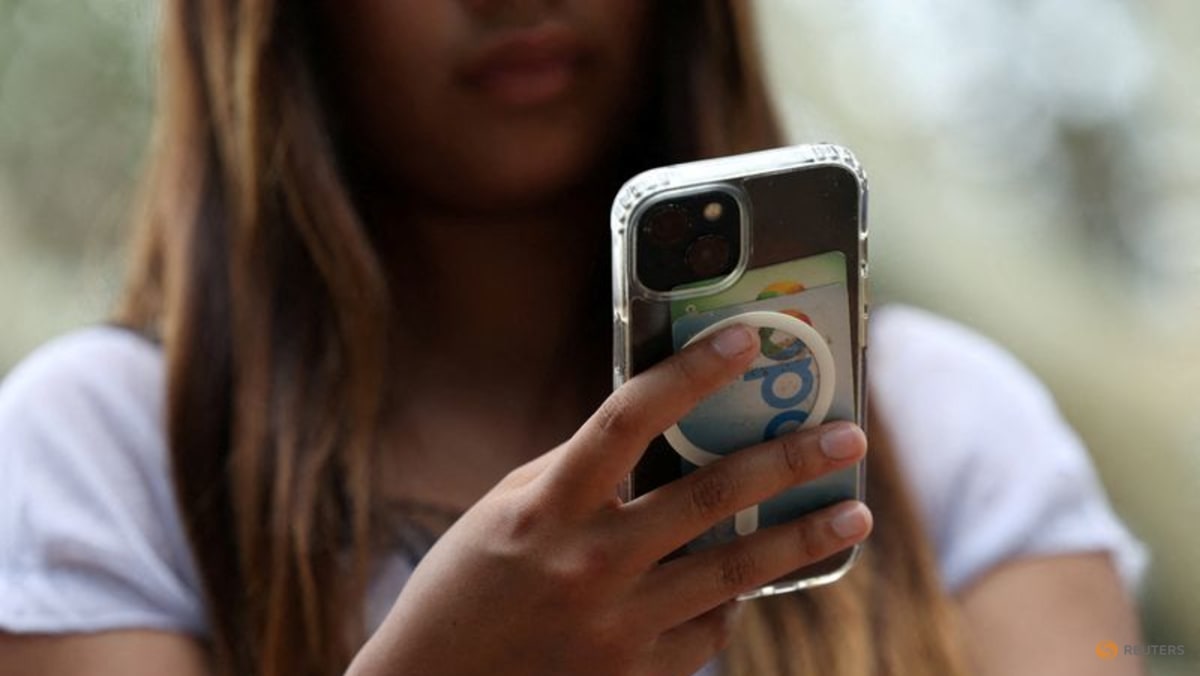
World Following Meta’s proposed US$16.7 billion settlement over claims that its platforms were designed to be addictive to children, new restrictions would be introduced for US users under 18. A teenager poses holding a mobile phone as law banning social media for users under 16 in Australia takes effect, in Sydney, Australia, Dec 10, 2025. (Photo: REUTERS/Hollie Adams) 27 Aug 2026 02:53AM (Updated: 27 Aug 2026 03:09AM) SAN FRANCISCO: In a landmark development, Meta reached a proposed settlement Wednesday (Aug 26) with US states over claims it designed Facebook and Instagram to hook children. Here are the main terms, which require a judge's approval to take effect. THE MONEYMeta would pay in 10 annual instalments totalling about US$11.7 billion, with a further US$5 billion payable only if rival platforms sign comparable agreements - a maximum of US$16.7 billion. Separately, the company would pay US$75 million toward the states' legal costs and US$459 million to settle older claims tied to the Cambridge Analytica data scandal.States are expected to spend the money on youth mental health programmes, crisis lines, after-school activities and digital literacy, though final decisions rest with state legislatures. NIGHTIME BLOCKWithin six months, teenage accounts would by default be locked out of Facebook and Instagram from midnight to 6am local time. Messaging and settings would stay available but stripped down so teens cannot use them to reach the wider app. Push notifications would be switched off from 10pm to 7am. DAILY TIME LIMITTeen accounts would default to two hours of cumulative daily use across Meta's apps, resetting at midnight. Messaging and long-form video do not count toward the total. Neither the curfew nor the cap can be changed by a teenager without a parent's approval and the limits can be tightened.If competing platforms adopt equivalent commitments, the overnight block widens to 10pm to 7am and the daily allowance drops to 60 minutes per app, capped at two hours across all of them. Notifications would be silenced during school hours, defined as 8am to 3pm on weekdays between Aug 15 and Jun 15. Within four months, teens would be offered a feed that is not algorithmically personalized. Like counts would be hidden by default and cosmetic surgery filters barred. AGE CHECKSMeta has one year to deploy an accurate age assurance system: age-checking tools must mistake no more than three per cent of 13 to 15-year-olds as adults, and no more than 10 per cent of 16 and 17-year-olds. New accounts whose age is unverified after 14 days are treated as teen accounts regardless of the age stated.For users under 13, who are barred from the platforms under US law, Meta must presume a reported account is underage absent evidence otherwise and check the friend networks of deleted accounts for other underage users. ROLE OF PARENTSParents supervising a teen account would get daily notifications of time spent, prompts to review settings and the power to adjust school hours. Meta must respond to teens reporting illegal or offensive content within six hours in at least 90 per cent of cases filed in English or Spanish.An independent auditor, chosen jointly by Meta and a committee of states and paid for by the company, would monitor compliance of the overall settlement for 10 years. A separate ruling bars Meta from making false or misleading statements about its safety features.
What could change for US teens on Instagram and Facebook
Full Article
Original Source
Read the full article at Channelnewsasia →KhanList aggregates and links to publicly available news content. We do not host full articles from third-party sources. Always verify important information with original sources.