
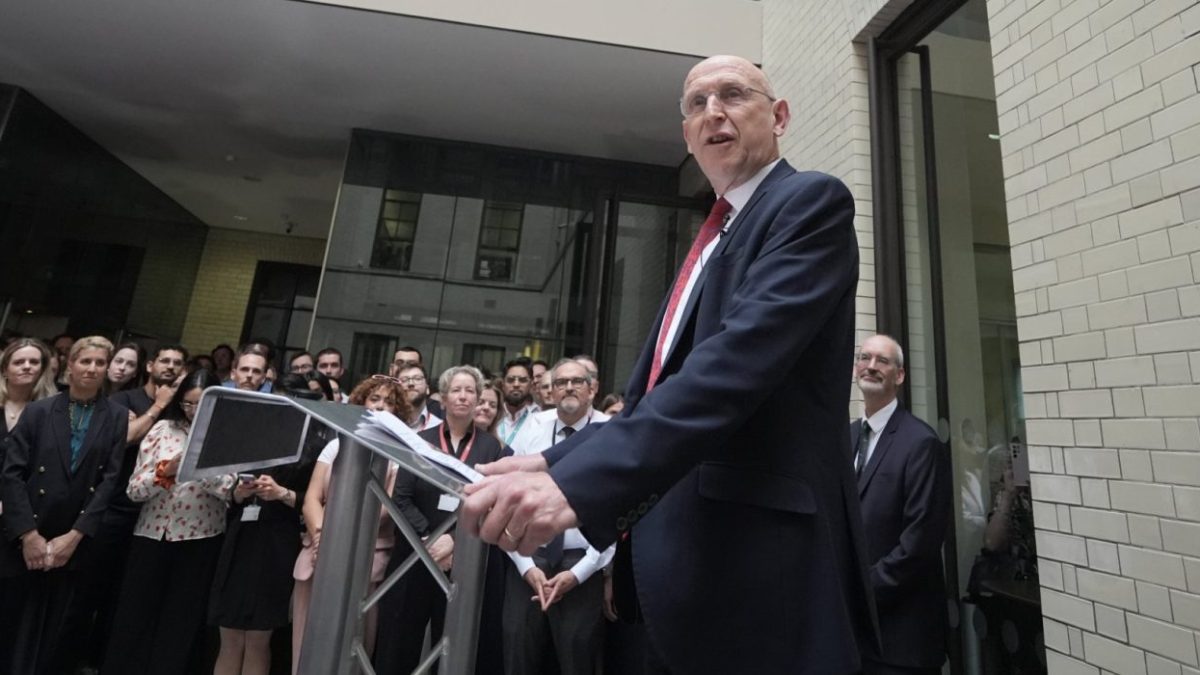
Shortly after John Healey was named Andy Burnham’s surprise pick for Chancellor, he quipped: “All I’ve done so far is go up to the chancellor’s office and it’s very much as Gordon Brown left it”. Not former chancellor Rachel Reeves, note, but former prime minister Gordon Brown. Brown hasn’t been chancellor for nearly 20 years – he swapped No 11 Downing Street for No 10 in 2007 – but he is still held in high regard in the City. Not for his politics, but because they knew where they stood. Conversely, Reeves was distrusted by business for the shock employers’ national insurance rise and disregarded for the alleged hyping of her CV, claiming she was a Bank of England economist – behaviour that is heavily frowned upon in corporate-land. Shorts Which is why the appointment of Healey, a left-wing trade unionist with minimal business experience, is not as unpopular a pick with the City as you might think. “Better than many,” is how one City economist turned investment advisor put it. Healey greeted with welcome surprise in Britain’s boardrooms No sooner was his appointment announced than the joke went round the City: Healey once said he would tax the rich “until the pips squeak”. He did, but that was former chancellor Denis Healey, back in 1974 and he said it in relation to property speculators. Fifty-odd years later, same name, same party, same need to raise money, same desire to target the wealthy. That’s how the City sees it, bracing themselves for a taxes onslaught from the new Government, with a mansion levy high on the new Healey’s hit-list. Add to that the fact that Healey has never worked in business, never had to appreciate the distinction between profit and loss, starting out as a journalist on The House, the Palace of Westminster journal, after a degree in social and political science (what’s that when it’s at home?) at Cambridge, then moving into campaigning and comms for trade unions and you can see why he would be viewed with fear and loathing. He was campaigns director of the Trades Union Congress (TUC), for heaven’s sake, someone who actively stirred up the shopfloor against the hated bosses for a living. The nearest he got to business was as a lecturer in the subject at the Open University. But if you thought all this would be held against him, you’d be wrong. Healey’s new role was greeted with welcome surprise and relief in Britain’s boardrooms. Partly, it is based on the thought that he was better than the reviled Foreign Secretary Ed Miliband, viewed as too leftie, beyond redemption, desperate to lay into anyone with a decent home, income and bank account. The other widely touted candidate was Home Secretary Shabana Mahmood. Her track record on the economy was thin; as far as business was concerned, she was unknown and therefore dangerous. She seemed alright at the Home Office, appeared tough on immigration, but beyond that, little was really known. Andy Burnham must like her if he made Mahmood chancellor, and, given Burnham is more left-wing than his predecessor, that made her a threat. City can forgive socialism for solid and sensible It was neither of them. Nor was it Defence Secretary Wes Streeting or any of the other canvassed names. Instead, it was Healey, the chap who had just quit defence, where he was highly regarded. “He genuinely should bring some middle ground common sense, whereas the other two options are a bit more extreme, one on the left and one on the right. He’s a solid, centre ground, common sense kind of guy,” Alyx Wood, chief investment officer of UK-focused hedge fund Kernow Asset Management, told Bloomberg. Add to that Healey had form in the Treasury, as financial secretary for two years in the Brown administration and Burnham’s stroke won plaudits. The admiration goes deeper. It’s to do with who the City likes and dislikes in politics. Those whom the City favours are the solid and sensible. Really, it does not matter so much if they are avowedly socialist. “‘John Healey brings Treasury experience and is a sign that Burnham will respect the bond markets as a check on his radicalism, rather than plough ahead with significant changes that could unsettle the fiscal position,” Nigel Green, Quilter Cheviot’s head of fixed interest research said. What swings the CEOs, entrepreneurs, fellow executives, their advisors, financiers and the like, is whether they can be trusted – if they do what they say and stick to it. That’s why they appreciated Brown. He was more left-wing than former prime minister Tony Blair but the City preferred him. Gordon, as they saw him, didn’t turn in the wind – you knew where you were, even if it wasn’t always to your liking. Sure-footed On that basis, they could make firm investment decisions and spending commitments. So, it was another feather in Healey’s cap that Brown, who knew the Treasury backwards, gave him a ministerial job. Healey, like Brown, isn’t given to donning fancy headgear. He’s not flash, decidedly unshowy, and the City likes that as well in a public servant. He’s plain, dresses properly, conforming dark suit and tie, again another plus. He’s also a pragmatist, which is another way of saying realist, and this they do appreciate. At a party fund-raising event in London, attended by many City-types, there were three main speakers: Streeting, then health secretary, Pat McFadden, the Work and Pensions Secretary and Healey. Streeting spoke about Streeting and was mostly “me, I”; McFadden was analytical, speaking of polling numbers and percentages; Healey was in between, displaying passion and conviction for the “[Keir] Starmer project” and stressing that Labour wished to work with, not against, business to generate growth. Of the three, his contribution stood out; Healey was quietly sure-footed, connecting ably with the crowd. John Healey, far left, with former chancellor and prime minister Gordon Brown and his Treasury team outside No 11 Downing Street in 2005 (Photo: Peter Macdiarmid/Getty) ‘Fiscal control is the duty of any Chancellor’ He has that aura. While he may have begun his career on the active left wing, galvanising the workers, Healey has shown himself to be a political mover. He is firmly of the centre, not on either wing, playing to both wings and not making enemies. Add to that a shrewd intelligence, and it’s easy to see why he has been such a survivor of very different Labour premierships. It’s hard to imagine Healey tripping up. The City jury is still out on Healey’s new chief for saying Britain should not be “in hock to the bond markets”. That showed a lack of understanding from Burnham as to how finance operates and still provokes jitters. The decision to cut VAT on energy bills has also sent the hares running, in that it is not costed.Healey, on the other hand, pressed exactly the right buttons when he said, outside the Treasury: “Fiscal control is the duty of any chancellor; it is mine. Fiscal credibility is the bedrock for economic stability and for national security, and you heard the Prime Minister this afternoon say in this more dangerous world we will meet our commitments on defence to our international allies”. Healey quit as defence secretary because he didn’t get the cash he desired. The problem lies within the department, as he stressed at the time: “The Treasury’s a paradox: you have some of the very best and brightest officials in the Treasury, but you have, too often, a Treasury orthodoxy that’s a dead hand on dynamic government.” That is why the City is less worried; it’s the Treasury that should be afraid. Two key Burnham economy influencers are Andy Haldane, the ex-Bank of England economist and Lord Jim O’Neill, the former Goldman Sachs Chairman. If Burnham consulted them, Healey is likely to have received their blessing, or he might have been their suggestion. Whatever. Ex-Bank, ex-Goldman – the City rates Healey.
What City insiders really think of Healey, and why the Treasury should be worried
Full Article
Original Source
Read the full article at Inews →KhanList aggregates and links to publicly available news content. We do not host full articles from third-party sources. Always verify important information with original sources.