
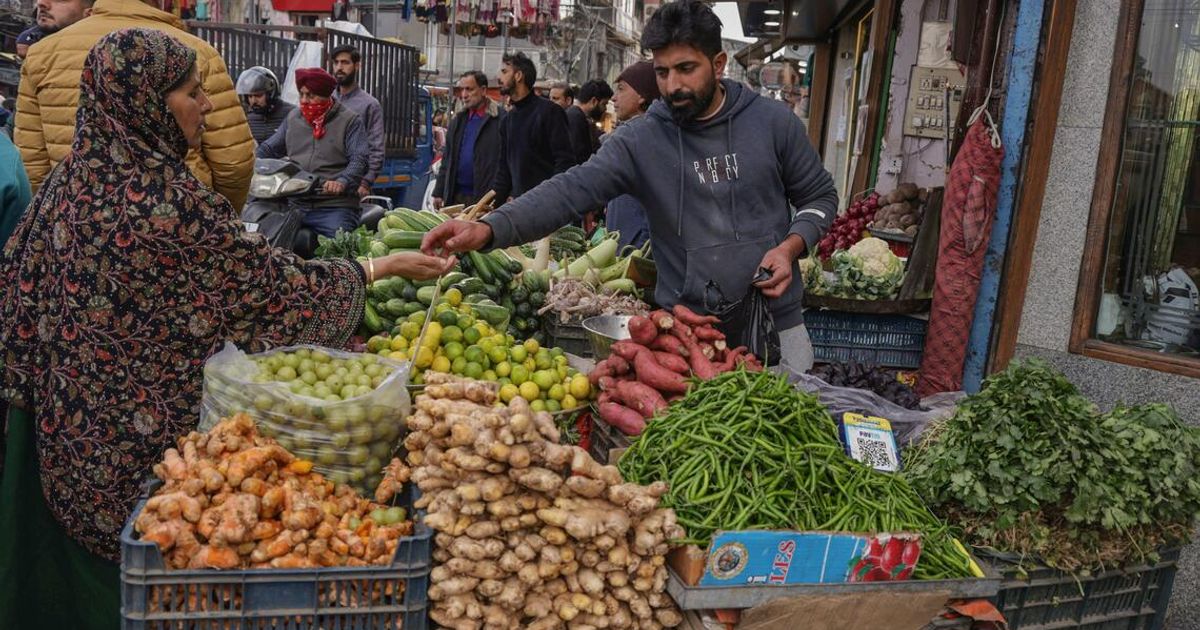
NEW DELHI – Every evening in Noida, Vinod Paswan sets up his omelette stall, working through about five crates of eggs, or 150 of them, to earn daily profits of around 300 rupees (S$4). But in recent months rising prices have taken a bigger bite out of his meagre savings.And he’s not alone. Globally, food inflation is on the rise as wars in Iran and Ukraine along with El Nino push up costs and lower crop yields, the United Nations Food and Agriculture Organization said recently.For Paswan, a key concern is the increasing cost of eggs driven by the rise in prices of maize, used not just to feed chickens but also increasingly diverted to produce biofuels. A crate of eggs, Paswan said, would cost him around 190 rupees a month or so ago but this has now gone up to 220.On top of this, he has to factor in elevated prices for cooking gas, edible oil, onions – all used to run his business. Raising the rates for his omelettes and other offerings are off the table for now, as his customers would “run away”.“Tell me what can I save after all this?” added the 42-year-old, serving up an omelette wrapped around two slices of white bread that he retails for 50 rupees each plate.His modest earnings from his stall have never been enough to feed his family of five and pay his room rent, forcing him to also work as a daily wage construction worker during the day. But this, too, is no longer enough. “I can never seem to save enough... things have become so expensive,” he said.Many Indians are increasingly feeling the heat from rising food prices, with food inflation rising to 8.94% in October from 7.74% in September amid surging prices of staples such as onions, milk, eggs, garlic and ginger.This has also pushed up India’s retail inflation, which rose to 6.09% in October, compared with 5.54% in September 2026 and breaching the Reserve Bank of India’s upper tolerance threshold of 6% for the first time in two years.The worrying rise in food prices, including staples such as rice, has been caused by a combination of factors, chief among them weather-related disruptions related to El Niño, which has reduced rainfall and triggered lengthy dry spells, impacting the country’s monsoon-fed or Kharif crops that are usually sown in June and harvested around October.A Kashmiri shopkeeper arranges a dry fruit product at his shop in Srinagar, the summer capital of Indian Kashmir, on Nov 13. PHOTO: EPAThe prices of onions, for instance, are up more than 100% compared to 2025 because delayed rains slowed the arrival of fresh harvests, creating a supply gap.Prices of maize – also mainly a Kharif crop – have roughly doubled year-on-year due to a surge in demand from India’s ethanol-blending programme along with a drop in domestic production caused by unfavourable weather.India uses food crops such as rice and maize to produce ethanol that is blended with petrol to reduce its reliance on fossil fuel imports.Food grains have come under greater pressure as India has stopped the use of direct sugarcane-based materials, used to produce sugar and jaggery, for ethanol production for a year starting Nov 1 because El Niño has reduced sugarcane yields.This has been done to tamp down the price of sugar, which peaked at around 65 rupees per kg in August 2026 and has now fallen to around 60 rupees.Political risksThe war in West Asia has also pushed up food prices through shipping disruptions and escalated energy costs, while also adding to the government’s subsidy burden as it seeks to cool market prices of agricultural inputs such as fertilisers.On Nov 11, the Cabinet approved a subsidy of 623.7 billion rupees for the 2026-27 winter Rabi cropping season that lasts from November until March or April the following year. This is 64% more than the budgetary support for the previous Rabi season.Rising food prices are a key concern for the government with a host of state elections due in 2027, including in the most populous state of Uttar Pradesh in the first quarter of the year. The government has also attempted a host of other price-cooling measures, including releasing buffer stocks and enhancing distribution schemes, besides curbing hoarding.But this might not be enough. Economists expect food prices to rise further in coming months as the monsoon rainfall deficit – estimated at around 13 per cent and the fourth lowest since 2001 – could have a lingering impact on the forthcoming Rabi cropping season.With water levels in the country’s reservoirs nearly 20% lower than normal, irrigating the winter crop could prove to be a challenge. There are also fears that this year’s El Niño could prove exceptionally severe and long, disrupting further rainfall.The United Nations’ World Meteorological Organization said in a Nov 9 report that the current El Niño event will trigger even more heat and extreme weather globally well into 2027.“India could have lower monsoon and winter crop yields and, hence, have higher prices between December and May (in 2027),” said Mr Suvodeep Rakshit, chief economist with Kotak Securities, a stock broking and financial services firm.“Now this is not a given, but it is certainly a risk,” he told The Straits Times. “This would be a worse scenario than what most of us would be factoring in.”“And if input prices are elevated for a prolonged period of time, core inflation will continue to inch up,” he added.As of Nov 13, the total area under Rabi crop sowing, including wheat, pulses and oilseeds, was trailing last year’s acreage by more than 11% because of weather-related disruptions.Adding fuel to the inflationary fire is a weaker rupee, which has made imports more expensive.Ms Dipti Deshpande, principal economist at analytics firm Crisil, told ST that a rare, synchronised rise in global food prices could further complicate the government’s efforts at food price management.“One of the interventions it has used is facilitating imports but that option will now be a little restricted for them,” she said. “Higher global prices could keep pressure on food commodities, particularly for those that India imports (such as maize, edible oils and pulses).”Globally, food inflation is on the rise as wars in Iran and Ukraine along with El Nino push up costs and lower crop yields. PHOTO: EPADeshpande, however, added that if climate-resistant varieties released for the winter cropping season perform well despite weather variations, it could offer some respite.All this pressure is showing up in daily household expenditures. According to Crisil Intelligence, the cost of a home-cooked vegetarian meal rose 12% year-on-year in October, while that of a chicken-based meal rose 9%.For Ranu Loni, a 35-year-old tailor in Noida, she has had to stretch every rupee as much as possible to make ends meet. She and her husband, who works as a rickshaw driver, earn about 20,000 rupees each month but this is barely enough to feed them and their two children, besides pay for other expenses such as their room rent and school fees.Expensive food items such as paneer, which now retails for about 500 rupees a kilo and which they consumed about once a week last year, are now prepared only once in two months. These days, meals for the Lonis mostly comprise basic cereals such as rice and wheat, along with cheap vegetables like potatoes and tomatoes.Even every drop of edible oil counts with a litre that earlier lasted a week, now used sparingly over 15 days or so. “I have to think twice before I add any oil to a dish,” she said.‘The real tragedy of El Nino’Meanwhile, there are concerns how rising food prices will also impact India’s rural economy. While farmers who have reliable access to water will benefit from higher market prices for their products, those who depend more on monsoon rains will suffer losses. Rain-fed agriculture constitutes nearly 60% of the sown area in India.Mr Ajay Vir Jakhar, chairman of Bharat Krishak Samaj, a farmers’ organisation, said those worst affected will be cattle-owning marginal farmers who cannot afford to feed them anymore given higher fodder prices, forcing them to sell their animals, more so if milk prices do not go up commensurately.“That’s the other impact that a drought or something like El Nino has – farmers have to sell their cattle cheap, and when the drought is over, they have to buy new cattle back at a much higher value. So they lose out in many ways,” he said.“The real tragedy of El Nino is not just (reduced) farm production, which everyone talks about,” he added. “The real tragedy of El Nino is how it plays out on the livelihoods of primary producers.”Jakhar noted that while the government has been “very good at crisis management”, this short-term approach merely “passes the problem on to the next generation of farmers”.What it should instead focus on, he added, is building long-term resilience of farming communities to help them meet these challenges, including through measures such as better use of groundwater, improved access to climate-resistant varieties and better risk insurance products.“India as a country has not done well on creating resilience on the farms,” he told ST.
‘What can I save after all this?’ Food inflation jumps in India amid El Niño and biofuel pressures
Full Article
Original Source
Read the full article at Straitstimes →KhanList aggregates and links to publicly available news content. We do not host full articles from third-party sources. Always verify important information with original sources.