
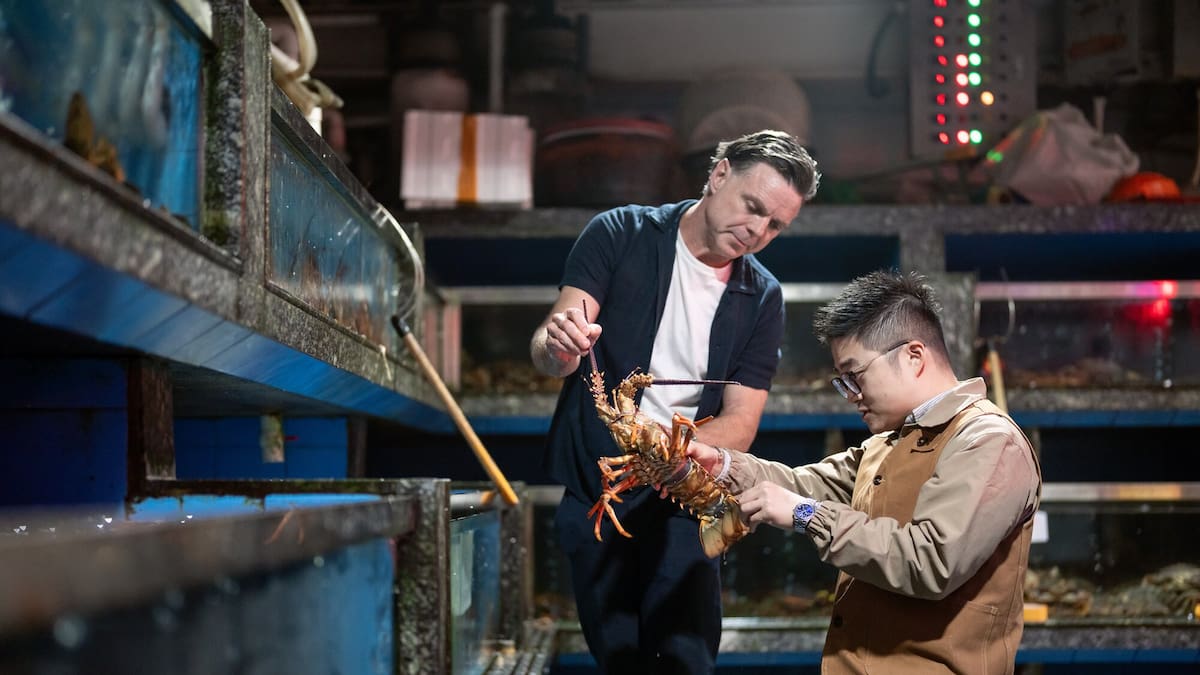
A Michelin star, a new season of his television show - and a humbling moment in China. Chef Ben Bayly talks to Kim Knight about a very big year. Turns out not everybody loves raw venison. “They weren’t really impressed with the tartare,” says a rueful Ben Bayly. “With On a reconnaissance trip to China, the chef and owner of Michelin-starred Auckland restaurant Ahi was learning a valuable lesson.“When you go to another country to cook New Zealand ingredients, you want to adapt to their flavours. How do New Zealand products integrate with their culture, their seasonings, their flavours?”To put this another way, he says, “Don’t take sand to the beach.”“I’m such an idiot. We grow a lot of chillies in the Ahi garden. I make my own sauce, right? And I brought this chilli sauce to go with the tartare. And here I am sitting in Chengdu, famous for its hot pots, famous for its chillies - and I’ve bought chillies from New Zealand? Like, what a donkey.”A year later, Bayly was back. Last November, he travelled to Shanghai with pāua, whitebait, salmon, beef, lamb – and a film crew.The newest season of Bayly’s A New Zealand Food Story (screening on TVNZ from October 31) features everything from salmon attacks in Tākaka to kimchi ice cream in Auckland and culminates with an Ahi restaurant pop-up at luxury hotel W Shanghai – The Bund.Organised after a chance meeting with Tribal Brands Asia (a New Zealand-owned and China-based food and beverage marketing agency), the trip was the first time the show – a deep dive into the ingredients that drive Bayly’s menus at Ahi – has filmed episodes overseas.“We apparently grow food for 40-45 million people and we’re a country of five million. Where does our food go? Who’s eating it? What story are we telling the world? That fascinates me,” says Bayly. Chef Ben Bayly in action at the Shanghai, China pop-up version of his Auckland restaurant Ahi, for season five of A New Zealand Food Story. In Shanghai, the menu included Fiordland whitebait fritters with hairy crab, Lumina lamb “steak ‘n‘ cheese” with Yunnan truffle, Gisborne kingfish with burnt cucumber and ponzu avocado sorbet and Northland kūmara with sichuan, mascarpone ice cream, flambe marshmallow and Whittaker’s chocolate crumble. Guests included New Zealand trade, diplomatic and business representatives and five artists whose work was featuring in the 15th Shanghai Biennale of Art.“Food production builds a lot of wealth for this country, and I just want people to be proud of that,” says Bayly. “This thing had a life, and someone looked after it and tended to it. There are a whole lot of people behind the scenes you never get to see, and they’re just phenomenal human beings.”Actually, says the chef: “They’re as mad as me, often - that’s the cool thing. You’re in different spectrums of the food industry, but you’re both just really passionate about what you’re doing. Sometimes you don’t know why you’re doing it, but you love what you do.”The show is a “passion project”, says Bayly. It’s self-funded, with some financial assistance from the producers who feature, and has screened in around 90 countries worldwide.He’s currently working on season six, and treats the 30-40 days a year it takes him out of the restaurant as research and development, marketing, and a handy induction tool for new employees.“I’ve got to be able to write a good menu, so I need to go visit these people. You have to invest in the knowledge. We just get to film it too.”Has he seen New Zealand’s food story change over the decades he’s been cooking?“I remember visiting a lamb farmer. He didn’t know how he was going to put diesel in his tractor, the lamb price was so low. There was a drought in Australia, they’d culled a lot of animals and flooded the international market and then New Zealand lamb prices had come down ... What I’ve seen is the struggle. Whether it’s a weather event, or events out of our control.”Bayly says if you make a product better, you can sell it for more. But if you can tell its story better, then, he is convinced, that’s reflected in how it tastes.“I see a lot of farmers, for example, who really care about their land and really care about what they do. They know they’re just custodians for a short time. Living and working in a city versus having the opportunity to get out to the countryside and see the engine room of New Zealand - it’s very inspiring.” Chef Ben Bayly at the source of the Tākaka-hatched salmon that features on the menu at Ahi. The new season covers everything from Hastings’ meatball festival to a Wonky Box depot in South Auckland where rescued produce is sorted and packed for delivery. At a salmon hatchery in Tākaka that uses water from Te Waikoropupū Springs, he’s terrorised by 40kg breeding fish (“they were like sharks!”). And at a factory on the North Shore, he tastes kimchi ice cream and decides to put Little ‘Lato Gelato’s raspberry lamington flavour on Ahi’s dessert menu.“It’s coming soon,” he promises. “The first time we did it was on camera and the meringue was burning. But I kind of like that. You want to show your mistakes.”Bayly first encountered Little ‘Lato at a supermarket in the Coromandel, near the patch of land his family camps on in summer.“My brother’s got this old Nuffield 1953 tractor ... we put the kids on the back of the tray and I’m driving ... it’s just like the Kiwi dream for me. You go down, you get an ice cream ... that’s New Zealand food to me. You don’t realise it when you’re growing up, but it’s those memories of the food you had.“That experience I had as a kid, having a 50 cent popsicle? To the day I die, we’ll have that as our refresher course. We could write a book on how many ice blocks we’ve made here with whatever fruit is in season.” (For the record, guava has recently replaced kiwifruit). Chef Ben Bayly's travels for the new season of A New Zealand Food Story included a trip to the Hawke's Bay where he met The Limery owner Dianne Downey (right). Bayly was filming Food Story’s Shanghai episodes when the news broke that Tourism New Zealand was bringing the Michelin Guide here. Seven months later, at the inaugural restaurant awards, Ahi was among the 14 that received one star. Meanwhile, Bayly’s second Auckland restaurant, Origine, made the “select” list and Queenstown’s Aosta received a Bib Gourmand.Ahi was originally conceived as a casual restaurant. Today, it’s firmly in the fine dining space. It offers a la carte, but the signature New Zealand Food Story menu (four snacks and four courses) is $195 a head, with an optional $150 beverage pairing.“It’s naturally gone like that,” says Bayly. “Holistically, it’s just gone in this direction and sometimes you’ve got to stay out of the way.”Post-Michelin, he’s had to change Ahi’s booking system to ensure loyal customers can still get a table and has also cut back on the number of diners served (from 130 a night to between 90 and 100) to ensure standards remain high. In turn, Origine has shifted its French focus to become “a bistro by Ahi” (think chicken and beef cheek main courses under $40, and luxe ingredients like pāua more judiciously reimagined as a school tuck shop “topper”).Chef Ben Bayly at Ahi. Photo / Michael Craig“I love pāua so much,” says Bayly. “It’s probably one of my top three or five ingredients. Kind of like a mushroom, super umami, the colour of it ... there’s no other seafood like it ... but it’s so freakin’ delicious, especially when you cook it right.”In Shanghai, the Ahi team served it with vinegar purchased with help from a local chef.“I go ‘Right, we need a vinegar to balance this dish - in this crazy wall of vinegars, which should I choose?’ I used Chinese flavouring equivalents ... going through the markets and finding their version of what I use.”Bayly was not going to make the chilli mistake twice. The greatest compliment, he says, was when a guest told him, “Oh, I thought there was a Chinese chef cooking”.More fine food Kim Knight joined the New Zealand Herald in 2016. She is a senior journalist on its lifestyle desk with a special interest in food and hospitality reportage.
What Ben Bayly Learned At Ahi’s Shanghai Pop-Up For TV Food Show
Full Article
Original Source
Read the full article at Nzherald →KhanList aggregates and links to publicly available news content. We do not host full articles from third-party sources. Always verify important information with original sources.