
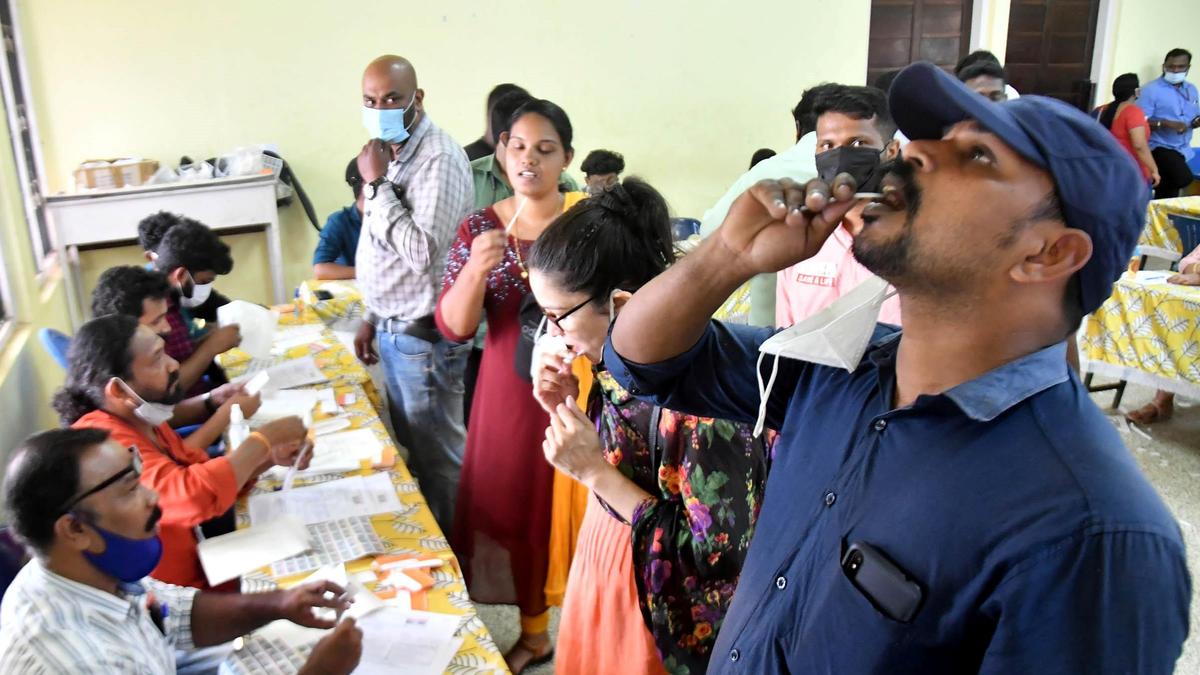
Last month, Tamil Nadu Health Minister K.G. Arunraj said Tamil Nadu would soon create a stem cell/bone marrow registry to facilitate bone marrow transplantation. At present, 50 patients are on the waitlist for bone marrow transplantation in T.N., he said.A stem-cell donor registry is a database of people who have voluntarily agreed to potentially donate their blood-forming stem cells to a patient in need. Their human leukocyte antigen (HLA) profile is recorded for comparison with patients looking for a suitable donor.For people living with blood cancers such as leukaemia and lymphoma, and disorders such as thalassaemia and aplastic anaemia, a stem-cell transplant can be a potentially curative treatment. But finding a suitable donor can be the first challenge. Only about 25% to 30% of patients have a fully HLA-matched sibling donor. For those without a suitable family donor, an unrelated donor registry can provide another route to finding a match.What is a donor registry?A bone marrow registry allows eligible people to register as potential donors. Registration usually involves providing a cheek or buccal swab for HLA typing. Although these are commonly called bone marrow registries, they are essentially stem-cell donor registries, says Jeyasankar S., consultant, medical oncology, haematology, haemato-oncology and bone marrow transplant, Apollo Speciality Hospitals, Vanagaram, Chennai.If a patient does not have a suitable family donor, the transplant team can search the registry for an unrelated donor. The search can also extend to international donor networks.How is a match found?The key factor in matching is HLA, rather than the blood group. HLA markers are proteins that help the immune system distinguish the body’s own cells from foreign cells. They are inherited, and a closer HLA match can improve the chances of a successful transplant and reduce complications such as graft-versus-host disease.The patient’s HLA profile is compared with those of registered donors. If a potential match is identified, the donor is contacted and further testing is done before donation.A.R. Jaswanthini, haematologist, haemato-oncologist and bone marrow transplant physician, VS Hospitals, Chennai, says a patient without a matched family donor can be searched against potentially large numbers of registered donors. A donor in one part of India, or another country, may eventually be found to be a suitable match for a patient they have never met.What is the situation in India?India does not have a single national stem-cell donor registry. The World Marrow Donor Association currently lists five donor registries in the country, DATRI Blood Stem Cell Donors Registry, DKMS Foundation India, Marrow Donor Registry India (MDRI), GeneBandhu and The Arjan Vir Foundation. Together, these registries have several lakh registered donors, although the numbers vary between registries and are updated at different intervals.The registries are linked to international donor networks, allowing transplant centres to look beyond India when a suitable donor is not found locally.Increasing the number of registered donors is important, but the composition of the donor pool matters too. HLA characteristics are inherited and vary across populations. India has substantial genetic diversity across regions, communities and ancestral groups. Therefore, a patient may have a better chance of finding a suitable unrelated donor when people from similar backgrounds are represented in the registry.“The importance of registries is particularly high for patients from communities that are under-represented in existing donor databases,” Dr. Jeyasankar says. “A registry can only help if it has donors who reflect the genetic diversity of the population. If certain communities have very few registered donors, patients belonging to those groups may face greater difficulty finding a suitable donor,” he adds.G. Vimal Kumar, senior consultant, paediatric haematology, oncology, blood and marrow Transplantation, MGM Cancer Institute, Chennai, says India needs more healthy young adults to register as potential donors, particularly from diverse communities.What happens after registration?Registration does not involve donating stem cells. If a person is identified as a potential match, the registry contacts the donor and further HLA testing and medical assessments are carried out. The donor can then decide whether to proceed.If the donor proceeds, stem cells can often be collected from the bloodstream through a process similar to platelet donation. In some cases, stem cells may instead be collected directly from the bone marrow.This distinction is important because some potential donors associate the term ‘bone marrow donation’ with a major operation. In many cases, however, blood stem-cell collection is performed through the bloodstream.Dr. Vimal Kumar says misconceptions about pain, weakness and the donation process can discourage people from registering. He also stresses that registration should be an informed commitment, as a person may be identified as a match months or years later.What we needExperts say India needs sustained awareness campaigns, particularly through colleges, workplaces and community organisations, along with better representation of different regions and communities. Stronger coordination between registries and transplant centres and reliable donor follow-up are also important.The challenge is not simply to create a larger registry, but one that better represents India’s population and improves the chances of finding a suitable donor when a patient needs one.
What are stem-cell donor registries and how do they work?
Full Article
Original Source
Read the full article at Thehindu →KhanList aggregates and links to publicly available news content. We do not host full articles from third-party sources. Always verify important information with original sources.