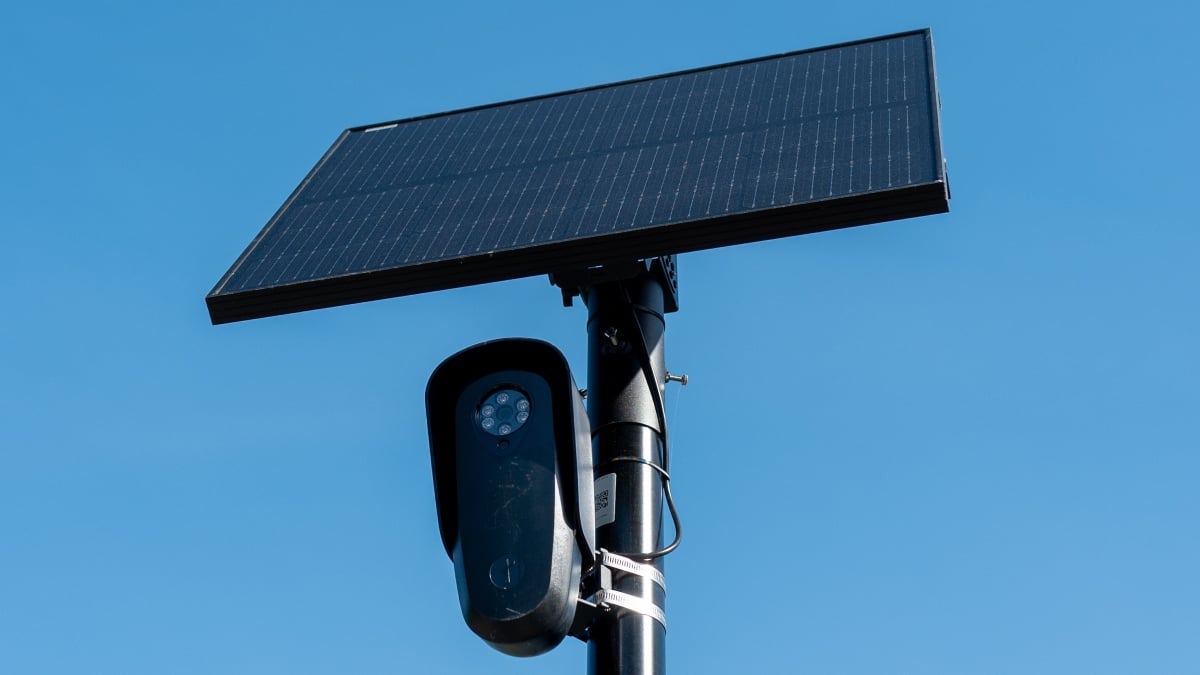
Police say Flock cameras help them solve crimes, while critics worry they make it far too easy to track where people drive. By Olivia Tauber Olivia Tauber Deputy Digital Culture Editor Olivia Tauber is the deputy editor of digital culture, covering creators, media, movies, beauty, and more. Based in New York, her work has appeared in The New York Times, Vanity Fair, The Cut, Teen Vogue, Complex, and Interview Magazine. She holds a Master's degree in Journalism from NYU and a Bachelor's from the University of Michigan. She also runs Fan Mail, a weekly pop-culture newsletter. Read Full Bio on July 30, 2026 Share on Facebook Share on Twitter Share on Flipboard Credit: Smith Collection/Getty Images Did you know that the next time you drive across town, a camera you barely notice could record where your car goes?Known as Flock cameras, the small black devices sit beside roads, near intersections, and at the entrances to neighborhoods and parking lots, collecting information about every vehicle that passes.Flock Safety says its network now includes more than 120,000 cameras across 49 states and operates in more than 6,000 communities. Police departments, businesses, schools, and homeowners associations use the cameras, which can turn a passing car into a searchable record containing its license plate, location, color, model, and even details such as bumper stickers or dents. This Tweet is currently unavailable. It might be loading or has been removed. The company's rise has been fast. Founded in Atlanta in 2017 by Garrett Langley, Matt Feury, and Paige Todd, the company raised $275 million last year at a $7.5 billion valuation. Although it is best known for license plate readers, Flock also sells broader surveillance systems and is developing first-responder drones following its acquisition of Aerodome.As that network has grown, so has the backlash. Cities are canceling contracts, police officers have been accused of using the system for personal reasons, and protesters have painted, burned, and cut down cameras across the country — and encouraged others to do the same. This Tweet is currently unavailable. It might be loading or has been removed. So, what exactly are Flock cameras, and why do some people want them gone?How do Flock cameras work?Flock cameras are automated license plate readers, commonly known as ALPRs. Unlike red-light or speed cameras, they are generally not waiting for a driver to commit a specific traffic violation, but rather photograph passing vehicles and convert what they see into data that can be searched later.Each record can include a car’s license plate, location, make, model, color, body type, and the time it passed the camera. Flock’s software can also recognize individual features of the car, creating what amounts to a “vehicle fingerprint.”Police officers can search for a particular plate or enter a broader description, such as a blue Toyota with a bumper sticker. They can also add vehicles connected to stolen-car reports, missing people, or criminal investigations to a “hotlist.” If a camera detects a possible match, the system sends an alert with the vehicle's location. A police department can also allow other participating departments to search its camera data. In some states, that can mean searching across much of the country.Flock says its cameras take individual images rather than continuously tracking a vehicle, and its default policy is to delete license plate data after 30 days — although the actual retention period can vary based on local laws and an agency’s agreement. Mashable Light Speed Why do police use Flock cameras?Some police departments say the technology can produce investigative leads and solve crimes. If a child is reported missing, for example, officers can enter the plate of the vehicle involved and receive an alert when it passes a camera. The same process can help police locate stolen cars, follow fleeing suspects, or determine where a vehicle traveled before or after a crime.On July 30, North Carolina authorities said Flock cameras helped track a vehicle connected to a child abduction case. Police arrested a woman in Charlotte on July 29, and the child was taken into protective custody.That same week, police in Alabama credited a Flock camera with helping establish the direction traveled by two missing senior citizens. Officers combined that information with a community tip and assistance from OnStar to locate the couple safely.Flock says its network has supported more than 1 million investigations and helped locate more than 10,000 missing people in 2025.So why are Flock cameras controversial? This Tweet is currently unavailable. It might be loading or has been removed. The concern starts with the amount of information being collected about people who are not suspected of committing a crime. When a single camera records one moment on a public road, a network of thousands can capture the same vehicle at different times and locations. Some industry critics argue that ALPR data can reveal when drivers visit sensitive places, including health centers, protests, and places of worship. The organization has also argued that police should obtain a warrant before searching large ALPR databases, although the Supreme Court has not decided whether historical ALPR searches require one. Flock adamantly disputes the description of its system as mass surveillance. Data sharing has also pulled Flock into the immigration enforcement debate. In May 2025, 404 Media reviewed search logs showing more than 4,000 Flock lookups that local and state police conducted at the request of federal officials, as an informal favor, or for potentially immigration-related purposes. A Feb. 2026 investigation by The 74 also found that outside police departments searched cameras owned by a Texas school district, including queries that officials said were performed to assist the Department of Homeland Security. Flock also responded to that claim, stating that it has no contract with ICE and that the agency cannot directly access its cameras or data. Then there is the possibility of personal misuse. The Institute for Justice has collected 28 reported cases in which officers allegedly used license plate readers to follow partners, former partners, colleagues, or other romantic interests.On July 29, the North Carolina State Bureau of Investigation arrested Charlotte-Mecklenburg police officer Seth Elliot and charged him with illegally accessing a government computer. Investigators allege that Elliot used Flock and a state criminal-justice database to run an unauthorized search of a North Carolina license plate for a non-law-enforcement purpose. The cameras can also make mistakes. This Tweet is currently unavailable. It might be loading or has been removed. This Tweet is currently unavailable. It might be loading or has been removed. In June 2026, The Drive editor Joel Feder was test-driving a Range Rover with a New Jersey manufacturer plate when four Minnesota police cars surrounded him and his wife in a parking lot. Police had been receiving Flock alerts because a different plate with a similar code had been reported lost in California.Flock acknowledges in its official policy that license plate translations can occasionally be incomplete or inaccurate. CEO Garrett Langley later said departments need a clearer process for challenging and correcting inaccurate hotlist entries. This Tweet is currently unavailable. It might be loading or has been removed. Disagreement has also spilled into neighborhoods. More than 80 municipalities have ended or declined to renew Flock agreements, while states including Washington have adopted new restrictions on how license plate data can be collected, searched, and shared. Residents of Marinette, Wisconsin, are pressing their city to do the same — a coalition is now circulating a petition calling for its Flock contract to be canceled outright.Some communities are also dealing with people damaging the cameras themselves. There have been 33 incidents across 23 states in which people damaged or destroyed Flock cameras in apparent protest against surveillance. Cameras have been covered in paint, cut down, burned, obstructed, and struck with vehicles. This Tweet is currently unavailable. It might be loading or has been removed. Online, some X users are tracking where Flock cameras appear, which models are being installed, and what direction they face. One user finds the company to be "laying the infrastructure for a mass surveillance network in America." This Tweet is currently unavailable. It might be loading or has been removed. This Tweet is currently unavailable. It might be loading or has been removed. This Tweet is currently unavailable. It might be loading or has been removed. This Tweet is currently unavailable. It might be loading or has been removed. For communities considering Flock cameras, the decision now involves weighing their use in investigations against concerns about privacy, access, and oversight. Deputy Digital Culture Editor Olivia Tauber is the deputy editor of digital culture, covering creators, media, movies, beauty, and more. Based in New York, her work has appeared in The New York Times, Vanity Fair, The Cut, Teen Vogue, Complex, and Interview Magazine. She holds a Master's degree in Journalism from NYU and a Bachelor's from the University of Michigan. She also runs Fan Mail, a weekly pop-culture newsletter. These newsletters may contain advertising, deals, or affiliate links. By clicking Subscribe, you confirm you are 16+ and agree to our Terms of Use and Privacy Policy.
What are Flock cameras and why are they so controversial?
Full Article
Original Source
Read the full article at Mashable →KhanList aggregates and links to publicly available news content. We do not host full articles from third-party sources. Always verify important information with original sources.