
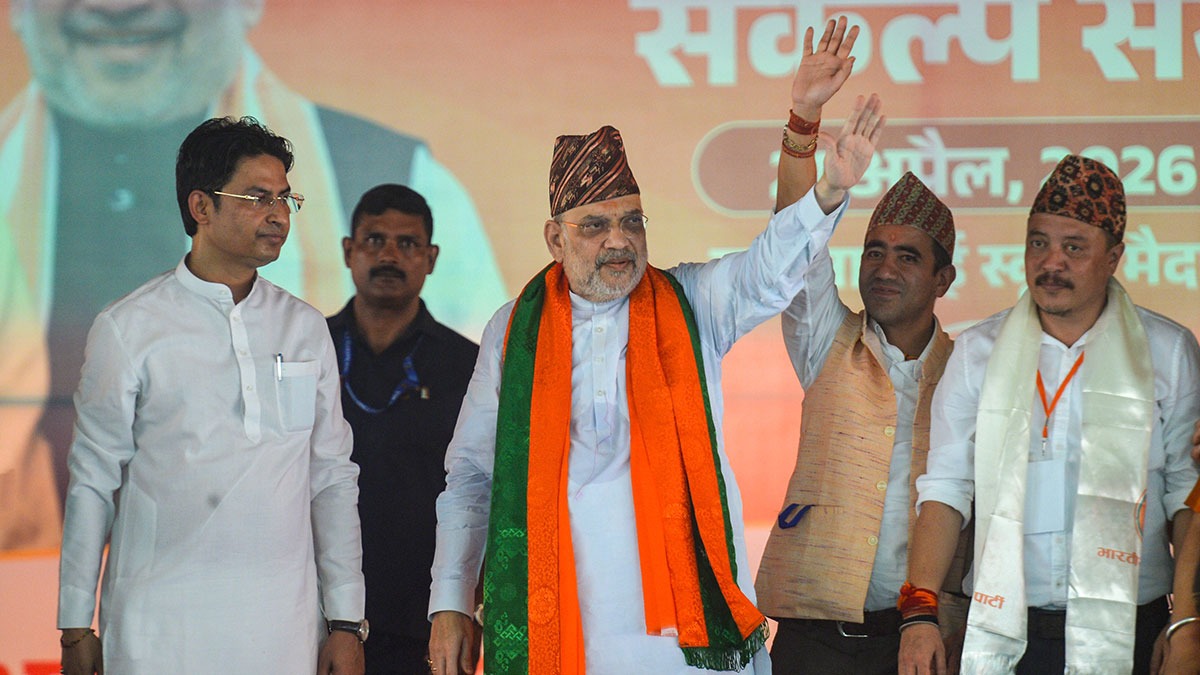
Takeaways from the Centre's discussions with the Gorkha and BJP hill leaderships to address the region's longstanding demands under a constitutional frameworkThe Union government on August 22 took the first concrete step towards the BJP’s promised “permanent political solution” to the longstanding Gorkha identity and administrative demands in the Darjeeling hills, announcing a committee to draft an agreement and work out the modalities of a final settlement.The decision followed a crucial tripartite meeting at Sukna, in the Darjeeling foothills, chaired by Union home minister Amit Shah and attended by West Bengal chief minister Suvendu Adhikari, Gorkha leaders and representatives of the hill administration. The meeting was held on the third and final day of Shah’s visit to West Bengal.The ministry of home affairs (MHA) said the discussions covered the hill population’s demand for a distinct identity, a permanent political solution and recognition within the Constitution. Shah assured the participants that the Centre would work towards a solution “under the umbrella of the Constitution of India”.A committee headed by Pankaj Kumar Singh, the Centre’s interlocutor for the Darjeeling hills, Dooars and Terai and a former deputy national security advisor, will now work out the modalities and prepare the framework of the proposed final agreement. Singh, also a retired IPS officer and former director general of the Border Security Force (BSF), was appointed interlocutor in October 2025. The move is significant because the BJP had promised during the Bengal assembly election campaign to resolve the Gorkha issue within six months of forming the government in the state. The August 22 meeting, however, stopped short of spelling out what form the eventual settlement could take. The possibilities range from greater administrative and political autonomy within Bengal to a new constitutional arrangement for the hills. But the Centre has made clear that any solution will remain within the existing constitutional framework.Shah also assured the hill representatives that other outstanding demands would be considered sympathetically and that adequate central funding would be made available to address pending developmental and infrastructural issues in the hills.The meeting brought together a broad cross-section of the hill leadership, including Gorkha Janmukti Morcha (GJM) chief Bimal Gurung and senior leader Roshan Giri, Gorkha National Liberation Front (GNLF) president Mann Ghising, BJP Darjeeling MP Raju Bista, BJP Rajya Sabha MP Harsh Vardhan Shringla, BJP MLAs from the hills and state government officials.Giri said the Gorkha leadership was prepared to pursue the issue within the constitutional framework. “Union home minister Amit Shah has clearly said that whatever solution is reached to address the issue will have to be under the constitutional framework. I am in favour of a constitutional solution and have put forward my suggestions in accordance with that,” he said.For the BJP’s hill leadership, the meeting carried additional historical significance. Bista pointed out that it coincided with the anniversary of the signing of the 1988 Gorkha Accord, which followed the violent Gorkhaland agitation of the 1980s and resulted in the creation of the Darjeeling Gorkha Hill Council (DGHC).“The history of struggle of hill communities spans over four decades during which the previous Left and Trinamool Congress governments trampled over the aspirations of the hill people. The sacrifice made by our people involves nearly 2,000 individuals, who were martyred, over 5,000 people displaced, and women tortured and raped,” Bista alleged.He said representatives of different communities had placed their concerns and expectations before Shah whereas Adhikari had outlined how the new state government intended to address the problems of the hills.“After hearing out all stakeholders, Shah summed up the meeting by elucidating how a permanent solution to the issues could be reached in the days ahead,” Bista said.The challenge for the Centre is to ensure that the August 22 announcement does not become another interim arrangement in a region that has seen several attempts at political accommodation without resolving the underlying dispute.The 1988 accord created the DGHC while the Gorkhaland Territorial Administration (GTA) was established in 2011 after another round of agitation. Neither arrangement has ended the demand for a more substantive political settlement. Hill leaders have repeatedly argued that these bodies lack adequate powers, financial autonomy and constitutional safeguards.The broader Gorkha demand also encompasses recognition and constitutional protection for 11 communities seeking Scheduled Tribe status, along with concerns over land rights, economic development, tea gardens, employment and infrastructure.The August 22 meeting therefore represents a shift from the language of another interim administrative arrangement to an attempt at negotiating a more durable political settlement. But the precise contours of that settlement—and whether it can satisfy competing aspirations in the hills while retaining the territorial integrity of Bengal—will now depend on the committee led by Singh.For the moment, the Centre has offered the hills a promise of permanence. The harder task will be to define what that permanence actually means.Subscribe to India Today Magazine- EndsPublished By: Shyam BalasubramanianPublished On: Aug 24, 2026 18:49 IST
What Amit Shah's 'permanent political solution' could mean for Darjeeling hills
Full Article
Original Source
Read the full article at Indiatoday →KhanList aggregates and links to publicly available news content. We do not host full articles from third-party sources. Always verify important information with original sources.